

Housing-first model won’t end homelessness, new report says
Advertisement
Read this article for free:
or
Already have an account? Log in here »
To continue reading, please subscribe:
Monthly Digital Subscription
$1 per week for 24 weeks*
- Enjoy unlimited reading on winnipegfreepress.com
- Read the E-Edition, our digital replica newspaper
- Access News Break, our award-winning app
- Play interactive puzzles
*Billed as $4.00 plus GST every four weeks. After 24 weeks, price increases to the regular rate of $19.95 plus GST every four weeks. Offer available to new and qualified returning subscribers only. Cancel any time.
Monthly Digital Subscription
$4.99/week*
- Enjoy unlimited reading on winnipegfreepress.com
- Read the E-Edition, our digital replica newspaper
- Access News Break, our award-winning app
- Play interactive puzzles
*Billed as $19.95 plus GST every four weeks. Cancel any time.
To continue reading, please subscribe:
Add Free Press access to your Brandon Sun subscription for only an additional
$1 for the first 4 weeks*
*Your next subscription payment will increase by $1.00 and you will be charged $16.99 plus GST for four weeks. After four weeks, your payment will increase to $23.99 plus GST every four weeks.
Read unlimited articles for free today:
or
Already have an account? Log in here »
Hey there, time traveller!
This article was published 11/02/2016 (3692 days ago), so information in it may no longer be current.
Canada’s shortage of affordable units and the complex problems of some indigenous people are hindering the success of Canada’s much-touted “housing first” programs.
That’s according to a new report released Thursday by the Canadian Centre for Policy Alternatives that looked at the housing-first model in Winnipeg and elsewhere.
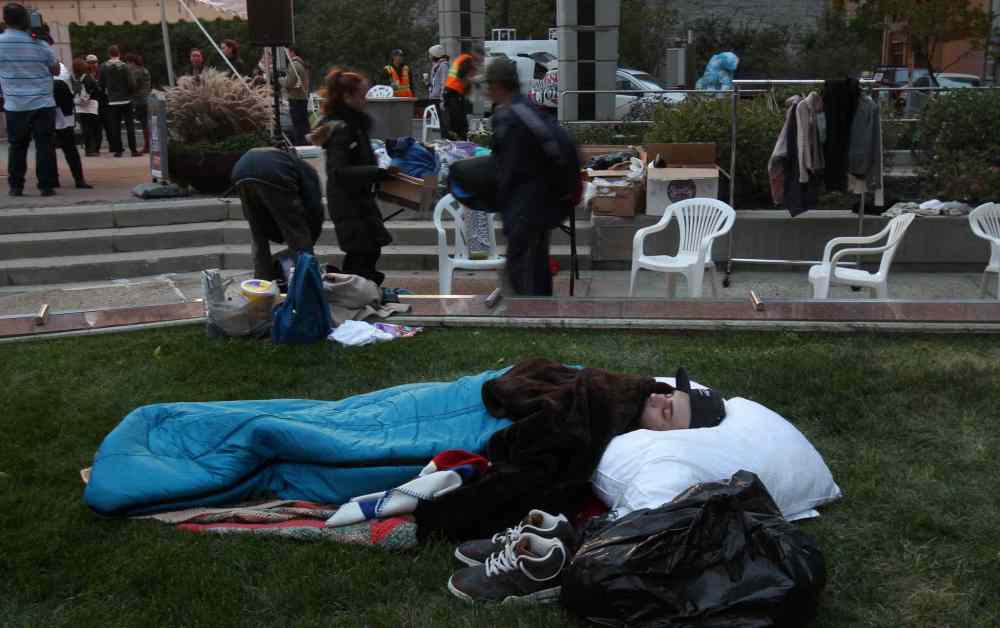
Housing First projects, such as the Bell Hotel on Main Street, aim to give homeless people a place to live as fast as possible, with few strings, such as sobriety, attached. The idea is to get the chronically homeless a stable “home base” and start delivering other services such as mental health care and addictions counselling, afterward.
The model had the support of the former Conservative government and was generally seen by poverty activists as one of the few positive federal initiatives of the past decade.
But University of Ottawa researcher Matthew Stock found the paucity of affordable units, especially in small towns and especially with some landlords unwilling to rent to those with addictions or mental-health issues, is one weakness of the program.
And, wrote Stock, the model doesn’t prevent homelessness in the first place or reach the “hidden homeless” – those who couch surf or whose housing is temporary or unstable. And, the long-term outcomes for aboriginal people are also less impressive than for non-aboriginal people. Though housing first tends to work much more successfully for indigenous people than traditional programs, it still isn’t as effective as it could be.

“[Housing First] should not be seen as the approach that will ‘end homelessness,’” wrote Stock. “Instead, it should be seen as playing a role in a wider, comprehensive homelessness strategy that includes a renewed investment in social and affordable housing, programs targeted at populations at risk of becoming homeless, emergency support services and poverty reduction initiatives to support the sustainable transition to being stably housed.”