

In conversation with Tukwini Mandela, the granddaughter of Nelson Mandela
Advertisement
Read this article for free:
or
Already have an account? Log in here »
To continue reading, please subscribe:

Digital Subscription
One year of digital access for only $205*
- Enjoy unlimited reading on winnipegfreepress.com
- Read the E-Edition, our digital replica newspaper
- Access News Break, our award-winning app
- Play interactive puzzles
*First annual payment billed as $205.00 + GST for one year. This annual subscription will automatically renew at $233.00 + GST every 52 weeks (10% off the regular annual price of $259.35). Offer available to new and qualified returning subscribers only. Cancel any time.
To continue reading, please subscribe:
Add Free Press access to your Brandon Sun subscription for only an additional
$1 for the first 4 weeks*
- Enjoy unlimited reading on winnipegfreepress.com
- Read the E-Edition, our digital replica newspaper
- Access News Break, our award-winning app
- Play interactive puzzles
*Your next Brandon Sun subscription payment will increase by $1.00 and you will be charged $17.95 plus GST for four weeks. After four weeks, your payment will increase to $24.95 plus GST every four weeks.
Read unlimited articles for free today:
or
Already have an account? Log in here »
Hey there, time traveller!
This article was published 20/02/2016 (3861 days ago), so information in it may no longer be current.
Tukwini Mandela knows she can never escape the fact she’s a Mandela — nor does she want to — so she is doing her best to create a name for herself while also enhancing her family’s legacy.
The granddaughter of late anti-Apartheid revolutionary Nelson Mandela runs the House of Mandela winery and was in Winnipeg this week to make one of five keynote addresses at the fourth annual National Fair Trade Conference, which took place at the Fort Garry Hotel. She addressed the more than 350 delegates during an event at the Canadian Museum for Human Rights.
FP: Your grandfather spent 27 years in a South African prison before being released, becoming the country’s president and a champion of human rights. There must be some real significance for you to be speaking at the CMHR.
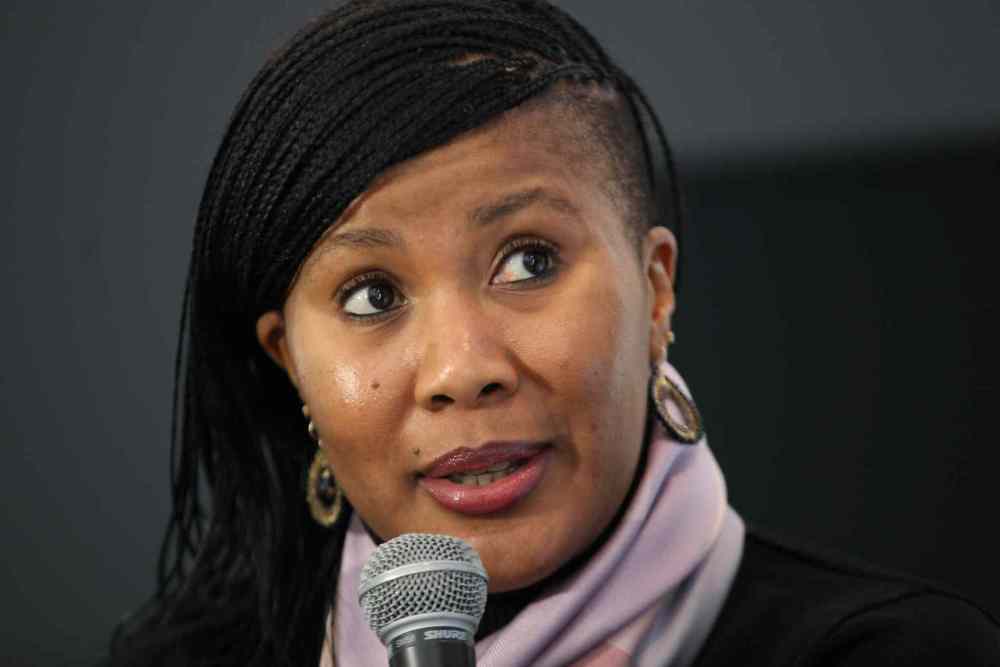
TM: Ultimately, that’s what my grandfather stood for and, ultimately, that’s what my family stands for. It’s quite an honour for me to speak at a venue like that.
FP: House of Mandela wines have been available for a few years here and Manitoba was the first Canadian province to put them on the shelves. Why didn’t you want to have your grandfather’s image on the labels?
TM: A family friend of ours introduced the concept to us 13 years ago. My mom and I didn’t know anything about wine at the time. We thought my grandfather’s name had been commercialized enough. We decided to investigate the wine industry because we knew nothing about it. We fell in love with the people who produced these wines. They were so passionate about the South African wine industry, we thought it would be a great vehicle to tell our family story.
Ultimately, it’s not just a focus on Nelson Mandela, himself, it’s a focus on where he comes from. People seem to think my grandfather just fell from the sky. He didn’t, he’s a father, he’s a son, he’s an uncle. All the ideals my grandfather espoused, he learned from someone and somewhere. We wanted to talk about that part of the story.
FP: That’s the “house” part.
TM: Yes. In African culture, the house is very important. It’s what forms you as a human being. We thought it would be neat for us to tell the story of where Nelson Mandela came from… and why he became the person that he became.
FP: You haven’t commercialized his face but you have commercialized his shirts on the bottles. (Mandela popularized “Madiba” shirts, which were silk and usually adorned in a bright and colourful print.)
TM: This is the Thembu collection. We ourselves are Thembus, that’s the cultural group we come from. Thembus are very laid back, welcoming people and we wanted those qualities to be infused in the styles of the wine.
My grandfather didn’t like wearing suits, he felt too constricted in a suit. He wanted to wear things that made him more accessible as a person and a leader. He started wearing these shirts and started a fashion trend without really intending to. So, we thought they would be great as labels for the wines.
FP: South Africa is a hotbed for fair trade products. Why is that?
TM: South Africa was the first country to certify its wine farms as fair trade. We don’t necessarily have a great history in the wine industry in terms of treating the farm workers with a level of dignity and respect. I think that fair trade has really brought all of those issues to the fore. And it just makes people more conscious. Fair trade places a premium on the wines and that premium goes back to the farm workers themselves. It pays for their education, health care, salaries, housing and, if they own a stake in the corporation, it goes back to investing in that corporation. You see a direct benefit of free trade because you can literally see an improvement in people’s lives.
FP: There must be a certain cache for you when dealing with people once they know your last name. Is it important for you to be able to move beyond that?
TM: People seem to think the Mandela name belongs to my grandfather, it doesn’t. We carry the name of our ancestors. Obviously, my grandfather is a very important part of that house.
He took all of those values that his family espoused to the world. You can’t run away from the fact you’re a Mandela. It’s part and parcel of who I am as a human being. I wake up every day and I go to work for my family. Keeping my family’s legacy alive is what I live for every day. I’ve learned to live with the fact that I’m a Mandela and people pay me closer attention than they would somebody else. That’s fine, but I’m still my own person and have my own goals and aspirations.
FP: You were 19 years old when your grandfather was released from prison. How do you develop a relationship with somebody who doesn’t live down the street, like other people’s grandparents?

TM: It was a process of getting to know each other. We spent a lot of time with him at the dinner table. He learned a lot of things from me and my cousins, like jellybeans. My cousin would say to me, “When you go to the garage, please get me some jelly beans.”
He would say, “What are jelly beans? Are they something that you eat?” We’d say, “You buy them and these are the colours that we like.” It was small things like that and just spending time with him, reading newspapers with him or asking him to tell you stories about things when he was a young man.
My favourite moments were at home doing nothing. My grandfather was a great storyteller and a great mimicker of people. He had a great sense of humour and he didn’t take himself too seriously. We enjoyed sitting around the dinner table talking to him about normal things.