

Full of sound and fury, signifying nothing

Advertisement
Read this article for free:
or
Already have an account? Log in here »
To continue reading, please subscribe:

Digital Subscription
One year of digital access for only $205*
- Enjoy unlimited reading on winnipegfreepress.com
- Read the E-Edition, our digital replica newspaper
- Access News Break, our award-winning app
- Play interactive puzzles
*First annual payment billed as $205.00 + GST for one year. This annual subscription will automatically renew at $233.00 + GST every 52 weeks (10% off the regular annual price of $259.35). Offer available to new and qualified returning subscribers only. Cancel any time.
To continue reading, please subscribe:
Add Free Press access to your Brandon Sun subscription for only an additional
$1 for the first 4 weeks*
- Enjoy unlimited reading on winnipegfreepress.com
- Read the E-Edition, our digital replica newspaper
- Access News Break, our award-winning app
- Play interactive puzzles
*Your next Brandon Sun subscription payment will increase by $1.00 and you will be charged $17.95 plus GST for four weeks. After four weeks, your payment will increase to $24.95 plus GST every four weeks.
Read unlimited articles for free today:
or
Already have an account? Log in here »
Hey there, time traveller!
This article was published 08/03/2016 (3819 days ago), so information in it may no longer be current.
Why would Premier Greg Selinger forgo tabling a budget in favour of a hastily prepared, unenforceable and — at times — confusing “Economic and Fiscal Outlook?”
There were certainly a number of people asking that question Tuesday, when Selinger unveiled what some were calling a “mini-budget,” a document that was tabled in the legislature in lieu of a full budget plan, which the premier argued was impractical in this, the last week before a spring election is expected to be called.
To be fair, mini-budget might have been overly generous terminology.
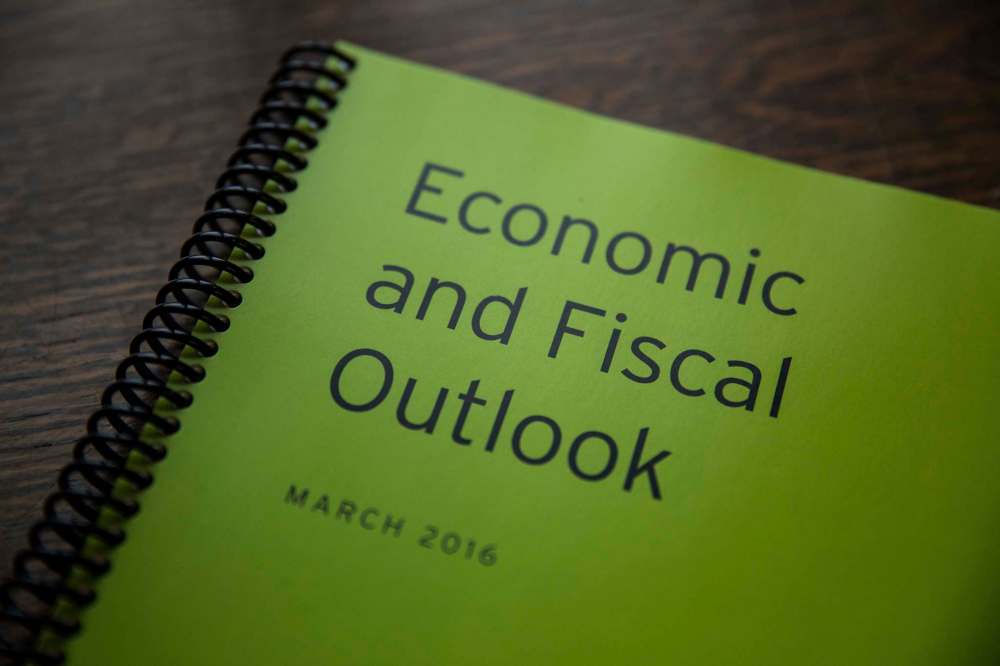
The outlook updated the province’s finances through the third quarter (December) of the 2015-16 fiscal year while providing a couple of modest tax measures.
The highest-profile of these measures was a surtax on incomes over $170,000 that would, at the highest income levels, cost wealthy Manitobans nearly $3,000 in additional tax. The $52 million raised by the new tax bracket would be used to fund a countervailing cut in taxes to the middle tax bracket, along with new or enhanced tax credits for families, seniors and some businesses.
The news in the update was not overly good for the NDP. The operating budget deficit — which accounts for all tax-supported spending — grew to $646 million, up significantly from the budget estimate of $421 million. The larger deficit was due in part to a decline in own-source tax revenue and higher-than-expected spending in health care, family services and disaster assistance, among other budget lines.
The ultimate strategy devised by Selinger and his inner circle isn’t entirely clear at this point. The outlook document was tabled in the legislature as a motion from the NDP. That means it could go to a vote, but without enabling legislation, none of the tax measures can be put into force.
This is merely a statement of the NDP’s intentions should it be re-elected April 19. And as the NDP is trailing badly in pre-election polls, there is really no certainty any of these measures will ever be put into effect.
What possible strategy could the NDP be using with a non-binding, non-enforceable fiscal outlook in lieu of a real budget?
A likely objective would be to create some contrast between the NDP and the surging, poll-leading Progressive Conservatives.
Taxing the wealthiest Canadians has become an almost-fashionable policy option, with the new federal Liberal government and several provinces, including Ontario, shifting tax burden to the highest income earners. And the NDP in Manitoba is now desperate to create any contrast they can with the Tories, particularly on progressive issues such as higher taxes on the wealthy.
In fact, it may be the NDP is mostly hoping the Tories will vote against the tax measures that were built into the fiscal outlook would likely provide some campaign fodder. Or, even better, hope the Tories use procedural wrangling to prevent a vote from happening at all. Then, the Progressive Conservatives and Leader Brian Pallister are not only against taxing the wealthy, they are undemocratic as well.
It is worth noting Pallister and the Tories did not rush to criticize the outlook document and its tax measures. When contacted by the media, Pallister claimed he had not read the document.
He could not account for how he missed the details of the tax measures, which were summarized by Finance Minister Greg Dewar Tuesday afternoon in the legislature.
Pallister said everyone in Manitoba is overtaxed, and then suggested the tax on the wealthiest citizens would drive doctors out of the province. Liberal Leader Rana Bokhari offered pretty much the same opinion. It is probably fair to say neither Pallister nor Bokhari wanted to engage on this issue.

This, of course, is the core of the NDP campaign strategy: portray the Tories (in particular) and Liberals as neo-conservative ideologues who want to keep taxes low for upper-income earners and gut health care and education. This, the NDP hopes, will position the incumbent government as the only one that will protect core government programs and the interests of the mythical “middle- class, working families” that are the focal point of so much of campaign policy.
Given the deficit in public support the NDP suffers now, that is a pretty long bow to draw. But it’s still a strategy, and it seemed to make Pallister and Bokhari quite uncomfortable.
In the final analysis, the fiscal outlook tabled this week wasn’t a huge help for the NDP, but neither was it a hindrance. It supports the core of Selinger’s campaign strategy.
And while it may still not be enough to help him win the next election, it might just be enough to stave off complete annihilation.
dan.lett@freepress.mb.ca
Dan Lett is a columnist for the Free Press, providing opinion and commentary on politics in Winnipeg and beyond. Born and raised in Toronto, Dan joined the Free Press in 1986. Read more about Dan.
Dan’s columns are built on facts and reactions, but offer his personal views through arguments and analysis. The Free Press’ editing team reviews Dan’s columns before they are posted online or published in print — part of the our tradition, since 1872, of producing reliable independent journalism. Read more about Free Press’s history and mandate, and learn how our newsroom operates.
Our newsroom depends on a growing audience of readers to power our journalism. If you are not a paid reader, please consider becoming a subscriber.
Our newsroom depends on its audience of readers to power our journalism. Thank you for your support.
Dan Lett is a columnist for the Free Press, providing opinion and commentary on politics in Winnipeg and beyond. Born and raised in Toronto, Dan joined the Free Press in 1986. Read more about Dan.
Dan’s columns are built on facts and reactions, but offer his personal views through arguments and analysis. The Free Press’ editing team reviews Dan’s columns before they are posted online or published in print — part of the our tradition, since 1872, of producing reliable independent journalism. Read more about Free Press’s history and mandate, and learn how our newsroom operates.
Our newsroom depends on a growing audience of readers to power our journalism. If you are not a paid reader, please consider becoming a subscriber.
Our newsroom depends on its audience of readers to power our journalism. Thank you for your support.
Advertisement Advertise With Us
Advertisement Advertise With Us
History
Updated on Tuesday, March 8, 2016 10:22 PM CST: Updates photo