

Earners of more than $100K in public housing
Advertisement
Read this article for free:
or
Already have an account? Log in here »
To continue reading, please subscribe:

Digital Subscription
One year of digital access for only $205*
- Enjoy unlimited reading on winnipegfreepress.com
- Read the E-Edition, our digital replica newspaper
- Access News Break, our award-winning app
- Play interactive puzzles
*First annual payment billed as $205.00 + GST for one year. This annual subscription will automatically renew at $233.00 + GST every 52 weeks (10% off the regular annual price of $259.35). Offer available to new and qualified returning subscribers only. Cancel any time.
To continue reading, please subscribe:
Add Free Press access to your Brandon Sun subscription for only an additional
$1 for the first 4 weeks*
- Enjoy unlimited reading on winnipegfreepress.com
- Read the E-Edition, our digital replica newspaper
- Access News Break, our award-winning app
- Play interactive puzzles
*Your next Brandon Sun subscription payment will increase by $1.00 and you will be charged $17.95 plus GST for four weeks. After four weeks, your payment will increase to $24.95 plus GST every four weeks.
Read unlimited articles for free today:
or
Already have an account? Log in here »
Hey there, time traveller!
This article was published 29/03/2016 (3814 days ago), so information in it may no longer be current.
Manitoba’s low-income housing stock is studded with high-income earners, including a dozen who earn more than $100,000 a year and two who bring in more than $200,000, according to provincial data that just became public.
In 2015, there were 51 people earning $70,000 or more a year living in Manitoba Housing, the province’s subsidized housing units built for low-income earners. That’s up from 31 in 2012.
There were about 5,200 renters in the province’s subsidized housing last year.
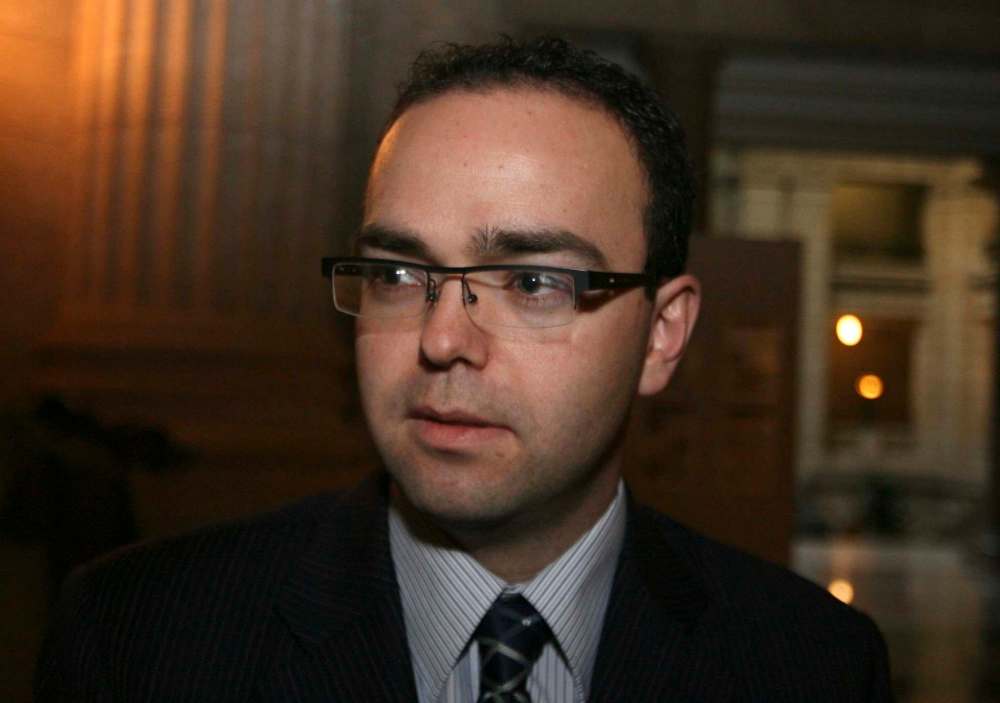
The figures became public through a series of data-mining requests by a former Manitoba tax advocate under the province’s freedom of information provisions.
In his blog, Colin Craig, the former head of Manitoba’s chapter of the Canadian Taxpayers Federation, singles out the NDP government under Greg Selinger for letting the problem fester.
“I first brought this problem to light back in 2013 while working for the Canadian Taxpayers Federation. Since then, the situation has obviously gotten worse. Why? Because the Selinger government refuses to do what’s necessary,” Craig wrote Monday in a blog on the online site of Manning Centre, a right-wing think tank named for Preston Manning, founder of the former Reform party.
In response to the pressure from the taxpayers federation, the province raised the rents on high-income earners in 2014 to 10 per cent above market rates for posted rents as set out by the Manitoba Housing and Rental Corporation.
At the time, MHRC said the policy in no way intended to evict or cause a household to involuntarily leave public housing because of the rent hike. Manitoba Housing can only increase rent upon renewal of a lease and can only impose one rent increase every 12 months.
In an email, a provincial spokeswoman appeared to refute some of the data and suggested Craig’s take on it might not be the whole story.
“People with low incomes aren’t being turned away,” she stated categorically. The spokeswoman added the province also offers a variety of rentals, including ones at market rates, and it is impossible to tell from the data Craig uses if it includes high-income earners in market-rate units and low-income units that would otherwise sit empty.
“Manitoba Housing has three rental programs, including a social housing (with rent geared to income), affordable housing and a market-rate rental program. Each program has a prescribed income limit, so the household income must be below this threshold to be eligible. However, if a household’s income rises, they can remain in the unit. In these cases, the tenant is required to pay more rent, and the depth of the provincial subsidy provided to the household decreases,” the spokeswoman said
Craig, who has since moved to Calgary and works for the Manning Centre, was the head of the CTF in Manitoba from 2008 to 2015. He’s known in Manitoba for blowing the whistle on a handful of First Nations chiefs who draw rich salaries from their poor communities.
In advance of the province’s response, Craig addressed the issue of what the numbers are really saying.
He emphasized there is no other way to look at the numbers than to conclude there are high earners living in low-income housing in Manitoba and the number is growing every year, a position he defended after the province’s response.
“It is hard to say for certain what is happening. What is clear is that the government should be forcing these high-income people out, so truly people, low-income people can get into those units,” he told the Free Press.
There may indeed be the occasional high earner in remote locations such as Churchill, where the housing stock is lean, but that doesn’t explain the numbers in the data, he said.

“While the government won’t say where these units are located, past government information notes some of these people are (in) government-housing units in cities like Winnipeg and Brandon, where the waiting lists are quite long,” Craig said.
“It’s one thing for the government to rent out an unused unit in a community like Churchill (where the unit may otherwise sit vacant without any revenue coming in), but it’s another to let high-income people take up space in a city like Winnipeg, where truly low-income people need support,” Craig said.
Even stranger, said Craig, is the province’s explanation for the problem.
“In the past, the province has claimed they can’t force the high-income earners to leave, due to the Residential Tenancies Act,” Craig said. “When this last came up,” he said, “I encouraged the province to change the act; after all, it’s provincial legislation.”
alexandra.paul@freepress.mb.ca