

Fair Share, Fair Say campaign an unmitigated failure

Advertisement
Read this article for free:
or
Already have an account? Log in here »
To continue reading, please subscribe:
Digital Subscription
One year of digital access for only $1.44 a week*
- Enjoy unlimited reading on winnipegfreepress.com
- Read the E-Edition, our digital replica newspaper
- Access News Break, our award-winning app
- Play interactive puzzles
*Billed as $5.77 plus GST every four weeks. After 52 weeks, price increases to the regular rate of $19.95 plus GST every four weeks. Offer available to new and qualified returning subscribers only. Cancel any time.
To continue reading, please subscribe:
Add Free Press access to your Brandon Sun subscription for only an additional
$1 for the first 4 weeks*
- Enjoy unlimited reading on winnipegfreepress.com
- Read the E-Edition, our digital replica newspaper
- Access News Break, our award-winning app
- Play interactive puzzles
*Your next Brandon Sun subscription payment will increase by $1.00 and you will be charged $17.95 plus GST for four weeks. After four weeks, your payment will increase to $24.95 plus GST every four weeks.
Read unlimited articles for free today:
or
Already have an account? Log in here »
Hey there, time traveller!
This article was published 03/04/2016 (3852 days ago), so information in it may no longer be current.
When the Association of Manitoba Municipalities unveiled its “Fair Share, Fair Say” campaign just prior to the beginning of the provincial election campaign, hopes were high that real change would come to the relationship between the local government and the province.
Fair Share, Fair Say (FS/FS), in essence, is the AMM’s demand for more funding from the province and a greater say in how the money is spent. And there are some good ideas contained in this campaign.
Fully rebating PST paid by municipalities is a good idea, as long as that money is dedicated to infrastructure. Freeing municipalities from contributing to the cost of health-care facilities has merit, even though local governments make only a token (10 per cent) contribution now. As well, it makes perfect sense to free municipalities from any costs associated with recruiting and retaining doctors; those should be carried by a province-wide program.
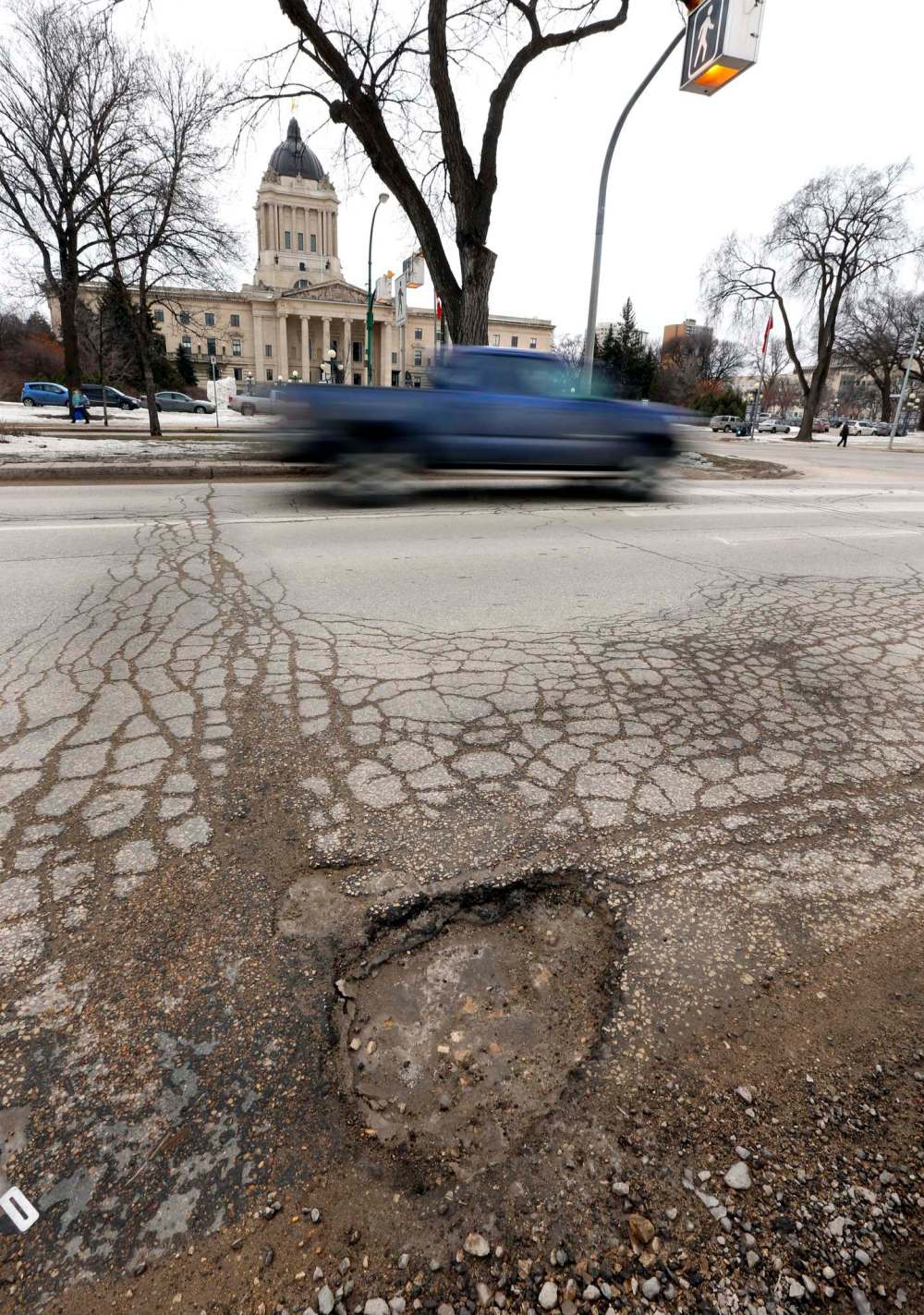
However, at the midway point in the election campaign, it’s pretty obvious that FS/FS has been a flop. Both the NDP and Progressive Conservatives have dismissed most of the core elements of the campaign. The Liberals did jump on the bandwagon but, based on their campaign struggles, it seems increasingly unlikely they will get a chance to put FS/FS into action.
Why did the campaign fail? There are a number of problems at work here, but the biggest flaw is that it is not honest or explicit.
For example, the campaign talks about “identification of grow-as-we-grow” revenues that would lessen the reliance on property tax. What the municipalities really mean is that they want, for example, access to their own sales and gas taxes. These sources of revenue grow with the size of municipal economies, thus allowing expenditures to rise naturally as communities grow in size and value.
However, the municipalities won’t come right out and say that because they know there is a political price to pay for levying new taxes. As a result, municipal officials would much rather that the federal or provincial governments make the decisions to raise taxes or fees, so they can have access to the money without having to do any of the heavy political lifting.
The municipalities also argue in FS/FS that they should receive a “full one per cent” of PST revenue — an amount roughly equal to $300 million — annually and without having to endure complicated negotiations with the provincial government on priorities or cost-sharing formulas.
Two problems arise here. First, despite wanting direct grants equal to one per cent of PST, the AMM has never explicitly said it supports the NDP decision to raise the PST by one point to fund infrastructure. Nor has it offered much of an opinion about whether the PST should remain at eight per cent, or be rolled back as proposed by the Progressive Conservatives and Liberals.
This is the pinnacle of cowardly politics. The NDP has pretty much wagered its political life on its decision to raise the PST. And whether they are willing to acknowledge it or not, municipalities have seen a steady increase in the amount of money for infrastructure as a result of this decision. And yet, municipalities have been unwilling to take a clear, unequivocal stand on whether the tax should be maintained at NDP levels or cut back.
However, that is not the only problem. The FS/FS campaign assumes providing more money directly to municipalities without any direction or strings attached is a better way of spending the money. With all due respect to municipal leaders — who most definitely carry the greatest burden of the infrastructure challenge — there is a fair bit of evidence to suggest that they are not best-suited to making decisions on their own about how to spend the money.
Left to their own devices, municipal officials have demonstrated over and over again they will embrace petty ward politics over longer-term, strategic thinking. The end result in Winnipeg has been an infrastructure agenda that places road expansions, extensions and grade separations above more strategic initiatives such as rail relocation and rapid transit.
The former eliminates the need for costly, ineffective grade separations while the latter is the only truly effective way of lessening traffic congestion — and thus the need for extensions and expansions — on major routes. Left to their own devices, municipalities will always default to expensive but ineffectual infrastructure projects that may placate frustrated motorists but don’t ultimately solve the problem. Building more, larger and longer roads is, ultimately, unsustainable.

That is why, as another example, the federal Liberal government is promising to deliver a strategic infrastructure policy to go along with its enhanced funding. In the recently tabled federal budget, Finance Minister Bill Morneau said the next two years of federal funding will go to very basic infrastructure needs. After that, Ottawa will take a lead role in helping municipalities find more strategic uses for the money.
The AMM had an opportunity to be a real player in the outcome of the provincial election. Using its considerable political influence, it could have helped drive the platforms of the major parties, ultimately influencing the policies enacted by the winner of the election.
However, by failing to clearly enunciate its plans or offer its own explicit solutions, the “Fair Share, Fair Say” campaign has been a vague and unmitigated failure.
It’s important to remember that if you really want to have a “fair say” in major decisions, you ought to have something to actually say.
dan.lett@freepress.mb.ca
Dan Lett is a columnist for the Free Press, providing opinion and commentary on politics in Winnipeg and beyond. Born and raised in Toronto, Dan joined the Free Press in 1986. Read more about Dan.
Dan’s columns are built on facts and reactions, but offer his personal views through arguments and analysis. The Free Press’ editing team reviews Dan’s columns before they are posted online or published in print — part of the our tradition, since 1872, of producing reliable independent journalism. Read more about Free Press’s history and mandate, and learn how our newsroom operates.
Our newsroom depends on a growing audience of readers to power our journalism. If you are not a paid reader, please consider becoming a subscriber.
Our newsroom depends on its audience of readers to power our journalism. Thank you for your support.
Dan Lett is a columnist for the Free Press, providing opinion and commentary on politics in Winnipeg and beyond. Born and raised in Toronto, Dan joined the Free Press in 1986. Read more about Dan.
Dan’s columns are built on facts and reactions, but offer his personal views through arguments and analysis. The Free Press’ editing team reviews Dan’s columns before they are posted online or published in print — part of the our tradition, since 1872, of producing reliable independent journalism. Read more about Free Press’s history and mandate, and learn how our newsroom operates.
Our newsroom depends on a growing audience of readers to power our journalism. If you are not a paid reader, please consider becoming a subscriber.
Our newsroom depends on its audience of readers to power our journalism. Thank you for your support.
Related Articles
Meet your candidate: We invited would-be MLAs to introduce themselves to you





Advertisement Advertise With Us
Advertisement Advertise With Us