

Woman died of brain aneurysm after spending hours curled up on ER floor

Advertisement
Read this article for free:
or
Already have an account? Log in here »
To continue reading, please subscribe:

Digital Subscription
One year of digital access for only $205*
- Enjoy unlimited reading on winnipegfreepress.com
- Read the E-Edition, our digital replica newspaper
- Access News Break, our award-winning app
- Play interactive puzzles
*First annual payment billed as $205.00 + GST for one year. This annual subscription will automatically renew at $233.00 + GST every 52 weeks (10% off the regular annual price of $259.35). Offer available to new and qualified returning subscribers only. Cancel any time.
To continue reading, please subscribe:
Add Free Press access to your Brandon Sun subscription for only an additional
$1 for the first 4 weeks*
- Enjoy unlimited reading on winnipegfreepress.com
- Read the E-Edition, our digital replica newspaper
- Access News Break, our award-winning app
- Play interactive puzzles
*Your next Brandon Sun subscription payment will increase by $1.00 and you will be charged $17.95 plus GST for four weeks. After four weeks, your payment will increase to $24.95 plus GST every four weeks.
Read unlimited articles for free today:
or
Already have an account? Log in here »
Hey there, time traveller!
This article was published 04/04/2016 (3809 days ago), so information in it may no longer be current.
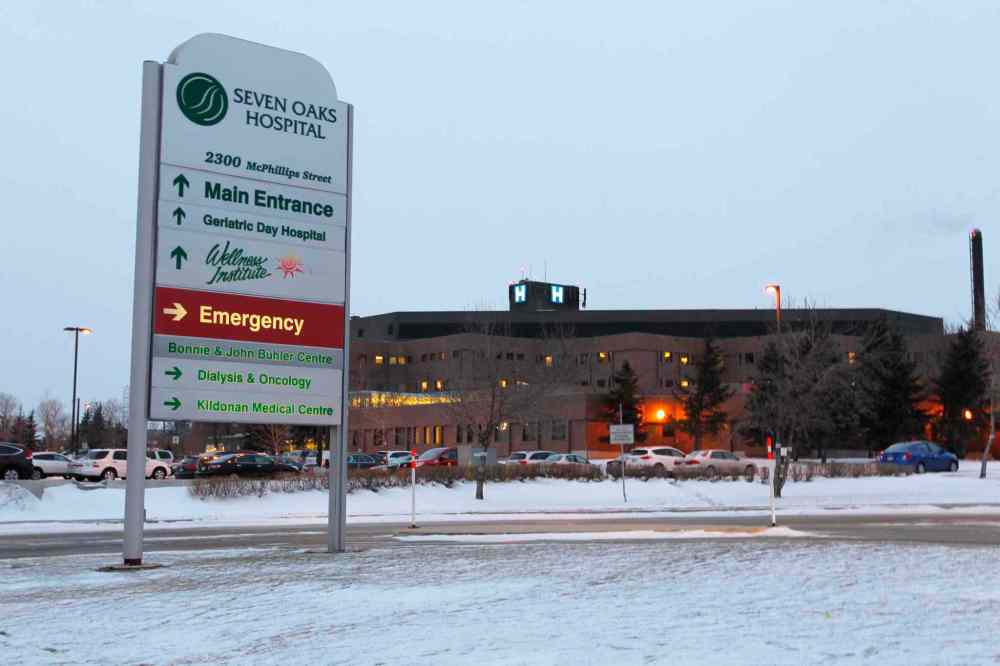
A woman whose final conscious hours were spent curled up in pain on the floor of the Seven Oaks General Hospital — while her family says they tried in vain to convince staff to treat her — deserved a more honourable way to die, her son said.
Now the family says their attempts to get answers about their mother’s death from a brain hemorrhage have been stonewalled, adding insult to death.

“It’s a tragedy,” said Braham Singh, the woman’s son. “She didn’t have to pass away. They could have done something. For my mom to be treated like a doormat… she just laid on the ground.
“You live your life with dignity and honour, and then the last moments are on the floor of a waiting room. She deserved better.”
Mohinder Singh, 57, was rushed to Seven Oaks by ambulance Oct. 14, 2015, after collapsing in her home on Calvert Close in the Maples. She never lost consciousness. Singh was treated and checked for symptoms by paramedics at her home.
Upon arriving at Seven Oaks around 4 p.m., instead of being admitted immediately, Singh was put in the waiting room. Her husband, Darshan, was told a CT scan wasn’t available.
She was given a wheelchair, but Singh told her husband she needed to lie down. She couldn’t sit upright.
“She was complaining of lots of pain in her head,” Darshan said.
With no other options, Darshan helped his wife lie on the floor of the waiting room, he said.
During the next two hours, Darshan said, he pleaded with staff at the nursing station for assistance. He even pleaded with a security guard.
“I went again and again and said, ‘Please, come and have a look at her. She’s getting worse,’” Darshan said. “Why was it ruled out that nothing serious would happen?”
Darshan said he felt helpless.
At around 6 p.m., Mohinder Singh lost consciousness. Darshan shook her, but she was not responsive. He ran to the emergency room doors to find a doctor.
Mohinder was taken immediately to the Health Sciences Centre — where she had worked as a member of the cleaning staff for years. A CT scan revealed a brain hemorrhage had occurred. The damage was done. She was pronounced dead on Oct. 15.
Mohinder died in a hospital room she used to clean almost every day.
A critical incident review was held within a couple of weeks. Darshan and son Braham attended the review and gave testimony. They were told results of the review would take about two months.
That was four months ago.

The Singh family said the Winnipeg Regional Health Authority has been less than helpful.
“We’re trying to do our part,” Braham said. “They’re not doing theirs. I’m not sure if they’re waiting for us to stop paying attention. I’m not sure if they’re waiting for the (provincial) election to be over.
“All we want out of this is accountability. People made mistakes, but no one is accepting responsibility. They’re just letting it slide.”
The WRHA wouldn’t confirm to the Free Press that Mohinder Singh was a patient at Seven Oaks. Nor did it confirm whether a critical incident review had taken place.
“We respect the Personal Health Information Act and are limited as to what we can share about any particular patient or family, so we can only address the questions you’ve posed in general terms,” the WRHA said in a prepared statement.
“If the care of a patient is called into question, the option to conduct a critical incident review is available for caregivers or family to request a review of the care process leading up to an injury or negative outcome for a patient. The family would be invited to participate in the investigation and any subsequent discussion of the recommendations stemming from the review.”
The WRHA statement concluded: “You’d asked specifically about the possible outcomes of an aneurysm in the brain in your series of questions — unfortunately, aneurysms in the brain generally do not have high rates of recovery and there is very little that can be done to treat or predict an aneurysm. Brain aneurysms often have very poor outcomes.”
However, Braham Singh questions the incident, particularly in the wake of recommendations that were made after the death of Brian Sinclair. Sinclair died in 2008 after waiting 34 hours in the emergency waiting room at Health Science Centre without receiving care.
Were those recommendations followed in the case of Mohinder Singh? Could her death have been preventable, too?
“How many more of these tragedies have to happen before they make any changes?” Braham said.
Sinclair’s death sparked an inquiry, which led to a 200-page report in 2014 that included 63 recommendations.
The son said he isn’t critical of the entire system. He stressed staff at HSC was empathetic and professional, he said.
“The staff there was everything that is right with the health care system,” he said.
“They were just so kind. It was just too late. They didn’t do all they could at Seven Oaks. That’s where they dropped the ball.”
Darshan acknowledged his wife might have died anyway, but asked how anyone will know due to the lack of treatment and subsequent answers.
“Maybe nothing could have been done,” he said. “But this wasn’t dignified. She didn’t have to die lying on the floor.”
randy.turner@freepress.mb.ca
Twitter: @randyturner15
Randy Turner
Reporter
Randy Turner spent much of his journalistic career on the road. A lot of roads. Dirt roads, snow-packed roads, U.S. interstates and foreign highways. In other words, he got a lot of kilometres on the odometer, if you know what we mean.
Our newsroom depends on a growing audience of readers to power our journalism. If you are not a paid reader, please consider becoming a subscriber.
Our newsroom depends on its audience of readers to power our journalism. Thank you for your support.
Randy Turner
Reporter
Randy Turner spent much of his journalistic career on the road. A lot of roads. Dirt roads, snow-packed roads, U.S. interstates and foreign highways. In other words, he got a lot of kilometres on the odometer, if you know what we mean.
Our newsroom depends on a growing audience of readers to power our journalism. If you are not a paid reader, please consider becoming a subscriber.
Our newsroom depends on its audience of readers to power our journalism. Thank you for your support.
Related Articles
New ER review process established after Maples woman's death

Advertisement Advertise With Us
Advertisement Advertise With Us