

Emission problems among Winnipeg Transit buses appear resolved
Six out of service, down from 75
Advertisement
Read this article for free:
or
Already have an account? Log in here »
To continue reading, please subscribe:
Monthly Digital Subscription
$1 per week for 24 weeks*
- Enjoy unlimited reading on winnipegfreepress.com
- Read the E-Edition, our digital replica newspaper
- Access News Break, our award-winning app
- Play interactive puzzles
*Billed as $4.00 plus GST every four weeks. After 24 weeks, price increases to the regular rate of $19.95 plus GST every four weeks. Offer available to new and qualified returning subscribers only. Cancel any time.
Monthly Digital Subscription
$4.99/week*
- Enjoy unlimited reading on winnipegfreepress.com
- Read the E-Edition, our digital replica newspaper
- Access News Break, our award-winning app
- Play interactive puzzles
*Billed as $19.95 plus GST every four weeks. Cancel any time.
To continue reading, please subscribe:
Add Free Press access to your Brandon Sun subscription for only an additional
$1 for the first 4 weeks*
*Your next subscription payment will increase by $1.00 and you will be charged $16.99 plus GST for four weeks. After four weeks, your payment will increase to $23.99 plus GST every four weeks.
Read unlimited articles for free today:
or
Already have an account? Log in here »
Hey there, time traveller!
This article was published 05/04/2016 (3577 days ago), so information in it may no longer be current.
The problems with Winnipeg Transit’s troublesome diesel buses appear to have been resolved.
Transit director Dave Wardrop told councillors Tuesday that only six buses are out out service with emission control problems — down from 75 vehicles when the issue was most acute at the beginning of September.
Despite the turnaround, Wardrop remains cautious about the reliability of the technical fix.
“We’ve work diligently with suppliers to come up with a revised maintenance schedule for these buses,” Wardrop told councillors on the public works committee. “We’ve been having some success with it.”
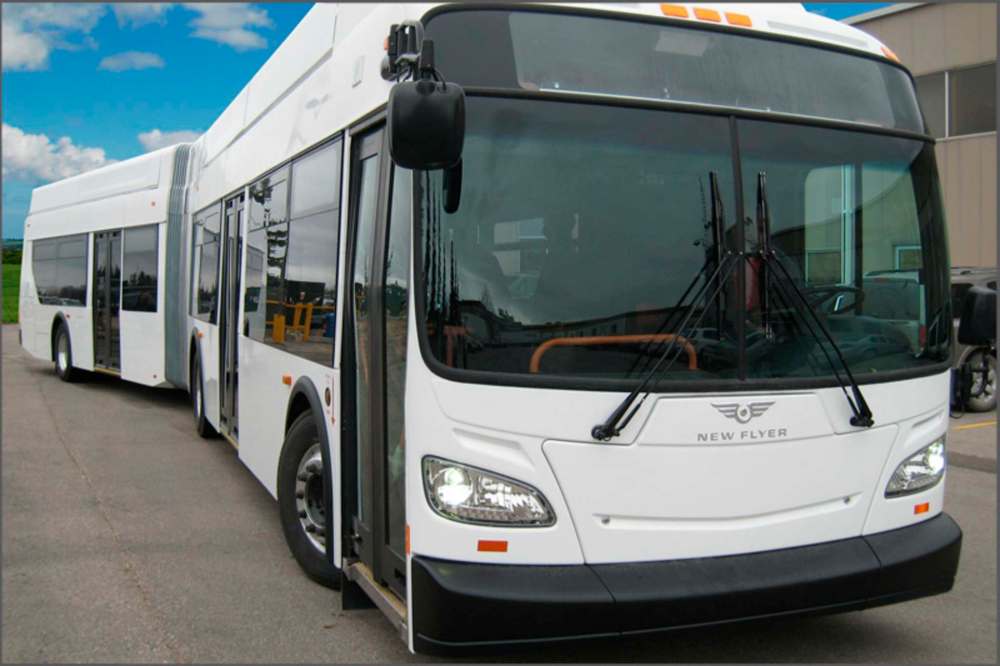
Winnipeg Transit bought 101 New Flyer diesel buses between 2011 and 2013, but most of them were out of service on a daily basis, for up to a week at a time, because of recurring emission control problems. The problem became so acute in early September that Transit didn’t have enough buses on the street to fill its full schedule.
Transit routinely takes buses out of service for regular maintenance but those with the emission issues were inoperable and compounded the fleet shortage.
At the time, transit had a fleet of 595 buses but 109 were out of service — 75 because of emission control problems.
After several weeks of trial and error, engine manufacturer Cummins suggested Transit stop trying to repair the faulty emission control devices and the city instead bought new replacement parts from Cummins at a discount.
The solution worked. Transit resumed its full service schedule in early December and four months later there have not been any unusual maintenance issues.
Wardrop said the troublesome engines are being shipped to Cummins for upgrades and repairs. It’s an expensive process, he said, but added Winnipeg Transit doesn’t have the required number of mechanics or the space to do the repairs itself. Wardrop said he expects similar repair work in the future will be done at a new transit garage facility.
“We’re capable of doing the work internally,” Wardrop said. “The issue is just capacity.”
To be on the safe side, Wardrop said Transit is buying 24 used buses from Calgary’s transit fleet, in the event there is a relapse with the technical solution on the diesel engines.
The 24 Calgary buses will cost Winnipeg Transit a total of $264,000 plus another $90,000 to refurbish them for service, he said, explaining these vehicles will allow Winnipeg Transit to retire some of its older vehicles, which were left in service because of the mechanical problems.

“This is all part of our strategy to help carry us through this period of monitoring of the emission control systems on the late model buses we’ve been struggling with,” Wardrop said.
Cummins has upgraded its diesel engines, he said, adding he’s looking forward to see how they perform when Transit makes additional purchases for 2017.
Wardrop said the size of the bus fleet is now up to 625 buses and will reach 630 to 635 once the Calgary buses are in service.
aldo.santin@freepress.mb.ca