

A good leader knows when to step down

Advertisement
Read this article for free:
or
Already have an account? Log in here »
To continue reading, please subscribe:

Digital Subscription
One year of digital access for only $205*
- Enjoy unlimited reading on winnipegfreepress.com
- Read the E-Edition, our digital replica newspaper
- Access News Break, our award-winning app
- Play interactive puzzles
*First annual payment billed as $205.00 + GST for one year. This annual subscription will automatically renew at $233.00 + GST every 52 weeks (10% off the regular annual price of $259.35). Offer available to new and qualified returning subscribers only. Cancel any time.
To continue reading, please subscribe:
Add Free Press access to your Brandon Sun subscription for only an additional
$1 for the first 4 weeks*
- Enjoy unlimited reading on winnipegfreepress.com
- Read the E-Edition, our digital replica newspaper
- Access News Break, our award-winning app
- Play interactive puzzles
*Your next Brandon Sun subscription payment will increase by $1.00 and you will be charged $17.95 plus GST for four weeks. After four weeks, your payment will increase to $24.95 plus GST every four weeks.
Read unlimited articles for free today:
or
Already have an account? Log in here »
Hey there, time traveller!
This article was published 08/05/2016 (3748 days ago), so information in it may no longer be current.
When is it time to go?
It is the most important decision facing a political leader. It is also by far and away the hardest.
Politicians generally have to work so hard to become leaders that it’s not easy to let go. Some political leaders become addicted to the power and attention. Others are unable to see when it’s time to step down because they are surrounded by sycophants who prevent them from seeing the reality of their situation.
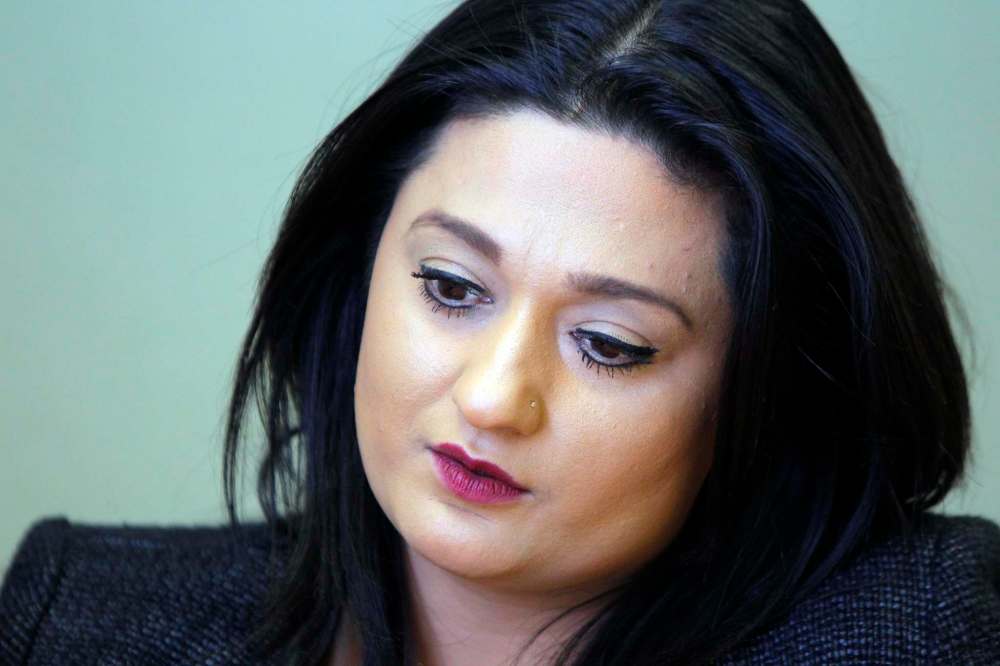
With all that in mind, let it be said that soon-to-be-former Liberal Leader Rana Bokhari will go out having fulfilled this last, great responsibility of political leaders. Over the weekend, Bokhari issued a news release indicating that she would not, as previously suggested, stay on at the helm of her party.
It was not immediately apparent why, after having pledged to stay on and fight, she decided to let go. Party sources said she consulted mainly with friends and family before making the final decision. It likely did not come easily.
The recent provincial election was a bittersweet experience for the rookie leader. Her party doubled its share of the popular vote, and tripled its seat total to three. However, Bokhari was unable to win her own seat, and the conventional wisdom was that her sloppy, uneven performance squandered an opportunity to make much greater gains.
The Liberal campaign never got up to speed. A half-dozen candidates were disqualified for filing improper nomination papers or violating regulations, while another was lost after it was revealed he had a history of domestic abuse. Still, had Bokhari been able to run a relatively smooth campaign, there were clear signs that Manitobans were ready to support her. She was not able to accomplish that.
Bokhari was awkward and jittery as she attempted to negotiate the macro-issues of the campaign. Her pledges and policies were often inexplicable, bordering on hare-brained. The Liberals’ 2016 Liberal election campaign may be best remembered for a pledge to spend $20 million to establish a government-run grocery store downtown, a promise that didn’t make sense politically or economically.
And when the tide of opinion turned against her mid-campaign, she lashed out at the media. Her reaction was clear evidence that, at least to that point, she had not acquired the maturity or resilience to lead.
Immediately following election-night results, Bokhari refused to speak to supporters or reporters. She announced the next day she would stay on as leader, choosing to focus on the gains her party had made instead of the lost opportunities that had been presented.
And then, this past weekend, a moment of clarity. Earlier in the week she had talked publicly about her plan to run in a byelection expected to be held at some point in Saint Boniface, the riding held by former NDP leader Greg Selinger, who has already been replaced on an interim basis by MLA Flor Marcelino. Although Selinger has not provided any clear timetable, it is certainly expected he will resign his seat at some point, creating an opening for Bokhari. Now, that opening, when it does come, will benefit whomever replaces Bokhari.
And therein lies the biggest challenge facing the Liberals: can the party attract several quality candidates to compete for the leadership? The last leadership race, the one that Bokhari won, was a less-than-compelling affair. It generated neither a broad array of quality candidates, or a surge in party membership. There was no convention bounce for Bokhari and the Liberals from that process. For the next leadership race, anything less than a robust contest featuring several viable candidates will only continue the Liberal streak of botching prime opportunities for growth.
The recent election campaign provided evidence that many more Manitobans wanted to vote Liberal than actually cast a vote for Bokhari. Voter turnout stalled, while deliberately spoiled and rejected ballots were at an all-time high. In Fort Rouge, where Bokhari lost, voter turnout actually went down. All of that anecdotal data strongly suggests there were voters that had abandoned the NDP and did not like the idea of electing a Progressive Conservative government, but could not find a viable alternative in the Liberal party.

If the Liberals do find a more compelling, more competent leader out of the next leadership race, there is a very good chance that the Grits could become a factor in deciding the next election. The federal Liberal government remains incredibly popular and should continue to provide a boost to anyone leading a provincial Liberal party. If, and it’s a big if, they can find a real leader.
Should any or all of that promise come to fruition, Bokhari will deserve a lot of the credit. Although it may seem counter-intuitive, making the right decision at the right time to step down is the sign of someone with a good grasp of the obligations of leadership. So many political leaders stay on long after they have stopped being a net benefit to their parties.
Certainly, Manitoba New Democrats might be looking right now at Bokhari’s decision with a mix of envy and respect; their leader, Greg Selinger, could not see that he had become a net liability for his party, notwithstanding the abundant advice he was getting from his elected caucus to step down. His decision to stay on one election too long was one of the main reasons the NDP lost so badly in the last election.
History will show Bokhari failed in the last election. However, her decision to step down now has allowed her to punctuate that performance with an act that, on its own, demonstrates the best qualities of a good leader.
dan.lett@freepress.mb.ca
Dan Lett is a columnist for the Free Press, providing opinion and commentary on politics in Winnipeg and beyond. Born and raised in Toronto, Dan joined the Free Press in 1986. Read more about Dan.
Dan’s columns are built on facts and reactions, but offer his personal views through arguments and analysis. The Free Press’ editing team reviews Dan’s columns before they are posted online or published in print — part of the our tradition, since 1872, of producing reliable independent journalism. Read more about Free Press’s history and mandate, and learn how our newsroom operates.
Our newsroom depends on a growing audience of readers to power our journalism. If you are not a paid reader, please consider becoming a subscriber.
Our newsroom depends on its audience of readers to power our journalism. Thank you for your support.
Dan Lett is a columnist for the Free Press, providing opinion and commentary on politics in Winnipeg and beyond. Born and raised in Toronto, Dan joined the Free Press in 1986. Read more about Dan.
Dan’s columns are built on facts and reactions, but offer his personal views through arguments and analysis. The Free Press’ editing team reviews Dan’s columns before they are posted online or published in print — part of the our tradition, since 1872, of producing reliable independent journalism. Read more about Free Press’s history and mandate, and learn how our newsroom operates.
Our newsroom depends on a growing audience of readers to power our journalism. If you are not a paid reader, please consider becoming a subscriber.
Our newsroom depends on its audience of readers to power our journalism. Thank you for your support.
Related Articles
Rana Bokhari steps down as leader of Liberal Party
Advertisement Advertise With Us
Advertisement Advertise With Us