

Rare orchid’s habitat protected
Advertisement
Read this article for free:
or
Already have an account? Log in here »
To continue reading, please subscribe:
Monthly Digital Subscription
$1 per week for 24 weeks*
- Enjoy unlimited reading on winnipegfreepress.com
- Read the E-Edition, our digital replica newspaper
- Access News Break, our award-winning app
- Play interactive puzzles
*Billed as $4.00 plus GST every four weeks. After 24 weeks, price increases to the regular rate of $19.95 plus GST every four weeks. Offer available to new and qualified returning subscribers only. Cancel any time.
Monthly Digital Subscription
$4.99/week*
- Enjoy unlimited reading on winnipegfreepress.com
- Read the E-Edition, our digital replica newspaper
- Access News Break, our award-winning app
- Play interactive puzzles
*Billed as $19.95 plus GST every four weeks. Cancel any time.
To continue reading, please subscribe:
Add Free Press access to your Brandon Sun subscription for only an additional
$1 for the first 4 weeks*
*Your next subscription payment will increase by $1.00 and you will be charged $16.99 plus GST for four weeks. After four weeks, your payment will increase to $23.99 plus GST every four weeks.
Read unlimited articles for free today:
or
Already have an account? Log in here »
Hey there, time traveller!
This article was published 08/05/2016 (3647 days ago), so information in it may no longer be current.
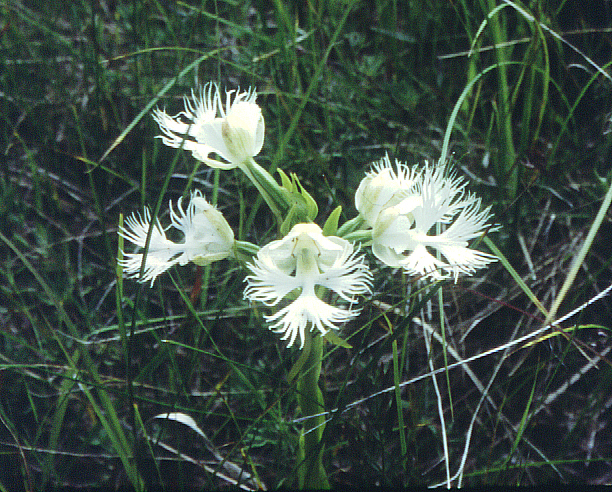
The rare and endangered western prairie fringed orchid, found only in Manitoba, has a secure future now that a conservation group has saved half its habitat here.
“It took almost 30 years to get here and that’s working with local land owners, and that’s including buying land from local folks, and working to manage it, to help conserve biodiversity and endangered species like this,” said Cary Hamel, the conservation science manager in Manitoba with Nature Conservancy Canada.
The Nature Conservancy reported its success with the orchid last week, releasing the news in a statement.
The non-profit organization buys up land and works with landowners across Canada to preserve sensitive ecosystems that are home to rare and endangered plants and animals. It holds some 63,000 acres in Manitoba including 20,000 acres of tall grass prairie.
The same orchid is also found in seven American states in the northern plains, but the Manitoba habitat is the largest anywhere on Earth, representing 25 per cent of the world’s population for this plant species.
“Since that’s the biggest population on the planet, here in Manitoba, that’s pretty huge. It’s pretty big news for nature lovers,” Hamel said.
Fixing a plant’s habitat isn’t as simple as watering flowers, of course.
“We try to keep healthy open prairies and we pay special attention to endangered species like the orchid,” explained Hamel.
Keeping the ecosystem healthy protected the orchid’s only known pollinator, a nocturnal moth called the sphinx moth, and paying attention to the water table also meant Sandhill cranes, drawn to the same wetlands, are also thriving.
“That’s when we started doing the math and realized in the course of 30 years with our partners we’d conserved over 50 per cent (of the orchid’s habitat) in Canada,” Hamel said.
The orchid is showy for a non-tropical plant; its fringed white wings spreading around a central orchid hood in blooms that last two, maybe three, weeks a year. Its scent resembles vanilla.
To view the orchid means making a trip to Stuartburn in southeastern Manitoba to the Nature Conservancy’s Prairie Orchid Trail, the Agassiz Trail or to the Weston Family Tall Grass Prairie Interpretive Centre in this town of about 1,500, just north of the U.S. border.
Experimental wetland restoration has stabilized the orchid in four low-lying areas of Manitoba prairie called swales, each about 10 kilometres long. They stretch across conservancy holdings and private property.

Its most unusual trait is hydrology. This plant will open its blooms and breath under torrential rains, snuggling up to high water tables in shallow wetlands.
“It really is linked to the water table. It doesn’t occur in dry prairie. If it’s too wet it doesn’t occur there either. It’s in glacial till, crushed up rock but it’s calcium rich. Even if you walked around some of these orchid sites after a rain storm, some of these orchids are underwater. You can see the flowers blooming under water. So the sites will flood and then they drain away over the course of the next few days,” Hamel said.
The orchid is listed as endangered in Canada and internationally, underscoring the significance of the success here.
alexandra.paul@freepress.mb.ca