

Protesters urge province to fix so-called worst road in Manitoba
Advertisement
Read this article for free:
or
Already have an account? Log in here »
To continue reading, please subscribe:
Digital Subscription
One year of digital access for only $1.44 a week*
- Enjoy unlimited reading on winnipegfreepress.com
- Read the E-Edition, our digital replica newspaper
- Access News Break, our award-winning app
- Play interactive puzzles
*Billed as $5.77 plus GST every four weeks. After 52 weeks, price increases to the regular rate of $19.95 plus GST every four weeks. Offer available to new and qualified returning subscribers only. Cancel any time.
To continue reading, please subscribe:
Add Free Press access to your Brandon Sun subscription for only an additional
$1 for the first 4 weeks*
- Enjoy unlimited reading on winnipegfreepress.com
- Read the E-Edition, our digital replica newspaper
- Access News Break, our award-winning app
- Play interactive puzzles
*Your next Brandon Sun subscription payment will increase by $1.00 and you will be charged $17.95 plus GST for four weeks. After four weeks, your payment will increase to $24.95 plus GST every four weeks.
Read unlimited articles for free today:
or
Already have an account? Log in here »
Hey there, time traveller!
This article was published 24/05/2016 (3673 days ago), so information in it may no longer be current.
Provincial Road 280 is called the “worst road” in Manitoba, a slurry of mud slicks where drivers regularly get stuck or slid off into the ditch between Thompson and Gillam.
A couple of dozen protesters stood on the steps of the legislature Tuesday to draw public attention to the need for repairs as northern leaders met inside with provincial officials to press for action.
At the same time, frustrated residents of Split Lake mounted a road block Tuesday at the First Nation’s exit to the provincial road to reinforce the safety hazard it poses.
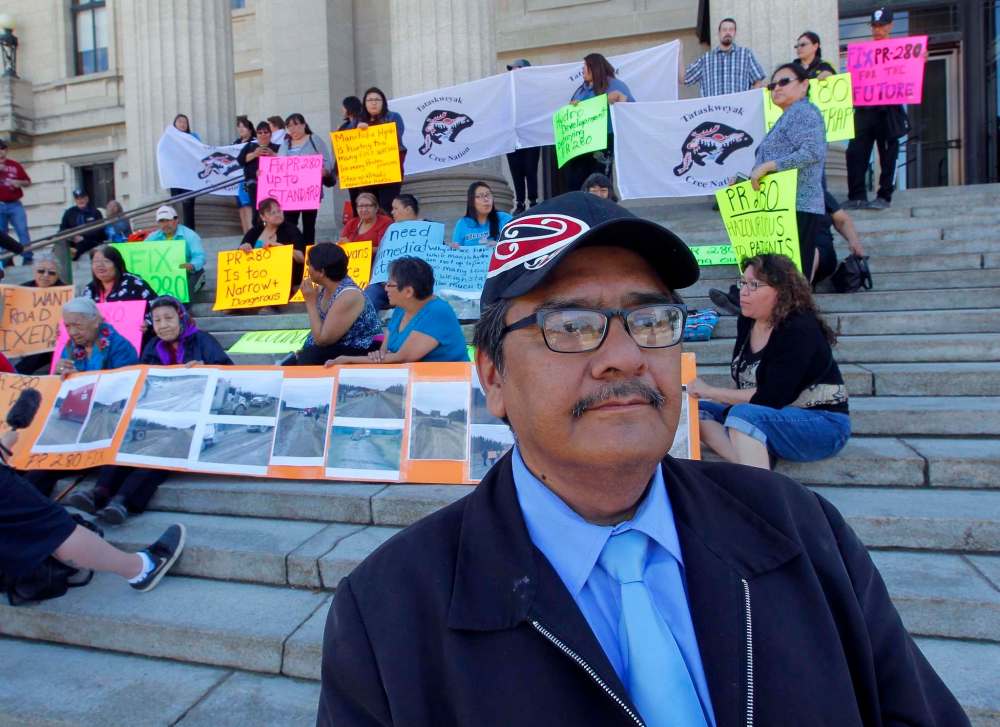
“The purpose of this rally is to bring attention to the horrendous conditions of the road from Thompson to Gilliam,” said Tataskweyak Cree Nation health director Gordon McGillivary outside the legislature.
“In the last four or five years the traffic volume has increased up north with the hauling of heavy machinery, rock trucks, trailers, fuel trucks. This has taken a tremendous toll on the road,” McGillivary said.
“We need to bring our minds together, federal, provincial and Manitoba Hydro officials to look at some kind of solution,” he said.
The previous NDP government rolled out a five-year plan to pave the gravel road a couple of years ago but northerners say it’s been very slow going. About 22 kilometres of the 130-kilometre stretch have been built up with crushed rock so far.
Infrastructure Minister Blaine Pedersen said he understands the concerns raised by protesters, but said a number of factors including the weather have led to delays in the upgrades.
“It takes time to do this, but it is happening. The road just took quite beating this spring, so it got ahead of them,” said Pedersen, citing a nasty spring snowstorm as one of the causes.
“They are working very hard, and realize safety and accessibility is paramount — they are doing the best they can right now to restore the road.”
Pedersen said the Progressive Conservative government is committed to the ongoing improvements. He said tenders were sent out in February, prior to his government taking power.
“There is money on an annual basis, so we will continue to review that every year and work to the best of our abilities to make sure the road is improved,” he said.

Tom Lindsay, the NDP MLA for Flin Flon, pressed the government to speed up repairs during Tuesday’s question period at the legislature.
McGillivary said northern mayors and First Nation leaders were meeting with provincial officials as the protest took place.
Kevin Hart, Manitoba vice chief for the Assembly of First Nations, said Cree elders who use the road every second day to get to Thompson for dialysis treatments report the trip takes four hours and said the conditions often leave them in great physical pain.
One elder suffered a heart attack on the road and died two years ago, Hart said. While it’s impossible to blame the road for the man’s death, it didn’t help, added others at the protest.
–With files from Kristin Annable
History
Updated on Tuesday, May 24, 2016 11:24 PM CDT: Changes headline.