

City finds cash for new police copter camera

Advertisement
Read this article for free:
or
Already have an account? Log in here »
To continue reading, please subscribe:

Digital Subscription
One year of digital access for only $205*
- Enjoy unlimited reading on winnipegfreepress.com
- Read the E-Edition, our digital replica newspaper
- Access News Break, our award-winning app
- Play interactive puzzles
*First annual payment billed as $205.00 + GST for one year. This annual subscription will automatically renew at $233.00 + GST every 52 weeks (10% off the regular annual price of $259.35). Offer available to new and qualified returning subscribers only. Cancel any time.
To continue reading, please subscribe:
Add Free Press access to your Brandon Sun subscription for only an additional
$1 for the first 4 weeks*
- Enjoy unlimited reading on winnipegfreepress.com
- Read the E-Edition, our digital replica newspaper
- Access News Break, our award-winning app
- Play interactive puzzles
*Your next Brandon Sun subscription payment will increase by $1.00 and you will be charged $17.95 plus GST for four weeks. After four weeks, your payment will increase to $24.95 plus GST every four weeks.
Read unlimited articles for free today:
or
Already have an account? Log in here »
Hey there, time traveller!
This article was published 31/08/2016 (3669 days ago), so information in it may no longer be current.
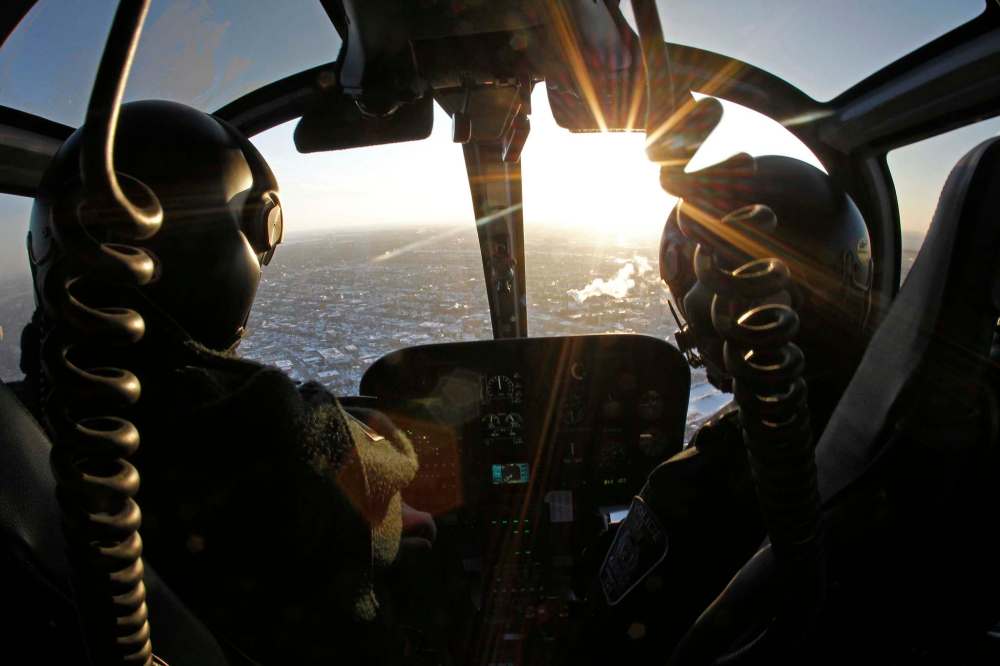
The Winnipeg Police chopper will be back in the air.
The police board Wednesday morning approved a request from the WPS to re-allocate funds from a reserve account to cover the shortfall that had prevented the purchase of a new thermal imaging camera for the helicopter, to replace the original equipment which was no longer functional.
Police board chairman Coun. Scott Gillingham said the board met during a closed-door meeting Wednesday and concluded the purchase of the camera was important.
“The board is supporting the re-allocation request to purchase the new (thermal imaging camera),” Gillingham (St. James) said.
The future of Air1 was put in doubt earlier this year when the former NDP government announced it wanted an independent operational review to ensure taxpayers are getting good value from the airborne unit. The unit was further jeopardized when the camera, originally purchased as used equipment, was deemed non-functional and had to be replaced, which severely restricted the effectiveness of the chopper.
The police didn’t have enough money in its budget to cover a new camera, known as an FLIR, which was estimated to cost $360,000 back in February.
The Selinger government agreed to split the camera purchase with police — $180,000 each — but then the cost of the camera jumped to $560,000 – mostly due to the dollar exchange rate and an increase in the cost of the equipment — leaving police $200,000 short.
The camera is considered an essential component of Air1, which uses technology to track heat signatures of individuals on the ground. Without the thermal imaging camera on board, the effectiveness of the chopper has been severely reduced.
Police said Air1 has remained operational and in the air without the thermal imaging camera but its “operational mission response” has been limited.
The helicopter — an EC120B from Eurocopter Canada — was publicly unveiled in December 2010 and cost the Winnipeg Police Service $3.5 million.
Gillingham said the police board earlier this summer had authorized a re-allocation of $100,000 from a WPS reserve account, with the understanding that the provincial government would provide the remaining $100,000.
However, the new Pallister government said it would only commit to the original agreement for $180,000 – leaving police still $100,000 short.
Gillingham said the board Wednesday morning approved a second re-allocation of $100,000 from a WPS reserve account to ensure a new camera can be purchased.
There had been speculation that the board wouldn’t agree to release the funds until the outcome of the provincial review – which would have effectively grounded the helicopter – but Gillingham said that was incorrect.
“Air1 will continue to operate while the provincial review is ongoing,” Gillingham said, adding the board is eager to learn the outcome of the independent review of the airborne unit.
Gillingham said he was uncertain when the new infrared camera will be purchased and when Air1 will be back in the air.
Gillingham said that if the provincial review concludes the airborne unit should be disbanded, the helicopter – and its new camera – will be sold to another police agency.
Gillingham said the board had concluded the helicopter would be more marketable with a fully-functioning infrared camera in the event the review concludes the unit shouldn’t be continued.
Justice Minister Heather Stefanson said Wednesday afternoon that the province remains supportive of Air1, but escalating costs were “a red flag” for the Pallister government.
The entire helicopter operation is part of the Tories’ value-for-money audit, she said in an interview.
“I’m concerned about the escalating costs — it was a bit of a red flag for us,” she said.
Stefanson said she is not pre-judging the outcome of that review.
“We’re still finalizing the details,” the minister said, but she expects the audit will examine why costs are increasing, whether a new helicopter might be the answer, or whether the Winnipeg Police Service should continue operating a helicopter.
The province said it’s spent $7.9 million in total to date to cover the unit’s annual operating costs.
Maintaining Air1 is the city’s responsibility, while “operating costs have been covered by us to date,” Stefanson said.
Since the airborne unit was approved, the city covered all capital costs, including its purchase, while the province covered the annual operating costs. The Selinger government agreed to amend the agreement for the purchase of a new thermal imaging camera but only on a one-time basis, with the $180,000 funds drawn from seizures of proceeds of crime.

Stefanson said operating costs have increased 50 per cent since Air1 became operative, while time in the air is declining. The operating time will be part of the review.
The Conservatives’ first budget carried out the former NDP government’s commitment to paying $180,000 as the provincial share of a new radar system, but was unwilling to go higher when costs rose, Stefanson said.
aldo.santin@freepress.mb.ca
nick.martin@freepress.mb.ca
Nick Martin
Former Free Press reporter Nick Martin, who wrote the monthly suspense column in the books section and was prolific in his standalone reviews of mystery/thriller novels, died Oct. 15 at age 77 while on holiday in Edinburgh, Scotland.
Our newsroom depends on a growing audience of readers to power our journalism. If you are not a paid reader, please consider becoming a subscriber.
Our newsroom depends on its audience of readers to power our journalism. Thank you for your support.
Air1 By The Numbers
$3.5 million — purchased by Winnipeg Police in 2010
Operating Costs Covered By Provincial Government — $7.9 million
$389,263.99 — Start-up expenses prior to December 31, 2010
2011 – $1,196,693.90
2012 – $1,327,590.00
2013 – $1,518,211.97
2014 – $1,752,514.89
2015 – $1,804,522.84
$7,988,797.59 — Total Provincial Contribution, including unit salaries
Nick Martin
Former Free Press reporter Nick Martin, who wrote the monthly suspense column in the books section and was prolific in his standalone reviews of mystery/thriller novels, died Oct. 15 at age 77 while on holiday in Edinburgh, Scotland.
Our newsroom depends on a growing audience of readers to power our journalism. If you are not a paid reader, please consider becoming a subscriber.
Our newsroom depends on its audience of readers to power our journalism. Thank you for your support.

Advertisement Advertise With Us
Advertisement Advertise With Us