City has no authority to impose growth fees, consultant says
Advertisement
Read this article for free:
or
Already have an account? Log in here »
To continue reading, please subscribe:
Digital Subscription
One year of digital access for only $1.44 a week*
- Enjoy unlimited reading on winnipegfreepress.com
- Read the E-Edition, our digital replica newspaper
- Access News Break, our award-winning app
- Play interactive puzzles
*Billed as $5.77 plus GST every four weeks. After 52 weeks, price increases to the regular rate of $19.95 plus GST every four weeks. Offer available to new and qualified returning subscribers only. Cancel any time.
To continue reading, please subscribe:
Add Free Press access to your Brandon Sun subscription for only an additional
$1 for the first 4 weeks*
- Enjoy unlimited reading on winnipegfreepress.com
- Read the E-Edition, our digital replica newspaper
- Access News Break, our award-winning app
- Play interactive puzzles
*Your next Brandon Sun subscription payment will increase by $1.00 and you will be charged $17.95 plus GST for four weeks. After four weeks, your payment will increase to $24.95 plus GST every four weeks.
Read unlimited articles for free today:
or
Already have an account? Log in here »
Hey there, time traveller!
This article was published 31/08/2016 (3702 days ago), so information in it may no longer be current.
Brian Bowman has unleashed a storm within the city’s development community over the potential for new hefty fees on residential and non-residential projects but it might have all been for nothing.
The consultant hired by the city hall to conduct the growth study and determine costs to city services as a result of new development had already concluded Winnipeg doesn’t have the authority to impose new fees on development.
Hemson Consulting had been hired in 2015 to do a similar growth study for the City of Saskatoon. Hemson’s Saskatoon study stated that the City of Winnipeg Charter doesn’t give the city authority to impose new fees – contradicting Bowman’s repeated assertions that city hall does have that power.
“Winnipeg is bound by the Winnipeg Charter, which restricts development fees only to the immediate infrastructure – roads, sewers, sidewalks, drainage, intersection improvements – directly connected to a new development,” the 2015 study states.
The Saskatoon findings contradict the repeated claims by Bowman that city hall does have the authority to impose new fees.
Hemson’s Winnipeg study is due at city hall today. Councillors are getting a closed-door briefing Thursday morning and it’s expected to propose hefty new fees for residential and non-residential development.
Bowman first went public with his claim that the city needs new development fees in his State of the City address to the Winnipeg Chamber of Commerce in February. Bowman said the existing fees only cover the provision of services for that specific development but new growth puts pressure on existing infrastructure – transit, roads, sewers, water, recreation, leisure, police and fire – that are unfairly being covered by property taxes. Bowman wants a fee to cover what he said is the cost of growth.
City hall raised the same issue three years ago under former mayor Sam Katz but civic officials then admitted city hall didn’t have the authority to impose new fees and needed changes to legislation, which the then-Selinger government refused to consider.
Bowman has repeatedly maintained that the type of charge he’s proposing to impose on development is different than what Katz had proposed three years ago, but a comparison of the claims then and now found Bowman’s reasoning exactly the same as what was put forward under the Katz administration in the fall of 2013.
Bowman has never offered an explanation as to why city hall believes it now has the power to impose new development fees. When asked again this week, Bowman said the administration will provide a report to council after the Hemson study is released.
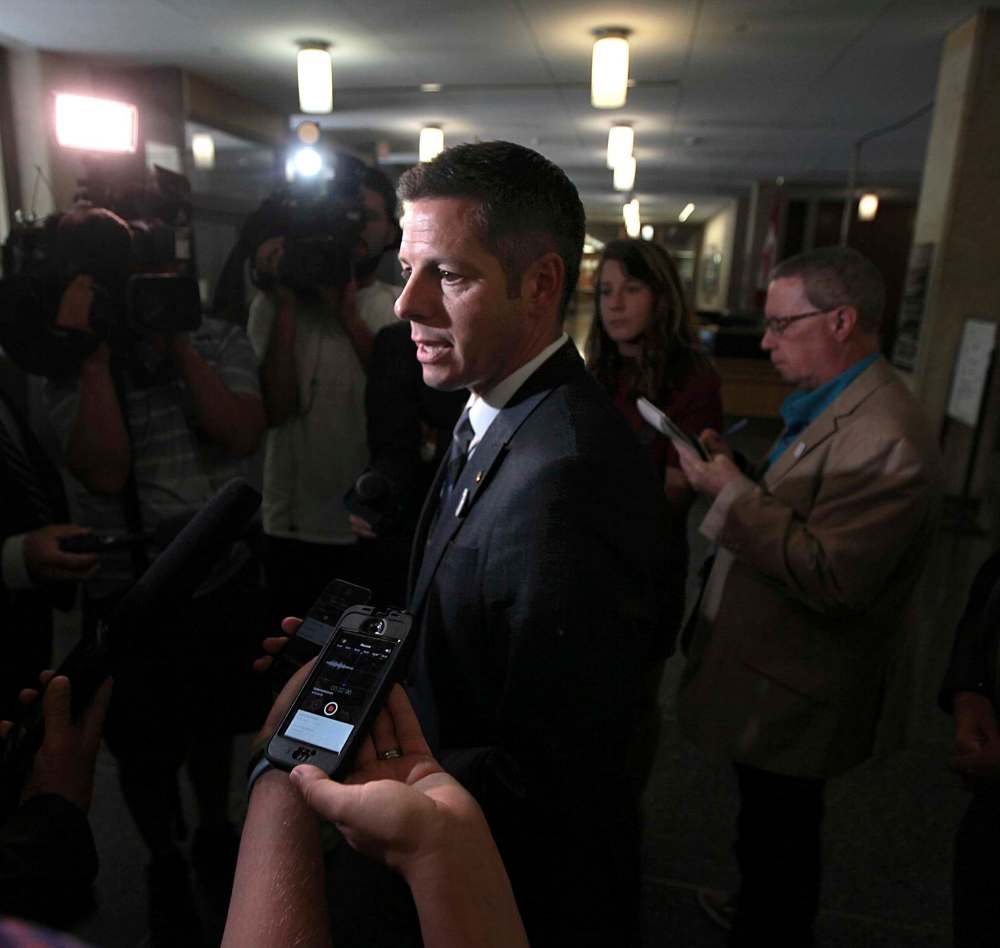
“If we choose to proceed, we’d work within the authority council has right now,” Bowman told reporters Tuesday. “Ultimately, we’ll be looking to the administration to provide clarity on how that would occur but I believe we have the authority to proceed but we need to have that report from the administration.”
“We will be asking the public service to provide that clarity on how we can proceed and what options are available to us under our current regime.”
The civic administration will be in tough to explain how its understanding of the legislation has changed in three years. Mike Moore, president of the Manitoba Home Builders Association, said he’s familiar with the Saskatoon study and is eager to hear Winnipeg’s revised position on the issue.
Moore has hinted the development community will take legal action against city hall if they impose new fees and any court battle may rest on the administration’s revised position.

“When the mayor receives from his administration with the proof of authority (to impose new fees), we’d like to see that,” Moore said, adding the provincial government also does not believe city hall has the ability to impose new fees.
The bad news for the local development industry is that Hemson’s Saskatoon study found new development does exact a price on existing city services and that Winnipeg, among most major Canadian cities, recovers the least amount from developers to pay for the impact to civic services from the new growth – because it doesn’t have the authority to recover those costs.
Moore said once city hall admits it doesn’t have the authority to unilaterally impose new fees, city officials should re-start discussions with local developers to reach a consensus on any new charges the city wants to impose, as has been done in other municipalities.
aldo.santin@freepress.mb.ca