

People can learn from ‘offensive’ books
Advertisement
Read this article for free:
or
Already have an account? Log in here »
To continue reading, please subscribe:
Monthly Digital Subscription
$1 per week for 24 weeks*
- Enjoy unlimited reading on winnipegfreepress.com
- Read the E-Edition, our digital replica newspaper
- Access News Break, our award-winning app
- Play interactive puzzles
*Billed as $4.00 plus GST every four weeks. After 24 weeks, price increases to the regular rate of $19.95 plus GST every four weeks. Offer available to new and qualified returning subscribers only. Cancel any time.
Monthly Digital Subscription
$4.99/week*
- Enjoy unlimited reading on winnipegfreepress.com
- Read the E-Edition, our digital replica newspaper
- Access News Break, our award-winning app
- Play interactive puzzles
*Billed as $19.95 plus GST every four weeks. Cancel any time.
To continue reading, please subscribe:
Add Free Press access to your Brandon Sun subscription for only an additional
$1 for the first 4 weeks*
- Enjoy unlimited reading on winnipegfreepress.com
- Read the E-Edition, our digital replica newspaper
- Access News Break, our award-winning app
- Play interactive puzzles
*Your next Brandon Sun subscription payment will increase by $1.00 and you will be charged $17.95 plus GST for four weeks. After four weeks, your payment will increase to $24.95 plus GST every four weeks.
Read unlimited articles for free today:
or
Already have an account? Log in here »
Hey there, time traveller!
This article was published 06/10/2016 (3501 days ago), so information in it may no longer be current.
Language changes. The Canadian Press stylebook, the ultimate manual for any copy editor plying their trade in a newsroom, has had many different iterations outlining stylistic changes. It advises against using the term Mrs. as an automatic honorific when writing about a woman. It admonishes reporters to be sensitive when talking about disability suggesting it only be mentioned when it’s integral to the story. As for questions of race, well, the policy is quite clear. Race should not be pointed out unless it’s required for context — for example, a victim of hate mail can be identified as an Arab.
Going over the different editions of the stylebook provides an interesting overview of the history of language and its evolution.
In 2011, there was great debate when Mark Twain’s The Adventures of Tom Sawyer and Huckleberry Finn was amended, replacing racial epithets with the words “slave” and “Indian.” The changes were made because American schools were reluctant to keep the classic on school curriculums because of the offensive wording. However, the book dealt with the disgraceful treatment of black people in the south and is seen as an important work. It was published in 1876.
Tintin’s adventures, whether they be in the Congo or elsewhere, have also been considered racist, with stereotypical portrayals of Jews, Soviets and Africans. The more problematic books were written in the 1930s and ’40s. There have been attempts to have some of them moved from the children’s sections of book stores to the adult sections. There were also discussions about shrink-wrapping them with warning labels.
Obviously, such books would not likely be published now, because the terms used are unacceptable in our society.
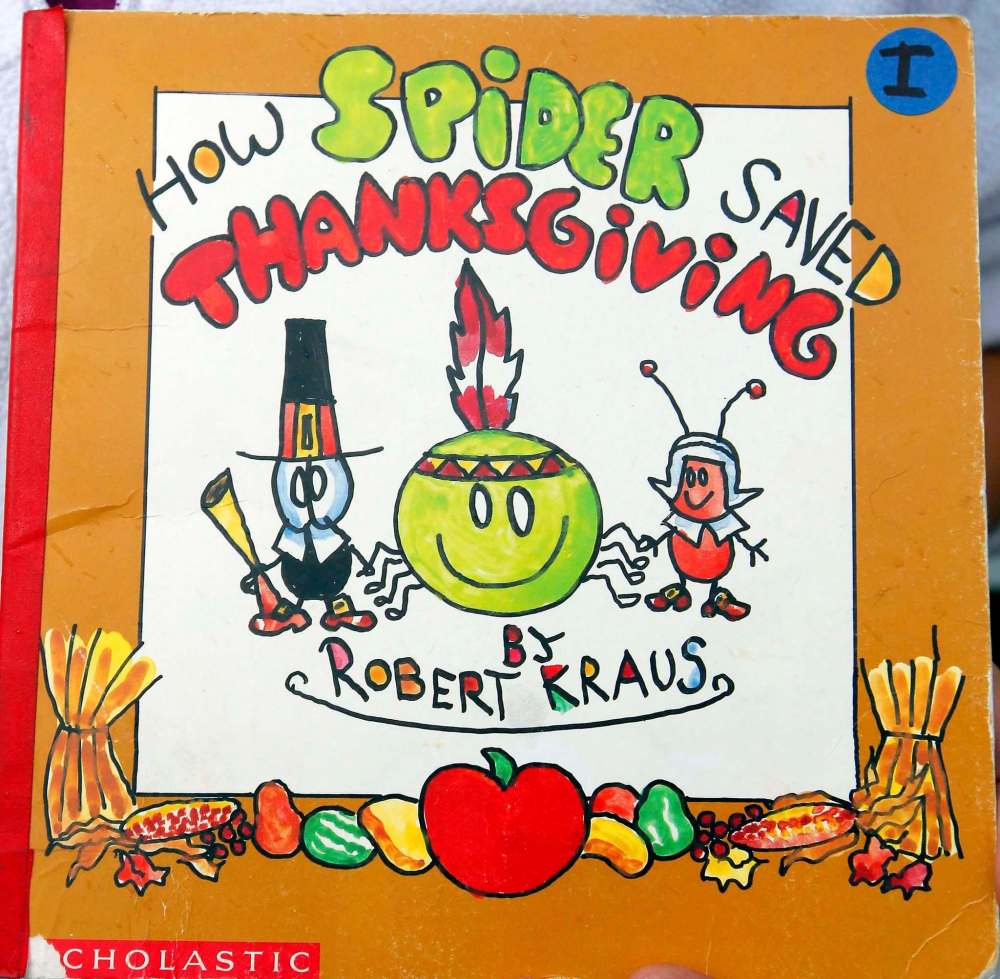
Most recently, a small book titled How Spider Saved Thanksgiving is on the radar for those easily offended. Published in 1991 by American writer Robert Krause, the book focuses on the first Thanksgiving with the meeting between the pilgrims and Indians. Winnipeg mother Cara McDougall was upset when her son — who is in Grade 2 — came home with the book. Ms. McDougall said the use of the word Indian amounted to “name-calling.”
Except Indian is actually not name-calling. It may indeed be antiquated, but it still has legal implications in this country. There are still “status Indians.” In 2011, there was still a department of Indian Affairs and Northern Development. In the United States and Canada, the word Indian is acceptable.
There’s more to it than that, however. Ms. McDougall says that she was one of the parents put in charge of culling her son’s school library of books that were inappropriate. “I got rid of ones that are religious and stuff like this,” she said in reference to the spider book. Well, apparently not well; she couldn’t explain how this one stayed on the shelf.

But more to the point, who gets to say what is considered inappropriate? A parent, a teacher or a student?
We can’t pretend that in the past we didn’t use words that are racist or stereotypical and we shouldn’t try to ban the books that used them. Instead, they should be used to teach moments about our history and why words matter.
Related Articles
School yanks book over outdated term
Advertisement Advertise With Us
Advertisement Advertise With Us