

Make food banks obsolete
Advertisement
Read this article for free:
or
Already have an account? Log in here »
To continue reading, please subscribe:

Digital Subscription
One year of digital access for only $205*
- Enjoy unlimited reading on winnipegfreepress.com
- Read the E-Edition, our digital replica newspaper
- Access News Break, our award-winning app
- Play interactive puzzles
*First annual payment billed as $205.00 + GST for one year. This annual subscription will automatically renew at $233.00 + GST every 52 weeks (10% off the regular annual price of $259.35). Offer available to new and qualified returning subscribers only. Cancel any time.
To continue reading, please subscribe:
Add Free Press access to your Brandon Sun subscription for only an additional
$1 for the first 4 weeks*
- Enjoy unlimited reading on winnipegfreepress.com
- Read the E-Edition, our digital replica newspaper
- Access News Break, our award-winning app
- Play interactive puzzles
*Your next Brandon Sun subscription payment will increase by $1.00 and you will be charged $17.95 plus GST for four weeks. After four weeks, your payment will increase to $24.95 plus GST every four weeks.
Read unlimited articles for free today:
or
Already have an account? Log in here »
Hey there, time traveller!
This article was published 16/11/2016 (3548 days ago), so information in it may no longer be current.
One of the priorities in Winnipeg next year should be to put David Northcott out of work. The amiable executive director of Winnipeg Harvest has been the face of this city’s food bank for more than three decades, in what at the time was viewed as a temporary solution to policy shifts at both the federal and provincial levels. Unfortunately, his work is not over and won’t be anytime soon. A new report suggests the use of food banks in this province, while down slightly from last year, is still the second highest in the country.
Food banks were supposed to be a quick fix. The first food bank opened in 1981 in Edmonton, at that time dealing with high unemployment rates as a result of a bust in an oil and gas reliant economy.
Now, in 2016 reliance on food banks in that province has grown 17 per cent, partially because of the slow down in the oilfield and partially due to the devastating forest fire in Fort McMurray that led to the evacuation of 90,000 people. In Manitoba, food bank usage is down slightly from last year, but there’s been a steady upwards creep of reliance on food banks in the past eight years. Close to five per cent of the province’s population is using the service as a way of making ends meet.
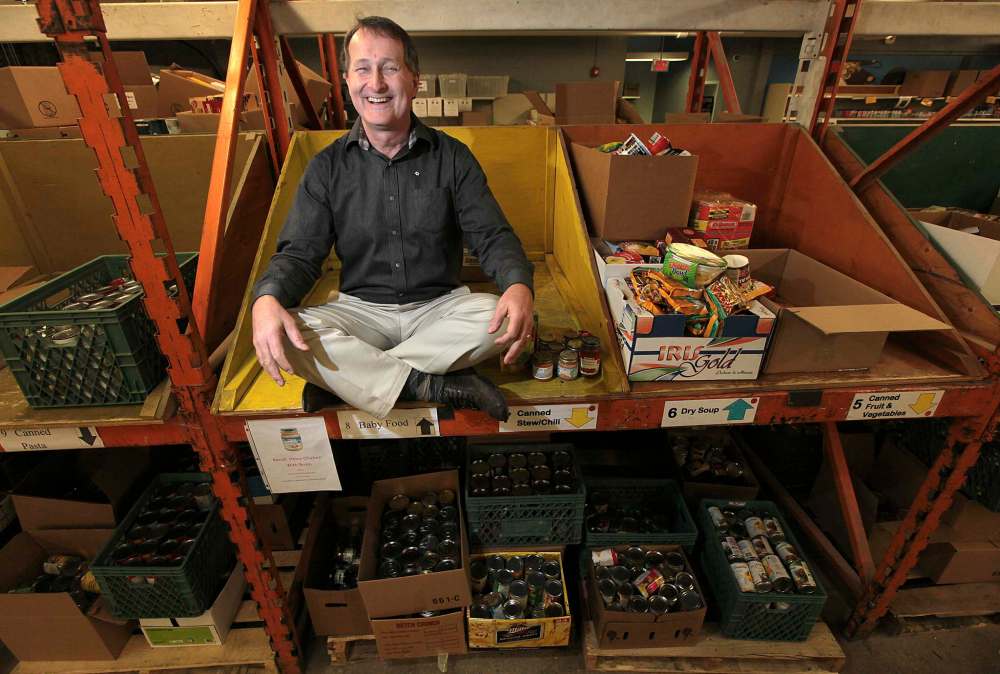
The problem is food banks are reactionary. They address a symptom without taking care of the disease. In doing so, they allow the state to ignore the growing problem of food insecurity and create an illusion of action. They are now the second tier of social assistance in most provinces. In other words, welfare is no longer expected to be enough. Food banks fill a gap the state used to address.
In the statistical snapshot of food bank usage released Tuesday by Food Banks Canada, the bulk of the users are reliant on social assistance or disability income support — close to 60 per cent.
However, perhaps more frightening is the statistic 2.3 per cent of users are post-secondary students. Almost 15 per cent are working. Close to 10 per cent are relying on a pension.

Food Banks Canada calls on Jean-Yves Duclos, the Minister of Social Development, to present a national poverty reduction strategy by next year. Manitoba passed its own poverty strategy act in 2011 and in 2013, Brian Pallister, then the opposition leader, supported the request by Make Poverty History Manitoba to raise the rental portion of welfare rates to 75 per cent of median market rent.
The NDP implemented that in its 2015 budget and Mr. Pallister kept it in the 2016 budget, along with the commitment to a cost-of-living increase in July. A positive first step for those having to make the terrible decision of paying rent or putting food on the table.
As any activist and politician knows, reducing poverty requires more than the band-aid response of a food bank.
There is a moral responsibility to put folks like David Northcott out of work. Unfortunately, he’s likely to have employment for many years to come.
Related Articles
Manitoba food bank usage 'distressing'
Advertisement Advertise With Us
Advertisement Advertise With Us
History
Updated on Thursday, November 17, 2016 11:13 AM CST: Corrects name of minister.