

Lightning-fast Winnipeg-created web tool takes aim at child porn

Advertisement
Read this article for free:
or
Already have an account? Log in here »
To continue reading, please subscribe:
Monthly Digital Subscription
$1 per week for 24 weeks*
- Enjoy unlimited reading on winnipegfreepress.com
- Read the E-Edition, our digital replica newspaper
- Access News Break, our award-winning app
- Play interactive puzzles
*Billed as $4.00 plus GST every four weeks. After 24 weeks, price increases to the regular rate of $19.95 plus GST every four weeks. Offer available to new and qualified returning subscribers only. Cancel any time.
Monthly Digital Subscription
$4.99/week*
- Enjoy unlimited reading on winnipegfreepress.com
- Read the E-Edition, our digital replica newspaper
- Access News Break, our award-winning app
- Play interactive puzzles
*Billed as $19.95 plus GST every four weeks. Cancel any time.
To continue reading, please subscribe:
Add Free Press access to your Brandon Sun subscription for only an additional
$1 for the first 4 weeks*
*Your next subscription payment will increase by $1.00 and you will be charged $16.99 plus GST for four weeks. After four weeks, your payment will increase to $23.99 plus GST every four weeks.
Read unlimited articles for free today:
or
Already have an account? Log in here »
Hey there, time traveller!
This article was published 17/01/2017 (3364 days ago), so information in it may no longer be current.
A revolutionary new tool, developed in Winnipeg, is now being deployed in the battle against child pornography.
On Tuesday, the Canadian Centre for Child Protection unveiled Project Arachnid, a web crawler specifically designed to detect images of child sexual abuse — and help victims by pushing Internet providers to remove those images.
The program, which is believed to be the first of its kind, was designed in-house at the non-profit’s Winnipeg office.
Here’s how it works. Project Arachnid scans roughly 150 web pages per second, searching for digital “fingerprints” of identified child pornography supplied by Interpol and the RCMP, as well as other child protection non-profits.
When images are detected, a team of analysts at the CCCP reviews them — to reduce the rate of false positives — and confirms the content. The centre then sends take-down notices to the sites’ Internet providers.
The scope of the crimes is staggering. In its first six weeks, Project Arachnid has identified more than 5.1 million web pages containing images of child sexual abuse, including 40,973 unique images involving a total 1,141 victims.
Some of those images are more widely distributed than others. So far, images from a series involving a child known as “victim one” have cropped up approximately 148,000 times. That is the highest figure of any individual victim.
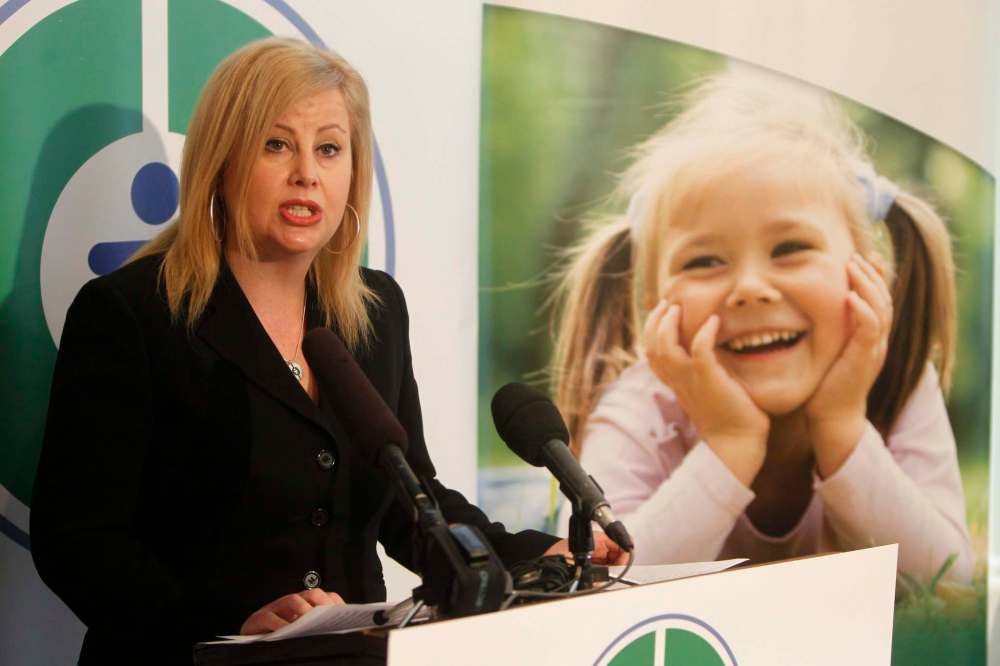
“There’s always a sobering reality check, when you start to see these numbers,” CCCP executive director Lianna McDonald said at a news conference Tuesday.
Administrators say there is even more potential in Project Arachnid. Currently, the webcrawler is running on the centre’s servers; although it upgraded processing power to host the project, there is still room to expand.

Right now, Project Arachnid identifies new web pages to scan quicker than it can scan them. So by Tuesday morning, more than 242 million pages had been scanned — but there over 767 million in the queue, and growing.

Increasing the processing power would help Project Arachnid catch up on the backlog. The CCCP is also considering adding more human analysts to confirm results, and follow up on efforts to stop the images from circulating.
“How we have been responding to this problem is not sufficient, and we all need to do everything we can,” McDonald said. “Is this the silver bullet to the problem of child-abuse material on the Internet? Absolutely not. Are we doing something about it? Yes.”
melissa.martin@freepress.mb.ca
Melissa Martin
Reporter-at-large
Melissa Martin reports and opines for the Winnipeg Free Press.
Every piece of reporting Melissa produces is reviewed by an editing team before it is posted online or published in print — part of the Free Press‘s tradition, since 1872, of producing reliable independent journalism. Read more about Free Press’s history and mandate, and learn how our newsroom operates.
Our newsroom depends on a growing audience of readers to power our journalism. If you are not a paid reader, please consider becoming a subscriber.
Our newsroom depends on its audience of readers to power our journalism. Thank you for your support.
Melissa Martin
Reporter-at-large
Melissa Martin reports and opines for the Winnipeg Free Press.
Every piece of reporting Melissa produces is reviewed by an editing team before it is posted online or published in print — part of the Free Press‘s tradition, since 1872, of producing reliable independent journalism. Read more about Free Press’s history and mandate, and learn how our newsroom operates.
Our newsroom depends on a growing audience of readers to power our journalism. If you are not a paid reader, please consider becoming a subscriber.
Our newsroom depends on its audience of readers to power our journalism. Thank you for your support.
Advertisement Advertise With Us
Advertisement Advertise With Us
History
Updated on Tuesday, January 17, 2017 2:34 PM CST: Adds photo
Updated on Tuesday, January 17, 2017 4:52 PM CST: Adds photo of Lianna McDonald