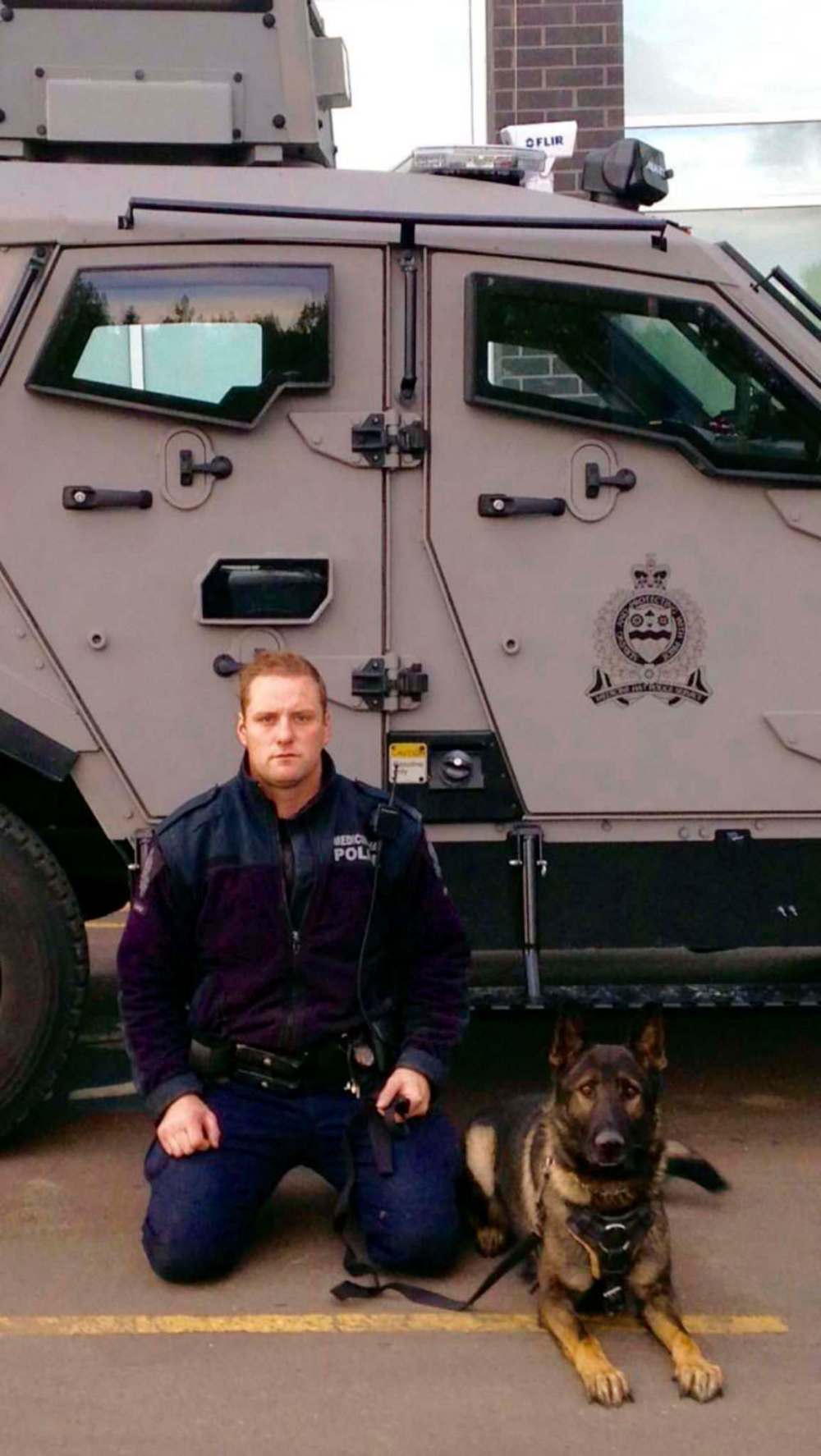
Official goes all-in pursuing his NHL dream
Former WHLer quits law-enforcement career to patrol ice with world's best players
Advertisement
Read this article for free:
or
Already have an account? Log in here »
To continue reading, please subscribe:

Digital Subscription
One year of digital access for only $205*
- Enjoy unlimited reading on winnipegfreepress.com
- Read the E-Edition, our digital replica newspaper
- Access News Break, our award-winning app
- Play interactive puzzles
*First annual payment billed as $205.00 + GST for one year. This annual subscription will automatically renew at $233.00 + GST every 52 weeks (10% off the regular annual price of $259.35). Offer available to new and qualified returning subscribers only. Cancel any time.
To continue reading, please subscribe:
Add Free Press access to your Brandon Sun subscription for only an additional
$1 for the first 4 weeks*
- Enjoy unlimited reading on winnipegfreepress.com
- Read the E-Edition, our digital replica newspaper
- Access News Break, our award-winning app
- Play interactive puzzles
*Your next Brandon Sun subscription payment will increase by $1.00 and you will be charged $17.95 plus GST for four weeks. After four weeks, your payment will increase to $24.95 plus GST every four weeks.
Read unlimited articles for free today:
or
Already have an account? Log in here »
Hey there, time traveller!
This article was published 29/03/2017 (3405 days ago), so information in it may no longer be current.
Chris Schlenker’s welcome to the big time was a bolt of lightning — totally unexpected.
Following the play up ice during a Nov. 18 game at the Barclays Center in Brooklyn, N.Y., the 32-year-old first-year NHL referee from Medicine Hat, Alta., suddenly felt himself swept off his feet before coming down hard and painfully on his back.
What he didn’t know was the NHL’s biggest star and captain of the Pittsburgh Penguins had roared past, too closely in fact, and one of his skates took Schlenker’s feet out from under him.
“I got slew-footed by Sidney Crosby — accidentally,” says Schlenker. “I popped back up. My partners were looking at me to see if I was OK. I got quickly back in the play like nothing happened. I got up, didn’t know who it was or what even happened. I didn’t see him coming. The next whistle, the guys came to check on me, I said, ‘Let’s keep going, I’m fine.’
“The next TV timeout, Sid comes across the ice and says, ‘Sorry about the slew-foot.’ I said, ‘No problem.’ He said, ‘I didn’t mean to do it.’ I said, ‘I know you didn’t.’”
Maintaining your cool is important in the officiating business and Schlenker, one of the rising stars on the NHL scene, is very good at it.
“Just keep on keeping on,” says Schlenker. “The biggest thing in officiating is try not to draw attention to yourself. You get right back up, it was no big deal.”
Schlenker is one of a handful of officials hired by the NHL in the off-season as contract employees, getting duty in the AHL and NHL while performing what is essentially an apprenticeship. The top performers eventually get promoted to the NHL on a full-time basis, and that’s the dream Schlenker is chasing.
His entry into the world of officiating came innocently enough. After four seasons playing in the WHL with the Regina Pats and Prince Albert Raiders from 2001-05, he had a brief and unsatisfying stint in a German pro league.
Convinced a pro career wasn’t happening, he played senior hockey for five years and did some moonlighting, getting casual work as a linesmen in the Medicine Hat area before WHL officiating supervisor Kevin Muench spotted him and suggested a bolder career initiative.
Schlenker, by then a full-time officer in the Medicine Hat Police Service’s canine unit, liked the idea and decided to pursue officiating as a sideline while also continuing his career in law enforcement.
Within three years, Schlenker had advanced from minor hockey and junior A work to refereeing full time in the WHL, and he had been invited to the NHL officials combine in Buffalo, N.Y., where the league begins the process of grooming former players and turning them into officiating prospects for the pro level. The atmosphere, says Schlenker, was intense and rewarding.
By last season, Schlenker was considered the WHL’s top official and was staffing the league final and Memorial Cup tournament with 60 regular-season AHL games thrown in. All told, he had 115 more games on his resumé and got the recognition he wanted while continuing his police work, trading shifts at work to keep his hockey dream alive.
“I kinda put all my chips on the table,” says Schlenker. “I took all my 2015 holidays before Christmas, all my 2016 holidays after Christmas in hopes that I’d be lucky enough to be hired by the NHL. It ended up working out that way.”
On Aug. 15, Schlenker retired from his policing job to begin the 2016-17 season completely devoted to a career as an official. He has been hired for 80 games split between the AHL and NHL.
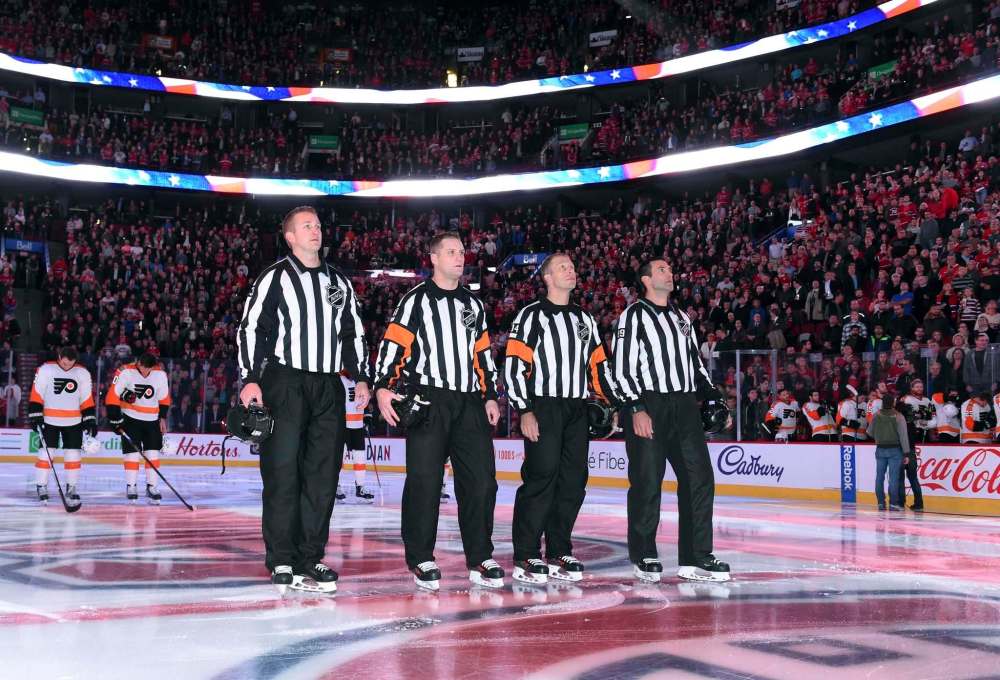
His NHL debut, coming Oct. 24 at the Bell Centre in Montreal with the Canadiens hosting the Philadelphia Flyers, was a night to remember.
“A great experience, start to finish. It seemed surreal,” says Schlenker. “The funny thing about it, it ends up just being another hockey game at the end of the year. There’s emotion. There’s good and bad… It was a great atmosphere. You had world-class players out there, yeah, it was a great night.”
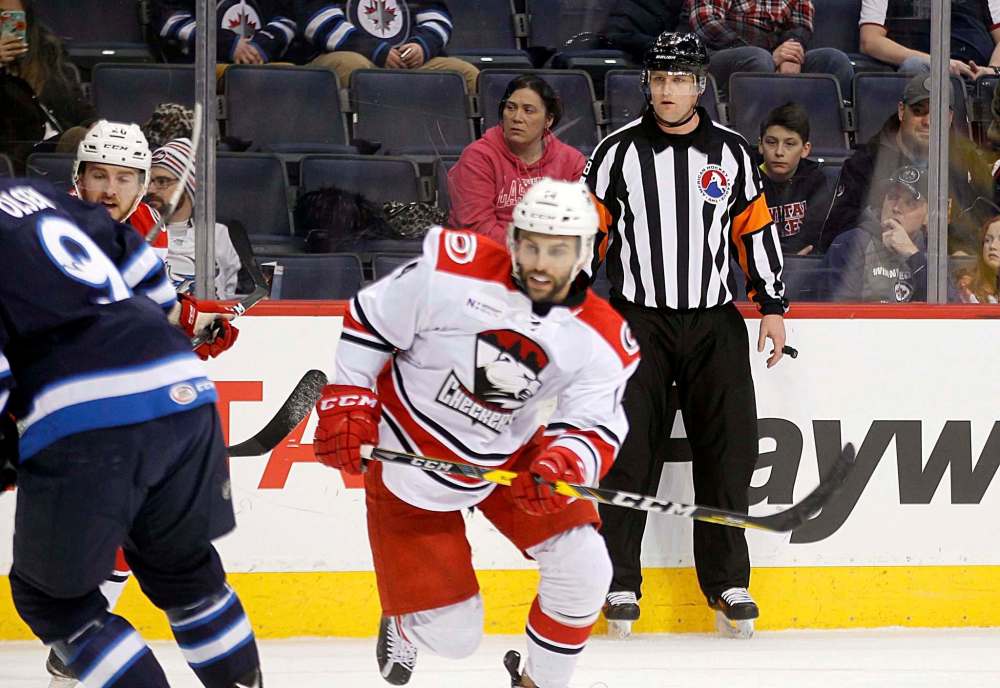
Make no mistake, however, life on the road isn’t glamourous. The travel can be a grind and time away from his family isn’t easy. Schlenker and his wife Brittany are parents to three active boys, ages 10, nine and five.
“No, she didn’t (sign up for this) but she’s been supportive that way,” says Schlenker. “Even with the shift work at the police service, I’ve never been a 9 to 5 guy Monday to Friday… There’s been missed birthdays, missed Christmases, that sort of stuff. So the transition wasn’t that bad. Nothing was busier than last year, where I was working basically the same type of schedule but going home to work shift work (at the police service).”
We make it work. This will be the first year that all of this pays off in the sense of having the summer off, which is one of the perks of being an NHL official.”
During a recent stretch earlier this month, Schlenker refereed two AHL games in Toronto on a Saturday and Sunday, flew home late Sunday and took two of his sons to hockey and baseball practices before flying to Winnipeg for AHL games on Thursday and Friday. With a travel day in between, Schlenker was assigned to a Detroit Red Wings-New York Rangers game two days after that.
Later in March, he had a four-games-in-six-days-stretch where he made stops in Hershey, Pa., Bridgeport, Conn., Wilkes-Barre, Pa., and Albany, N.Y.
“I think the best way to put it, for me, is you can play rec hockey five days a week and it’s hockey but it’s not the hockey that you’re used to,” he says. “Now I skate with the best players in the world.”
Schlenker says NHL players can be an understanding bunch, even when calls are missed or go against them. Outrage is usually temporary.
“We’re all human, no different than a player missing a pass or a breakout,” says Schlenker. “The biggest thing is just to be honest with them… You’re not meaning to miss anything but often the players will come, depending on how they ask, and say, ‘Did you see a high stick or did you see a slash? I’ll say, ‘My mistake, I was looking in a different direction,’ and they’ll say, ‘Hey no problem.’”
Officials have had to make peace with the possibility of a call being overturned by a video challenge.
“It’s reality of the game, reality of technology. If we’re talking about the offsides, I think from what I read in the media, nobody’s faulting the officials,” says Schlenker. “It’s a quarter inch off the ice with a skate blade in real time with world-class players. I don’t know anyone in the world who’s going to see absolutely everything… At the end of the day, you’re trying to get the call right and that’s the easiest way to accept it. Even with the goalie interference, sometimes what you saw isn’t what happened.”
mike.sawatzky@freepress.mb.ca
Twitter: @sawa14