

Cannabis activist accused of importing fentanyl

Advertisement
Read this article for free:
or
Already have an account? Log in here »
To continue reading, please subscribe:

Digital Subscription
One year of digital access for only $205*
- Enjoy unlimited reading on winnipegfreepress.com
- Read the E-Edition, our digital replica newspaper
- Access News Break, our award-winning app
- Play interactive puzzles
*First annual payment billed as $205.00 + GST for one year. This annual subscription will automatically renew at $233.00 + GST every 52 weeks (10% off the regular annual price of $259.35). Offer available to new and qualified returning subscribers only. Cancel any time.
To continue reading, please subscribe:
Add Free Press access to your Brandon Sun subscription for only an additional
$1 for the first 4 weeks*
- Enjoy unlimited reading on winnipegfreepress.com
- Read the E-Edition, our digital replica newspaper
- Access News Break, our award-winning app
- Play interactive puzzles
*Your next Brandon Sun subscription payment will increase by $1.00 and you will be charged $17.95 plus GST for four weeks. After four weeks, your payment will increase to $24.95 plus GST every four weeks.
Read unlimited articles for free today:
or
Already have an account? Log in here »
Hey there, time traveller!
This article was published 17/04/2017 (3411 days ago), so information in it may no longer be current.
A self-proclaimed cannabis activist who advertised a drug delivery service and cultivated marijuana plants on government grounds has now been accused of importing a deadly opioid painkiller to Winnipeg from China.
Raymond Csincsa, 54, was denied bail last week on charges of trafficking in fentanyl and marijuana and importing more than $14,000 worth of fentanyl. The charges were laid after an undercover police investigation that was prompted by flyers promising pot delivery to paying customers.
Csincsa has claimed to have spent the past 30 years as a “freedom activist, for love and health,” but accusations of illegally importing a highly toxic prescription painkiller stand in stark contrast to those ideals, which he has publicly touted on social media sites.
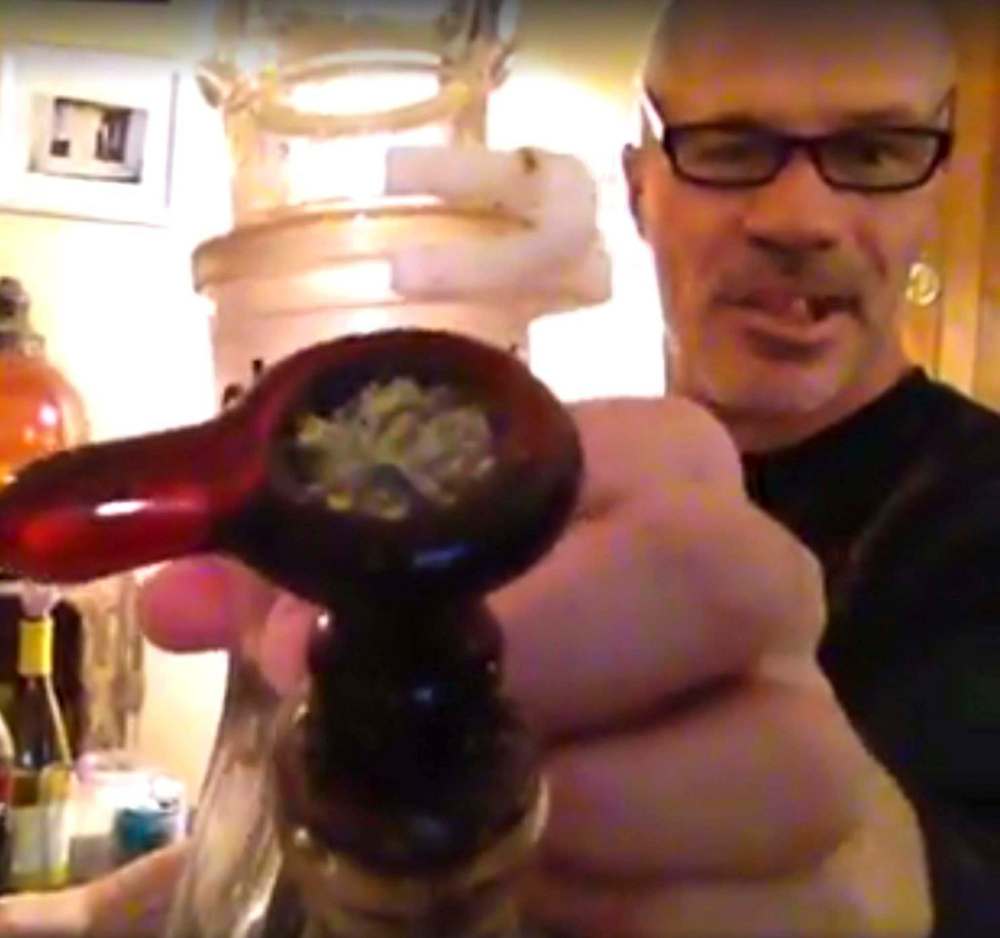
He was charged with the fentanyl-related offences in July after an undercover RCMP officer arrived at his door with a special delivery — a package containing the potent opioid, which Csincsa allegedly accepted, and a search warrant that yielded an additional three grams of fentanyl, about 250 grams of marijuana and resin, drug-cutting substances, a digital scale, notebooks containing scoresheets and bitcoin account information and $4,780 in cash.
The allegations have not been made public until now.
Manitoba Justice is taking legal action against Csincsa, seeking forfeiture of the seized cash, and the drug allegations against him are summarized in a statement of claim filed in the Court of Queen’s Bench. It has not been proven in court, and Csincsa is awaiting a preliminary inquiry on the criminal charges. Csincsa contests the forfeiture, saying the cash wasn’t obtained by crime, but was from his income-assistance cheque, savings and gambling winnings, according to the statement of claim.
RCMP investigated the fentanyl deliveries after the Canadian Border Services Agency (CBSA) in Vancouver intercepted a suspicious package sent by someone named “Marry” in Shanghai. It was addressed to a Thomas Greene in Winnipeg — an alias police believe Csincsa was using. The package was turned over to police and tested at a lab in Ottawa, which found it contained nine grams of fentanyl worth about $14,800. The RCMP then got a search warrant prior to delivering the drugs to Csincsa — who identified himself as Thomas Greene — at a home in the 600 block of Church Avenue. He faces several charges of drug trafficking and possession of proceeds of crime. Csincsa has been previously convicted of possession of property obtained by crime, for which he received a conditional discharge in 2012, and he was fined for failing to appear in court.
Csincsa was first arrested a year ago after an undercover Winnipeg Police Service officer allegedly bought about two ounces of marijuana from him for $395 over the course of four meetings arranged via an encrypted email address Csincsa was using to run a cannabis delivery service — something he described as a “micro-business” in a December 2015 email exchange with the Free Press.
“First off I hardly make any money doing this. I do it for the activism. I’ve figure (sic) out how to use this encrypted email to protect from getting robbed. I am a micro business, and I will not stop,” he wrote.
In the summer of 2015, Csincsa posted YouTube videos of himself planting cannabis seeds in public locations including near the Winnipeg Police Service’s former Public Safety Building headquarters, near the Manitoba legislative building and the University of Winnipeg as acts of “non-violent civil disobedience to break the law against cannabis prohibition,” as he said in one such “guerilla gardening” video. His Facebook page promotes the use of marijuana and advertises cannabis delivery with the encrypted email address.
“I am the morph of the street dealer of the ’70s thanks to proper use of encryption. I can protect myself and my customers from deluded police and people,” reads one of the many posts.
With federal legislation in the works to legalize recreational marijuana, a local advocate said it’s important to distinguish pot from deadly drugs such as fentanyl — “a scourge,” said cannabis advocate Steven Stairs.
Stairs, head of the Winnipeg 420 Organizing Committee and a former federal Green Party candidate, said someone who purports to be a cannabis advocate has no business being involved with fentanyl.

“That’s really scary,” he said. “I don’t consider someone who would be doing it an advocate for cannabis. It’s so counter-intuitive,” Stairs said, saying there’s no comparison between the two drugs.
“One is killing people in record numbers, one is saving people in record numbers,” he added.
Fentanyl has been linked to about 40 deaths in Manitoba within the past two years. The powerful opiate, which is prescribed to treat severe pain, has been blamed for hundreds of fatal overdoses in Alberta and B.C., prompting the B.C. provincial government to declare a public-health emergency. Opposition parties in Alberta have called on their government officials to do the same as the number of overdose deaths continues to climb.
katie.may@freepress.mb.ca
Twitter: @thatkatiemay
Katie May is a multimedia producer for the Free Press.
Our newsroom depends on a growing audience of readers to power our journalism. If you are not a paid reader, please consider becoming a subscriber.
Our newsroom depends on its audience of readers to power our journalism. Thank you for your support.
VIDEO
Ray Csincsa plants marijuana near police station, legislature:
Katie May is a multimedia producer for the Free Press.
Our newsroom depends on a growing audience of readers to power our journalism. If you are not a paid reader, please consider becoming a subscriber.
Our newsroom depends on its audience of readers to power our journalism. Thank you for your support.
Advertisement Advertise With Us
Advertisement Advertise With Us