

Cowz and effect
Police, activists cautiously optimistic as jail sentences, deportations and defections weaken ultra-violent West End street gang

Advertisement
Read this article for free:
or
Already have an account? Log in here »
To continue reading, please subscribe:
Monthly Digital Subscription
$1 per week for 24 weeks*
- Enjoy unlimited reading on winnipegfreepress.com
- Read the E-Edition, our digital replica newspaper
- Access News Break, our award-winning app
- Play interactive puzzles
*Billed as $4.00 plus GST every four weeks. After 24 weeks, price increases to the regular rate of $19.95 plus GST every four weeks. Offer available to new and qualified returning subscribers only. Cancel any time.
Monthly Digital Subscription
$4.99/week*
- Enjoy unlimited reading on winnipegfreepress.com
- Read the E-Edition, our digital replica newspaper
- Access News Break, our award-winning app
- Play interactive puzzles
*Billed as $19.95 plus GST every four weeks. Cancel any time.
To continue reading, please subscribe:
Add Free Press access to your Brandon Sun subscription for only an additional
$1 for the first 4 weeks*
*Your next subscription payment will increase by $1.00 and you will be charged $16.99 plus GST for four weeks. After four weeks, your payment will increase to $23.99 plus GST every four weeks.
Read unlimited articles for free today:
or
Already have an account? Log in here »
Hey there, time traveller!
This article was published 10/06/2017 (3218 days ago), so information in it may no longer be current.
So much blood spilled. So many lives lost and lives ruined. So much pain and heartache. There have been countless shootings, stabbings and swarmings. Targeted attacks and random acts of violence. Detentions and deportations.
And still, the gang pressed on, leaving its mark primarily in Winnipeg’s West End and a trail of despair in its wake. For more than a decade, community leaders, social workers, police and justice officials struggled to find answers.
Finally, there is a glimmer of hope. The numbers are down dramatically. There are believed to be as many members behind bars as there are on the streets. Others have been kicked out of the country. Some have “aged out.” A handful have been killed. Only one original member, co-founder Evan Murphy Amyotte, is still believed to be involved.
Have the Mad Cowz — at one point Winnipeg’s most violent, youngest (with members as young as 12) and most active street gang — finally been corralled?
“A lot of them moved on, they’ve been arrested, they’ve rolled out of the gang or been rolled out,” Det. Steve Mitchell, a veteran investigator in both the street crime and organized crime ranks, told the Free Press this week. He estimates the gang is about half the size it was at its peak, although specific numbers are difficult to gauge, given the transient nature of the members.
“It’s not like there’s a census,” he says.
Nobody is ready to declare victory, not with a long, hot summer on the horizon and the possibility of new recruitment to bolster membership ranks. There is particular concern as it relates to new young arrivals to the city — whether they’re from First Nations communities up north or immigrants fleeing war-torn countries who are seeking a fresh start.
History has shown the Mad Cowz are especially cunning when it comes to corrupting some of the most vulnerable and impressionable in society.
“There’s always those one or two new kids trying to make a name for themselves,” says Jamil Mahmood, the executive director of the Spence Neighbourhood Association.
He also serves as co-chair of the Gang Action Inter-Agency Network, which unveiled a new strategy this week that brings together more than 180 community stakeholders.
“Definitely on the street we’re seeing less activity, especially with the Mad Cowz. But it’s always a matter of waiting for the right few guys to be released and it could fire up again,” he says.
The Mad Cowz formed around 2004 but were most prominent in 2012, when they were engaged in a dangerous battle with rival members of the B-side gang. At the heart of it — like most gang conflicts — was a battle over drug turf and profits
Winnipeg police launched an elaborate undercover investigation, dubbed Project Recall, which culminated in a series of raids and arrests in April 2013. Police nabbed 11 key Mad Cowz members and several associates. It left a major mark, one the gang has not fully recovered from; most of them remain locked up.
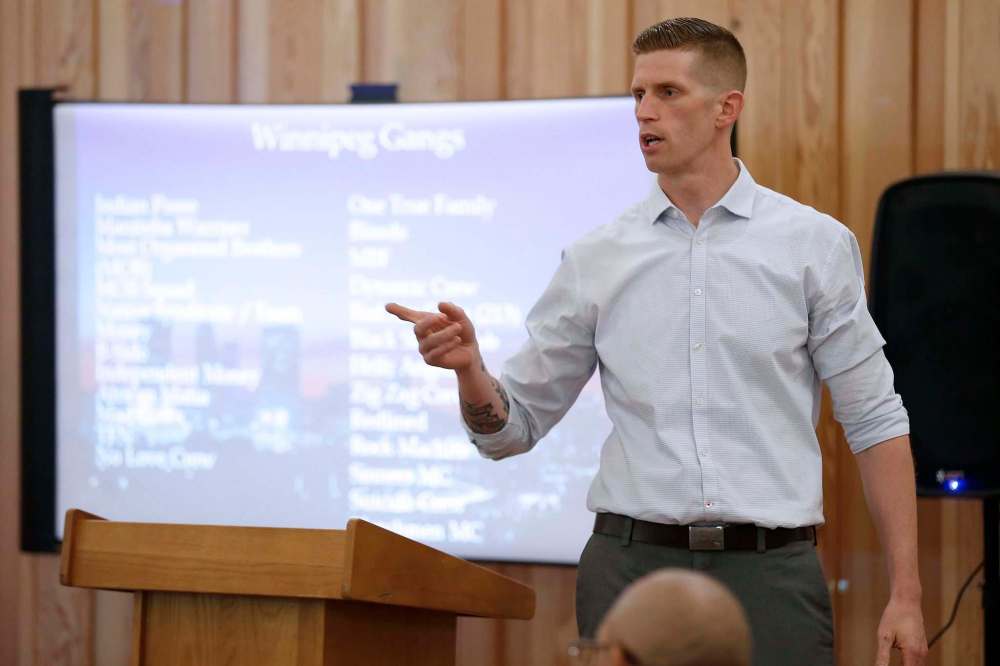
“We tried to identify the lines that were operating. This is where it became clear as day that gangs were just a sham for drug trafficking,” says Mitchell, who was a part of that probe. “The party life in the gang is what initially attracts you. But you will be schooled very quickly on the drug trade. They need to sustain their lifestyle. In order to do that, they have to traffic in drugs. Removing the underlying distribution network crippled them.”
Mitchell says it’s important to remember police aren’t social workers and he admits arresting gang members — without addressing many of the root social causes — is not a recipe for long-term success. Indeed, several other new gangs have emerged in the area in recent years looking to fill the void. While they may not be nearly as co-ordinated or large as the Mad Cowz, the potential for violence is a concern.
“The trend is shifting from one large gang having control, to youth forming their own little cliques, and they’re operating on their own solely focused on drug trafficking,” he says.
That’s where GAIN and its strategy come into play. Co-ordinator Robyn Dryden told the Free Press it is estimated there are as many as 1,500 active youth gang members in the city, believed to be connected to as many as two dozen different groups. The majority are with well-established gangs such as the Manitoba Warriors, Indian Posse, B-side and Mad Cowz.
“Incarceration isn’t a deterrent. Kids involved in gangs don’t see that as the end of the road. We really need to shift to more preventative measures and intervention like this strategy,” she says.
“Incarceration is just a Band-Aid solution. It’s not looking at the root causes of why people commit crimes or looking at the structures and systems that put them in the position where crime is a viable option for them. Until we look at the broader picture and really try to address some of those larger system issues, movement on issues like this will be slow.”
Mitchell says the Mad Cowz are unique in that they are the most “cannibalistic” street gang he’s seen. He points to a major fracture within the gang about a decade ago, when many immigrant members broke away to form a rival dubbed the African Mafia. It occurred in the aftermath of the August 2004 murder of Mad Cowz member Sirak “Shaggy” Okbazion, who had moved to Winnipeg with his family four years earlier after fleeing Eritrea. Four B-side members were charged. Only one was convicted, of manslaughter.
Other immigrant members of the Mad Cowz, who formed a big part of the gang in its early years, wanted to seek instant revenge, Mitchell says. But others within the gang opted to lay low.
“The split was connected to the lack of response,” she says.
Police had their hands full as the two sides went at each other, and eventually several members of the Mad Cowz and African Mafia were deported following criminal convictions.
“I was a beautiful kid who had a dream at one time to be a doctor, but I became a street hustler, selling crack,” Yassim Ibrahim told the Free Press in a jailhouse interview before he was deported to Somalia in 2008.
As a boy, Ibrahim saw his father being murdered. He immigrated to Winnipeg in 1999 with his mother and four siblings, and in less than 10 years, at age 23, he was the co-founder of the Mad Cowz along with Amyotte, a Canadian citizen. His criminal record included the attempted murder of a rival gang member.
Mitchell says those moves sent a chill through the gang structure — especially after Hussein Jilaow, a high-ranking Mad Cowz member racked up a massive criminal record in Winnipeg and was returned to Somali, where he was quickly killed.
It’s no secret Winnipeg has been opening its doors to asylum seekers in recent months, many of whom come from African countries. As a result, those working on the front lines say they are taking extra care to try to prevent gangs from swooping in.
“Those kids have experienced a lot of trauma. It’s crazy that we just expect them, with very little support, to have a whole different life here, when all they’ve grown up in is around violence and war, Mahmood says.
“We expect them to be healthy members of society immediately… gangs prey on people who are weak, who have mental-health and trauma issues. People have to heal before they can move on to positive things.”
Mahmood says the same goes for First Nations youth who are suffering the effects of colonization. He says one of the keys is making the transition from their old lives to their new ones in the city as seamless as possible, especially at school, where many newcomers feel ostracized.
“Let’s bridge these gaps, let’s make sure their first interaction with the system isn’t a failure,” he says. “That’s the key, whether it’s an asylum seeker, someone coming from the north, a reserve community. They’re all in the same situation. It’s just how quickly they get doors closed on them or pushed down into poverty before they turn to crime and gangs.”
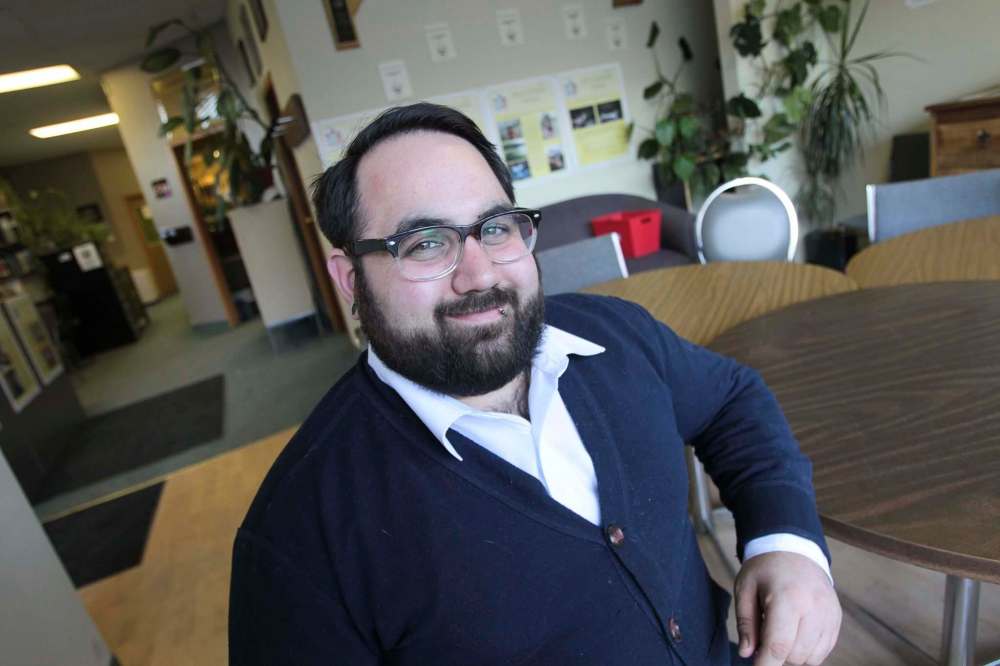
Mitchell often talks of the “idle hands” theory — a concept those involved in the GAIN initiative are looking to address.
“If you have time on your hands, you’re going to be filling it. How young people chose to fill their time can either help them or get them involved in things like gangs if they’re not spending it in pro-social ways,” Dryden says, adding typical recruitment tactics include flashing money and designer clothing and shoes while also promoting a sense of belonging and family to young people struggling to adjust.
“It’s giving them that sense of identity and purpose that really gets young people involved,” she says.
“In the moment it seems really good and you have all these things, money and influence. But none of that stuff really belongs to you.”
Winnipeg immigration lawyer Bashir Khan recalls one Somalian family in which the father won his refugee claim, then brought over the rest of his family on a sponsorship. It wasn’t long before the man’s son was in trouble with the law and was later sent back to his homeland.
However, Khan says he never brings the subject up with clients when dealing with refugee claims. He doesn’t believe new immigrants are any more susceptible to being recruited by gangs than long-standing citizens.
“That would be offensive if I said, ‘Hey, make sure your kids don’t get involved in crime.’ If you want to, you could go into every school and tell kids not to commit a crime and promote a pro-social message, as well,” he says. Nobody is joining a gang in front of me.”
Mahmood says the Magnus Eliason Recreation Centre on Langside Street between Portage and Ellice avenues was once a key hunting ground for the Mad Cowz, who would try to take advantage of youth using the facility. Various measures, including having staff at the site 24/7, have helped.
“We’ve had some success getting those kinds of understandings, that these are places you can’t do recruiting,” he says.
Mitchell says Mad Cowz has moved away from its roots as an ethnically focused gang and will take in just about anybody — on one condition.
“If you can work a dial-a-dealer phone, you’re in,” he says.
The veteran street cop has a final word of warning for anyone who thinks the gang life is for them.
“Most young people don’t know what they’re getting into. Until they’re asked to go into custody for that gang (by committing crimes), it doesn’t really set in,” he says.
mike.mcintyre@freepress.mb.ca

Mike McIntyre is a sports reporter whose primary role is covering the Winnipeg Jets. After graduating from the Creative Communications program at Red River College in 1995, he spent two years gaining experience at the Winnipeg Sun before joining the Free Press in 1997, where he served on the crime and justice beat until 2016. Read more about Mike.
Every piece of reporting Mike produces is reviewed by an editing team before it is posted online or published in print — part of the Free Press‘s tradition, since 1872, of producing reliable independent journalism. Read more about Free Press’s history and mandate, and learn how our newsroom operates.
Our newsroom depends on a growing audience of readers to power our journalism. If you are not a paid reader, please consider becoming a subscriber.
Our newsroom depends on its audience of readers to power our journalism. Thank you for your support.
Key events involving the Mad Cowz
• 2004: Sirak “Shaggy” Okbazion is gunned down outside a Sherbrook Street drug house, apparently in retaliation for an earlier gang shooting. Four B-Side members are charged with second-degree murder in the 14-year-old immigrant’s death. Only one is convicted. This sets the stage for years of gang conflict to follow.
• 2005: Some members of the Mad Cowz break apart and form their own rival gang, the African Mafia.
• 2005: Phil Haiart, 17, was caught in the crossfire of a gang-related gun battle and killed while walking through the West End. The gunman, Jeff Cansanay, was aiming at two Mad Cowz members but instead hit Haiart. Cansanay was eventually convicted of second-degree murder.
• 2007: Emmanuel Bashir, a 19-year-old member of the Mad Cowz, tries to kill a 14-year-old B-Side rival in retaliation for Okbazion’s murder. His bullets miss the target and hit a 19-year-old man, who is critically injured. He is eventually convicted.
• 2007: Kyle Boss, 21, is beaten to death by three teen members of the Mad Cowz, all of whom plead guilty to manslaughter.
• 2007: A high-ranking Mad Cowz member, Hussein Jilaow, is killed shortly after being deported back to Somalia. He had fought the proceedings, claiming a return home would be “death sentence.”
• 2008: A Mad Cowz youth member is convicted for his role in a deadly high-speed crash on Portage Avenue that killed a Winnipeg cab driver. He gets the maximum youth sentence.
• 2008: Yassim Ibrahim, co-founder of the Mad Cowz, is deported back to Somalia after racking up a lengthy criminal record in the years after immigrating to Canada.
• 2009: A Sudanese man, 19, is left permanently brain-damaged after being beaten by a group of B-Side members who believed he was connected to the African Mafia. He had no gang connection at all.
• 2012: The Mad Cowz form an unusual alliance with longtime rivals, the Indian Posse. This is to combat a similar alliance between the Manitoba Warriors and the B-Side gangs. It lasts only a few months before the two gangs go their separate ways.
• 2013: B-Side member William Moar is shot and killed inside Johnny G’s restaurant on Main Street near Broadway. Three Mad Cowz members are charged with first-degree murder. Two have since pleaded guilty for their roles in the killing, while a third accused remains before the courts.
• 2013: A 17-year-old Mad Cowz member is shot while sitting inside a vehicle, leaving him permanently brain-damaged. A 14-year-old B-Side member, Matthew McKay, is charged with attempted murder and eventually found guilty and sentenced as an adult. “I shot that (racial slur) with a .45,” McKay later bragged to a fellow B-Sider, the trial heard.
• 2013: Nigel Dixon, 20, was shot and killed after a chance encounter with several Mad Cowz members. Court later heard they did a “G-check” — slang for gang check — and opened fire, believing Dixon may have been a rival. He had no gang affiliation. The 17-year-old gunman pleaded guilty to second-degree murder.
• 2013: Police arrest 11 key members of the Mad Cowz as part of Project Recall, an undercover investigation that targeted the gang’s drug-dealing network.
Mike McIntyre is a sports reporter whose primary role is covering the Winnipeg Jets. After graduating from the Creative Communications program at Red River College in 1995, he spent two years gaining experience at the Winnipeg Sun before joining the Free Press in 1997, where he served on the crime and justice beat until 2016. Read more about Mike.
Every piece of reporting Mike produces is reviewed by an editing team before it is posted online or published in print — part of the Free Press‘s tradition, since 1872, of producing reliable independent journalism. Read more about Free Press’s history and mandate, and learn how our newsroom operates.
Our newsroom depends on a growing audience of readers to power our journalism. If you are not a paid reader, please consider becoming a subscriber.
Our newsroom depends on its audience of readers to power our journalism. Thank you for your support.
Advertisement Advertise With Us
Advertisement Advertise With Us