

Bugs, bacteria invade Manitoba summer

Advertisement
Read this article for free:
or
Already have an account? Log in here »
To continue reading, please subscribe:
Digital Subscription
One year of digital access for only $75*
- Enjoy unlimited reading on winnipegfreepress.com
- Read the E-Edition, our digital replica newspaper
- Access News Break, our award-winning app
- Play interactive puzzles
*Billed as $5.77 plus GST every four weeks. After 52 weeks, price increases to the regular rate of $19.95 plus GST every four weeks. Offer available to new and qualified returning subscribers only. Cancel any time.
Monthly Digital Subscription
$4.99/week*
- Enjoy unlimited reading on winnipegfreepress.com
- Read the E-Edition, our digital replica newspaper
- Access News Break, our award-winning app
- Play interactive puzzles
*Billed as $19.95 plus GST every four weeks. Cancel any time.
To continue reading, please subscribe:
Add Free Press access to your Brandon Sun subscription for only an additional
$1 for the first 4 weeks*
- Enjoy unlimited reading on winnipegfreepress.com
- Read the E-Edition, our digital replica newspaper
- Access News Break, our award-winning app
- Play interactive puzzles
*Your next Brandon Sun subscription payment will increase by $1.00 and you will be charged $17.95 plus GST for four weeks. After four weeks, your payment will increase to $24.95 plus GST every four weeks.
Read unlimited articles for free today:
or
Already have an account? Log in here »
Hey there, time traveller!
This article was published 10/07/2017 (3238 days ago), so information in it may no longer be current.
GIMLI — The shores of Gimli Beach were filled with sunbathers, volleyball players and sandcastle builders Monday afternoon.
Swimmers? Not as many as normal.
After an advisory went up July 9 for high levels of E. coli in the water at the popular Manitoba summer spot, many beachgoers opted out of taking a midday dip in the 24 C heat.
“The days of going to the beach and not worrying are done,” said Brad Siemens, who came to the beach for the day with his wife, Marie Keller, and their three grandchildren.
A July 6 test of the area waters found 322 colony-forming units (CFU) of the bacteria per 100 millilitres; the highest acceptable amount is 200.
A spokesman for the provincial department of conservation and water stewardship said there were several factors that may have led to the elevated number of CFUs, including freshly graded sand, strong northerly winds, rising water levels, feathers and a thick layer of dead fishflies along the beach.
The fishflies are a crunchy, stinky nuisance, but Siemens said it’s nothing out of the ordinary for Gimli.
“We’re not scared of them,” he said with a laugh.
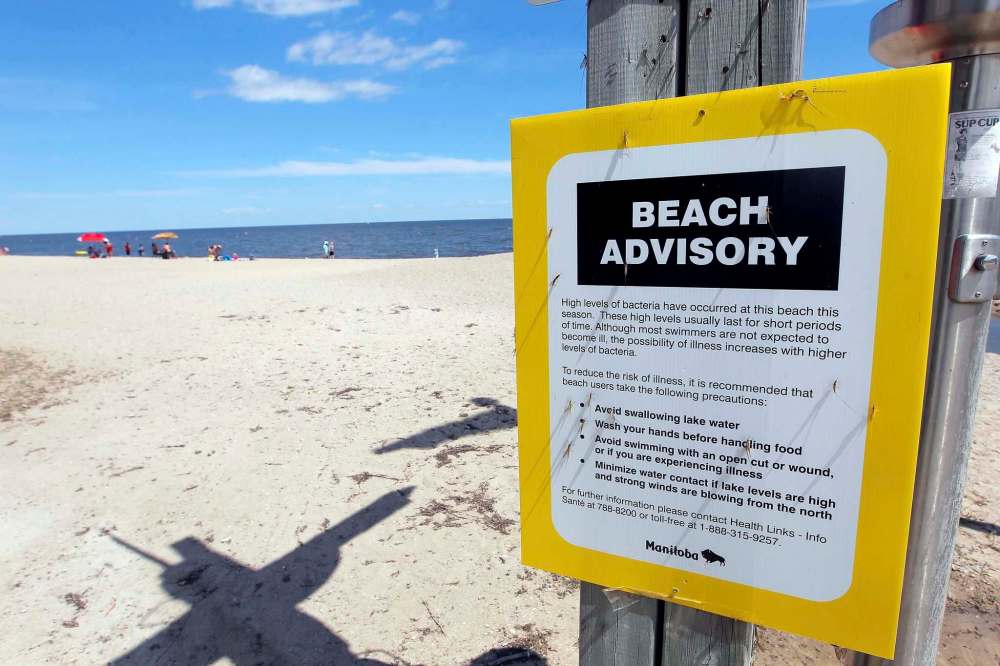
With the high E. coli levels, people are advised to wash their hands after swimming and before handling food. Swimmers are also advised to not swallow lake water and to not swim with open cuts or if already dealing with other digestive ailments.
Most swimmers won’t become ill when E. coli is high, but the possibility of illness goes up as bacteria levels do.
In more than 30 years visiting Gimli, Siemens and Keller said they have not had any incidents of illness related to E. coli, but they elected to take their grandchildren to the nearby splash park to cool down instead of taking them into the lake.
“(The children) are a little disappointed because they saw other kids in there, but I just said, ‘You could get really really sick,’” Keller said. “As soon as the advisory’s over, they’ll be able to go back out there.”
E. coli is found in all warm-blooded animals, including inside healthy human intestines, but when it’s present in large numbers, the bacteria can lead to diarrhea, cramps and irritated eyes and skin.
Once E. coli levels exceed the acceptable amount per 100 ml, advisory signs are provided by the government and posted along the beach. The signs stay up all summer — regardless of the most recent bacteria count.
Along the roughly one-kilometre stretch of public beach in downtown Gimli, three official advisory signs were posted, along with a water-quality board updated daily by the beach patrol.
So far this year, Gimli Beach — located some 80 km north of Winnipeg — is the only Manitoba beach with higher-than-acceptable E. coli levels, according to Chris Hornby, Gimli’s manager of parks and recreation services.
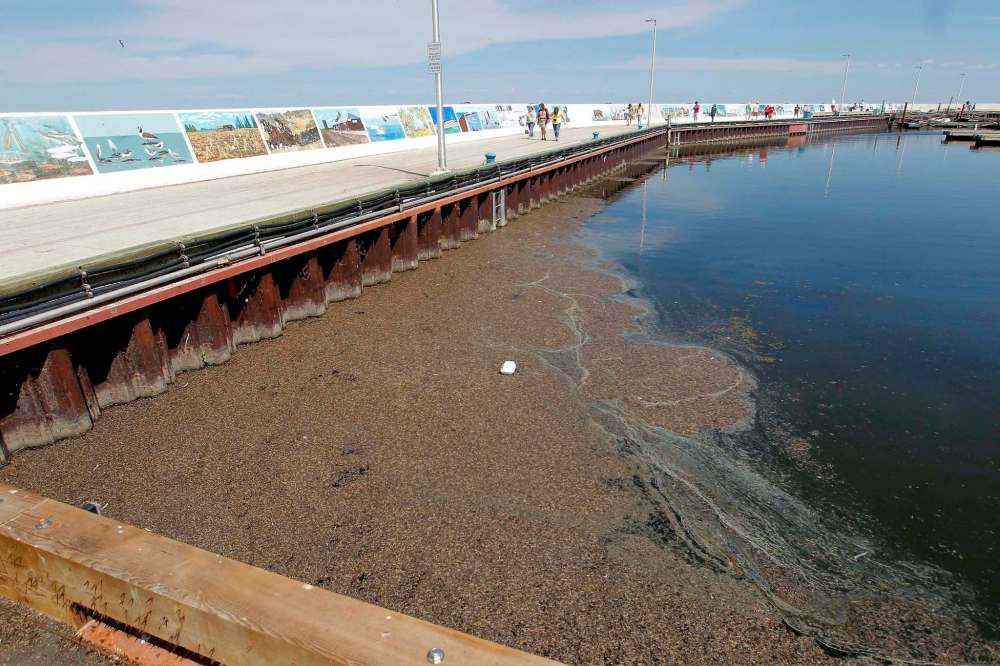
Hornby said the E. coli levels recorded this year aren’t the highest the beach has experienced. He said a spike normally occurs during the first week of July — around the same time as the town’s fishfly invasion hits its peak.
“It’s not doom and gloom. We see this regularly,” Hornby said of both the fishflies and the E. coli rise.
Usually, the E. coli numbers drop rather quickly after a spike, but when levels are high, it can mean fewer people going into the water. “I don’t think it will be good for tourism,” Hornby said.
On Monday, many parents and grandparents kept their young ones ashore when they normally might be playing in the water. “They can put their feet in the water, but I said they can’t go in today,” one concerned parent said.
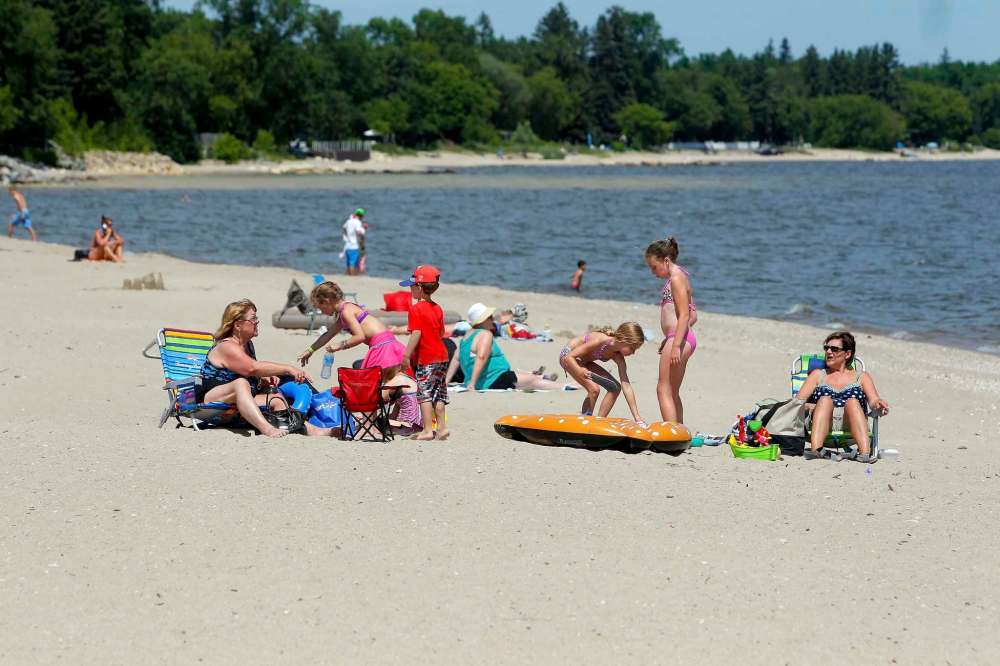
Swimming isn’t prohibited when an E. coli advisory is in effect, but those that do take the plunge should be aware of what’s floating in the lake.
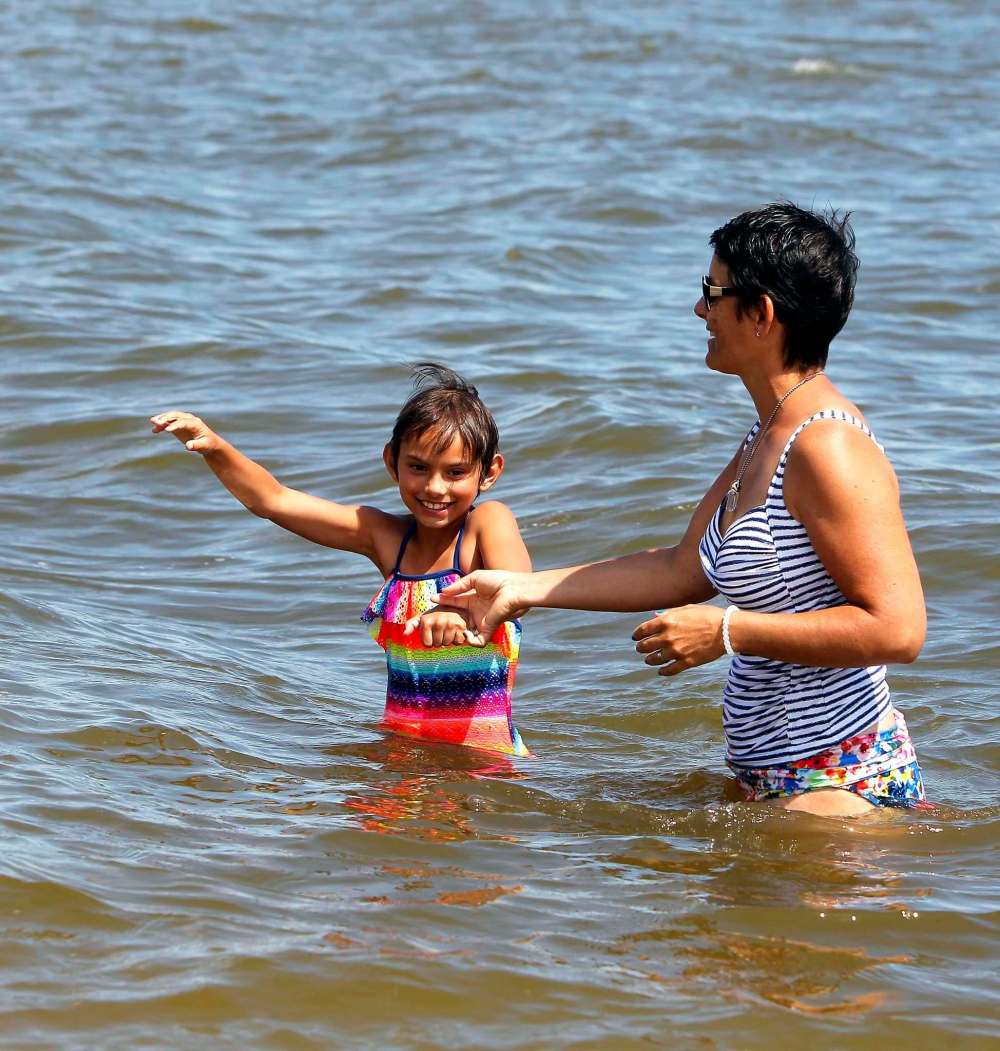
Spencer Todd, 9, knew exactly what she was diving into.
Her Grade 4 class from Winnipeg’s Montrose Elementary School learned about E. coli and came to the beach for a field trip to learn about algae, water safety and more.
“Don’t put anything in your mouth. Wash your hands before eating your lunch,” Spencer advised, with her mom, Dana, nearby. “We’re just being very careful.”
The conservation and water stewardship spokesman said the water at Gimli Beach has been retested and the updated results are expected Tuesday.
For now, beachgoers can decide whether they go into the lake — and Spencer and her mom chose to swim cautiously.
After splashing around for a few minutes, Spencer emerged from the water with a smile on her face.
“That was refreshing,” she said. “Very refreshing.”
And when she gets home?
“I’ll take a shower.”
ben.waldman@freepress.mb.ca

Ben Waldman is a National Newspaper Award-nominated reporter on the Arts & Life desk at the Free Press. Born and raised in Winnipeg, Ben completed three internships with the Free Press while earning his degree at Ryerson University’s (now Toronto Metropolitan University’s) School of Journalism before joining the newsroom full-time in 2019. Read more about Ben.
Every piece of reporting Ben produces is reviewed by an editing team before it is posted online or published in print — part of the Free Press‘s tradition, since 1872, of producing reliable independent journalism. Read more about Free Press’s history and mandate, and learn how our newsroom operates.
Our newsroom depends on a growing audience of readers to power our journalism. If you are not a paid reader, please consider becoming a subscriber.
Our newsroom depends on its audience of readers to power our journalism. Thank you for your support.
Ben Waldman is a National Newspaper Award-nominated reporter on the Arts & Life desk at the Free Press. Born and raised in Winnipeg, Ben completed three internships with the Free Press while earning his degree at Ryerson University’s (now Toronto Metropolitan University’s) School of Journalism before joining the newsroom full-time in 2019. Read more about Ben.
Every piece of reporting Ben produces is reviewed by an editing team before it is posted online or published in print — part of the Free Press‘s tradition, since 1872, of producing reliable independent journalism. Read more about Free Press’s history and mandate, and learn how our newsroom operates.
Our newsroom depends on a growing audience of readers to power our journalism. If you are not a paid reader, please consider becoming a subscriber.
Our newsroom depends on its audience of readers to power our journalism. Thank you for your support.
Advertisement Advertise With Us
Advertisement Advertise With Us