

Khadr payout a matter of rights
Woman who lost spouse in 9/11 backs compensation to child soldier

Advertisement
Read this article for free:
or
Already have an account? Log in here »
To continue reading, please subscribe:
Digital Subscription
One year of digital access for only $1.44 a week*
- Enjoy unlimited reading on winnipegfreepress.com
- Read the E-Edition, our digital replica newspaper
- Access News Break, our award-winning app
- Play interactive puzzles
*Billed as $5.77 plus GST every four weeks. After 52 weeks, price increases to the regular rate of $19.95 plus GST every four weeks. Offer available to new and qualified returning subscribers only. Cancel any time.
To continue reading, please subscribe:
Add Free Press access to your Brandon Sun subscription for only an additional
$1 for the first 4 weeks*
- Enjoy unlimited reading on winnipegfreepress.com
- Read the E-Edition, our digital replica newspaper
- Access News Break, our award-winning app
- Play interactive puzzles
*Your next Brandon Sun subscription payment will increase by $1.00 and you will be charged $17.95 plus GST for four weeks. After four weeks, your payment will increase to $24.95 plus GST every four weeks.
Read unlimited articles for free today:
or
Already have an account? Log in here »
Hey there, time traveller!
This article was published 15/07/2017 (3387 days ago), so information in it may no longer be current.
As some Canadians seethe over former child soldier Omar Khadr receiving a $10.5-million settlement from the federal government, a widow of the 9/11 terror attacks sees it as the right thing to do.
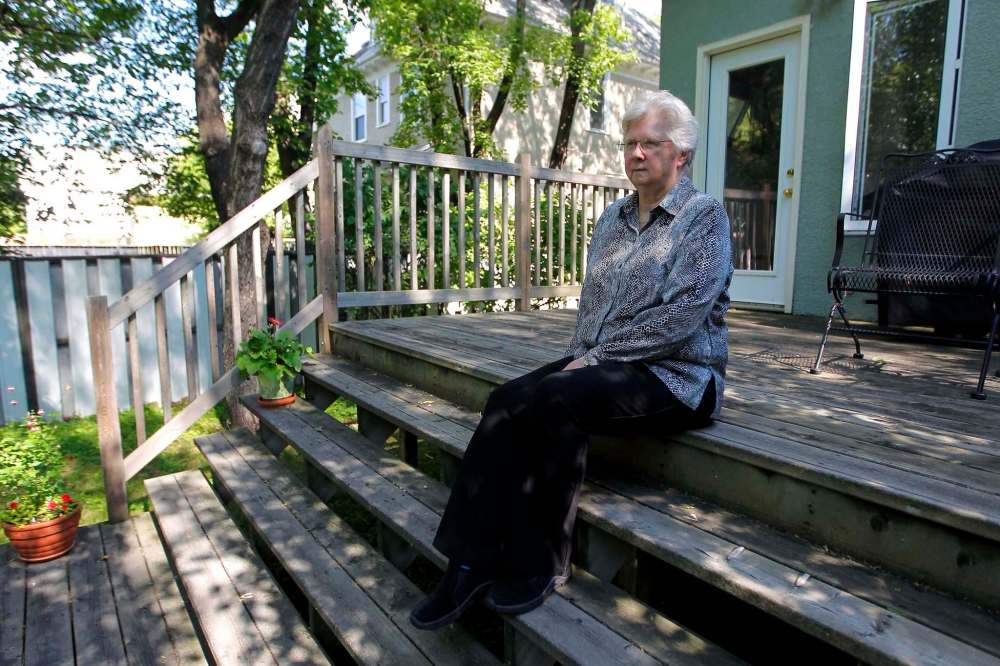
“If we want to fully ensure our charter rights, we have to be certain that those rights will apply to everyone,” said Winnipeg’s Ellen Judd, whose spouse, Chris Egan, died while visiting her brother at the World Trade Center in New York when it was hit by terrorists in hijacked planes Sept. 11, 2001.
In 2002, 15-year-old Canadian Khadr was in Afghanistan with his al-Qaida-connected dad, who handed young Omar over to an insurgent fighting force to become a child soldier.
The teen was injured in a firefight with U.S. forces that were trying to root out terrorism.
Khadr was accused of throwing a grenade that killed U.S. special forces medic Christopher Speer.
The young Canadian was flown to the American military base at Guantanamo Bay, Cuba, where he was ultimately charged with war crimes by a military commission and held there until 2012.
In 2010, the Supreme Court of Canada ruled Canadian intelligence officials visiting the base at Guantanamo in 2003 obtained evidence from Khadr under “oppressive circumstances,” including sleep deprivation, and then shared that evidence with U.S officials.
Allowing governments to get away with violating its citizens’ charter rights and internationally recognized human rights hurts everyone, Judd said.
“The government has to provide a remedy… This is all about preserving the charter rights of Canadian citizens.”
Khadr filed a lawsuit for $20 million against the federal government.
Rather than spending millions of taxpayer dollars trying to fight a case the country’s highest court had already decided, the current government under Prime Minister Justin Trudeau settled for $10.5 million.
“I do support what the government of Canada is doing in seeking a settlement,” said Judd, an anthropology professor at the University of Manitoba.
“The reason for that is what has been going through the courts for many years,” she said.
“The issue is whether the government of Canada must protect its citizens’ charter rights and rights under international law. That’s what the Canadian court case is about.”
Judd said she understands some of the anger surrounding the settlement.
“The punishment ends up having to be paid by the taxpayer,” she said.
“Underlying all of this are the charges against Omar Khadr and all that is happening in American courts.”
In October 2010, Khadr was sentenced under the terms of a plea agreement to an eight-year prison term that included time already served.
He was required to serve at least one more year at Guantanamo Bay before being eligible for a prisoner transfer to Canada.
Delays by the Canadian government were such that he spent one more year at Guantanamo Bay before his transfer in September 2012 to serve the remainder of his sentence.
He was released in May 2015 pending an appeal of his guilty plea, which he said was made under duress.
“He entered a guilty plea under legal advice that that’s how he could get out of Guantanamo,” said Judd, who has followed Khadr’s case over the years.
“He’s still appealing the original charges.
“I’m interested in what’s happening at Guantanamo Bay, and he was the only Canadian there. It’s not a new case to me.”
Judd said she sympathizes with the widow of the U.S. medic who filed a wrongful death claim against Khadr in a U.S. court that subsequently awarded her US$134 million.
The widow tried and failed this week to get an Ontario court to block Khadr’s monetary settlement from the federal government.
“My heart goes out to Tabitha Speer,” said Judd.
“She had a terrible loss.”
Most of those fuming over the Canadian government’s settlement with Khadr likely have never had their human rights violated in a life-changing way or been personally touched by a terror attack, she said.
“They don’t understand what the consequences are,” said Judd.
Judd has listened to Khadr’s response to his situation and the settlement and has heard something hopeful.
“He said he doesn’t know whether he’s responsible for that grenade. He regrets some of the things he did when he was younger, but he’s trying to (rehabilitate and to) live a good life now,” she said.
“We have an opening here to think about what constitutes justice.
“It’s not about retribution. It’s about having safety and security for all of us. We need, somehow, to think about a more vigorous concept of justice that will allow people caught up in war and the justice system to have a peaceful route out,” she said.
“It’s not that I’m sympathetic to anyone killing anybody,” said the 9/11 widow.
“I think it’s terrible and people need to be accountable.”
To restore the peace, though, people on all sides who want to quit fighting need to be able to do that, she said.
“Every war has to end, and we need exit routes,” Judd said.
“Much of this involves things that are really hard to think about — things we’d like to think are fixable, but some are not.

“We need a concept of justice that can handle that. Nothing here is going to bring back any life lost or make the bereaved feel better,” she said.
“It’s not possible. The only thing we can try to do is prevent more of this from happening.
“We need to go into that uncomfortable space and make that possible. It’s the only way that things can be better in any sense.”
carol.sanders@freepress.mb.ca
Carol Sanders
Legislature reporter
Carol Sanders is a reporter at the Free Press legislature bureau. The former general assignment reporter and copy editor joined the paper in 1997. Read more about Carol.
Every piece of reporting Carol produces is reviewed by an editing team before it is posted online or published in print — part of the Free Press‘s tradition, since 1872, of producing reliable independent journalism. Read more about Free Press’s history and mandate, and learn how our newsroom operates.
Our newsroom depends on a growing audience of readers to power our journalism. If you are not a paid reader, please consider becoming a subscriber.
Our newsroom depends on its audience of readers to power our journalism. Thank you for your support.
Going to Gitmo
The U.S. military base at Guantanamo Bay, Cuba, is where Canadian Omar Khadr was imprisoned from 2002 to 2012.
Since the 9/11 terror attacks in the United States, there have been some 780 detainees rounded up and shipped to the notorious prison known as Gitmo. Then-president George W. Bush released more than 500; his successor, Barack Obama, released more than 200.
Guantanamo now has just 41 detainees. Khadr was the youngest prisoner and the last from a Western country to be released.
The third week in August, Winnipegger Ellen Judd is scheduled to observe U.S. military commission proceedings at Guantanamo against five defendants alleged to have masterminded attacks on the World Trade Center in New York and the Pentagon in Virginia. Since the case began in 2011, close family members of the victims and some of the survivors have been invited to attend the proceedings in person so they can see what’s going on and talk to the prosecution and defence teams involved.
Judd, whose spouse, Chris Egan, was killed at the World Trade Center, had been scheduled to go several times, but each trip was postponed by the commission for various reasons.
The military commissions process has been plagued from the start by detours and scandals, including the legacy of the use of torture against Gitmo detainees, an FBI attempt to penetrate a defence team and the unexplained censoring of court deliberations, believed to be the work of the CIA.
Legal experts and lawyers who have been involved in the trials at Guantanamo Bay say the system may be irreparably flawed. Even if the cases can be concluded, they say, the process is now seen as so tainted those verdicts may be publicly dismissed.
Judd has said she doubts the legitimacy of the legal process there but is going anyway to see for her herself and to represent her beloved who can’t be there.
— Carol Sanders, with files from The Associated Press, Toronto Sun
Carol Sanders
Legislature reporter
Carol Sanders is a reporter at the Free Press legislature bureau. The former general assignment reporter and copy editor joined the paper in 1997. Read more about Carol.
Every piece of reporting Carol produces is reviewed by an editing team before it is posted online or published in print — part of the Free Press‘s tradition, since 1872, of producing reliable independent journalism. Read more about Free Press’s history and mandate, and learn how our newsroom operates.
Our newsroom depends on a growing audience of readers to power our journalism. If you are not a paid reader, please consider becoming a subscriber.
Our newsroom depends on its audience of readers to power our journalism. Thank you for your support.
Advertisement Advertise With Us
Advertisement Advertise With Us