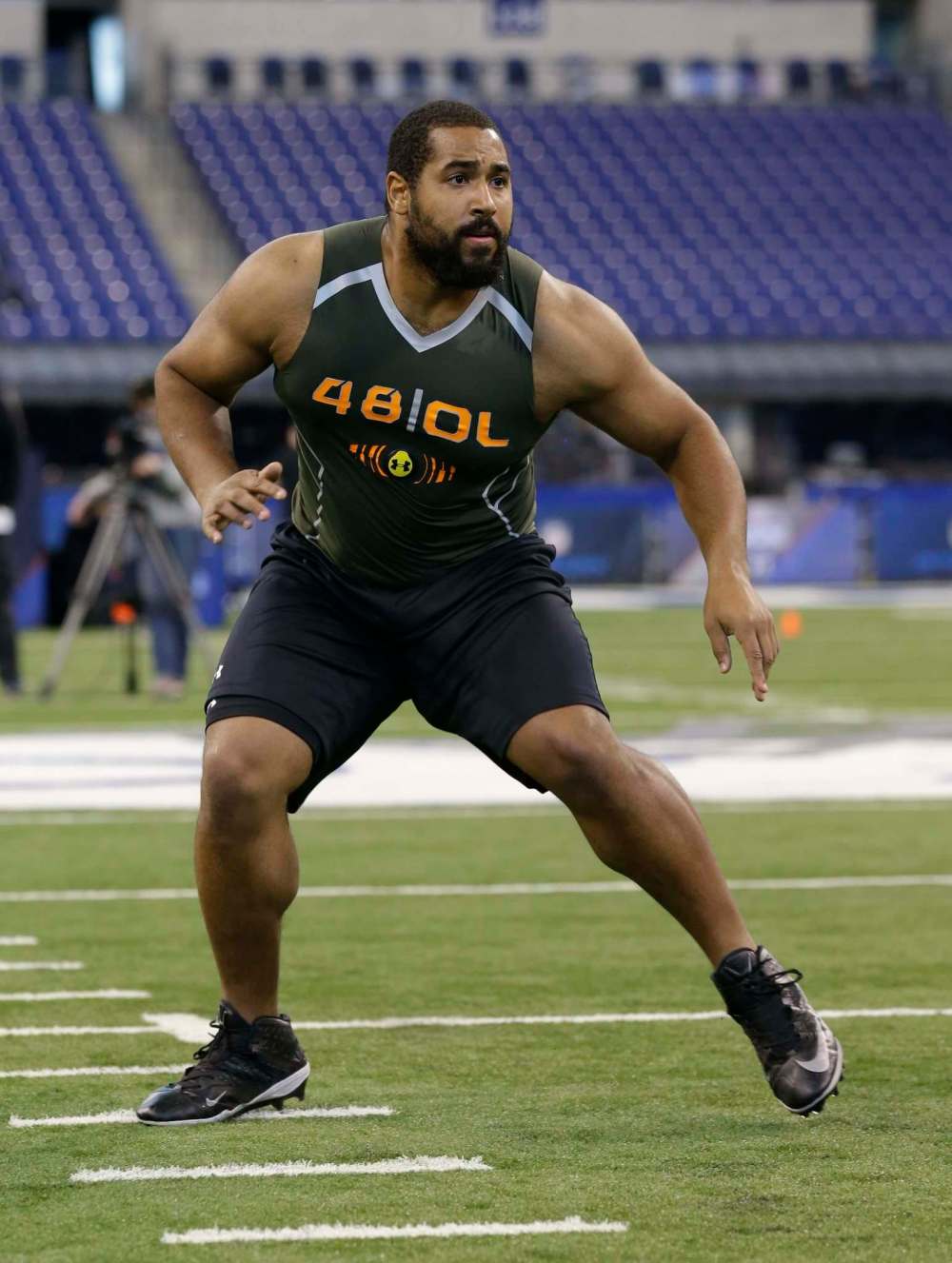
By quietly walking away, Winnipegger John Urschel delivers big hit to NFL
Advertisement
Read this article for free:
or
Already have an account? Log in here »
To continue reading, please subscribe:

Digital Subscription
One year of digital access for only $205*
- Enjoy unlimited reading on winnipegfreepress.com
- Read the E-Edition, our digital replica newspaper
- Access News Break, our award-winning app
- Play interactive puzzles
*First annual payment billed as $205.00 + GST for one year. This annual subscription will automatically renew at $233.00 + GST every 52 weeks (10% off the regular annual price of $259.35). Offer available to new and qualified returning subscribers only. Cancel any time.
To continue reading, please subscribe:
Add Free Press access to your Brandon Sun subscription for only an additional
$1 for the first 4 weeks*
- Enjoy unlimited reading on winnipegfreepress.com
- Read the E-Edition, our digital replica newspaper
- Access News Break, our award-winning app
- Play interactive puzzles
*Your next Brandon Sun subscription payment will increase by $1.00 and you will be charged $17.95 plus GST for four weeks. After four weeks, your payment will increase to $24.95 plus GST every four weeks.
Read unlimited articles for free today:
or
Already have an account? Log in here »
Hey there, time traveller!
This article was published 31/07/2017 (3327 days ago), so information in it may no longer be current.
And in the end, let history record that it was a Winnipegger who gave the NFL what may yet prove to be its ‘canary in the coal mine’ moment.
Last week’s announcement that NFL lineman John Urschel — who was born in Winnipeg to a University of Manitoba-trained surgeon — was walking away from the sport in the prime of a lucrative career sent shockwaves through a multi-billion dollar league that would prefer we continue to believe there’s nothing wrong with pro football that money — and a billion dollar settlement — cannot fix.
Well, Urschel just laid waste to that idea.
We’ve known for awhile now pro football kills players, but I cannot help but wonder whether years from now we will look back at Urschel’s retirement as the moment the sport itself started dying.
Because make no mistake: When you’ve reached the point where prominent NFL players like Urschel are walking away from multi-million dollar paydays because they’ve concluded the risks the sport poses to their long-term health are simply not worth any amount of money, the question ceases to be whether pro football can survive in its present form and becomes whether it can survive in any form?
Ponder this: While Urschel is the most prominent NFLer — and one of the youngest at age 26 — to retire early amid increasing concerns about what playing football is doing to the brains of players, he’s just the poster child for what ESPN described last week as an emerging “trend” — NFLers in the prime of their careers voluntarily walking away.
The network said Urschel was the 34th player under the age of 30 to voluntarily retire in just the last two off-seasons.
It makes perfect sense, when you think about it, that the brilliant son of a doctor would look at all the available research on the link between pro football and Chronic Traumatic Encephalopathy and say, ‘Enough.’
Urschel’s father, John Sr., is a Canadian who played football and studied medicine at the University of Alberta before moving on to complete a residency in thoracic surgery at the University of Manitoba.
The elder Urschel went on to a pioneering surgical career in both Canada and the U.S. that included a stint as an associate professor at Harvard Medical School. He is listed to this day as a distinguished alumni on the University of Manitoba’s website.
It was while the elder Urschel was living in Winnipeg with his wife, Venita Parker — a former operating room nurse from Cincinnati who went on to become an attorney — that the couple had their only child, John Jr, in 1991.
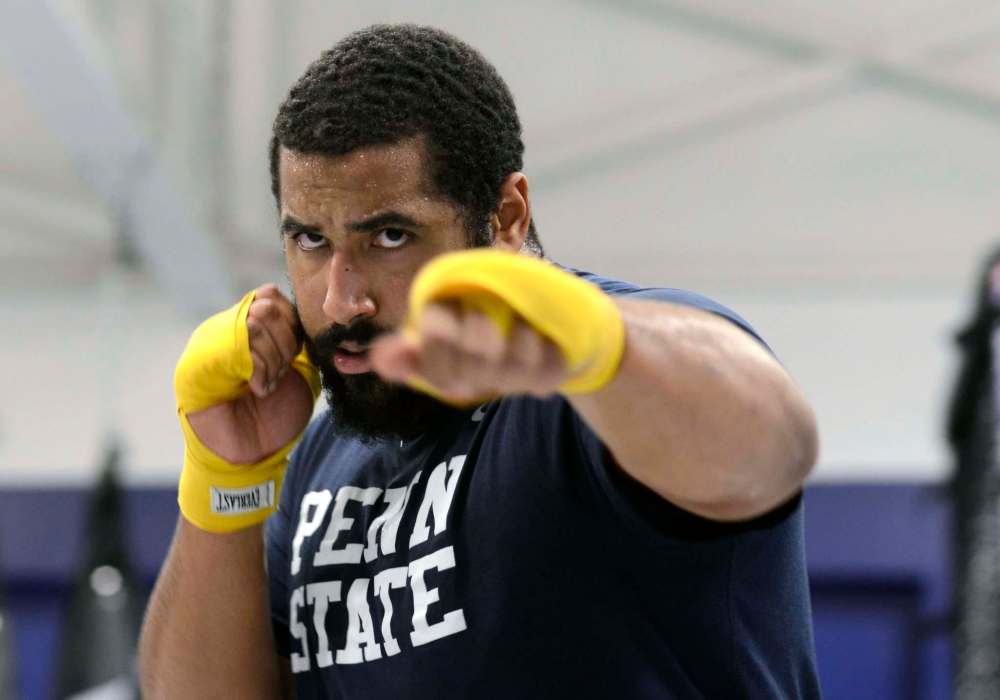
The Urschels divorced and left Winnipeg when their son was still a toddler and the younger Urschel went on to a standout college career in the U.S. at Penn State before being drafted in the fifth round in 2014 by the Baltimore Ravens.
He played in 40 NFL games over the past three seasons for the Ravens, starting in 13 of them, and the book on Urschel was that he was molding into a lineman whose best football — and biggest paydays — were probably still in front of him.
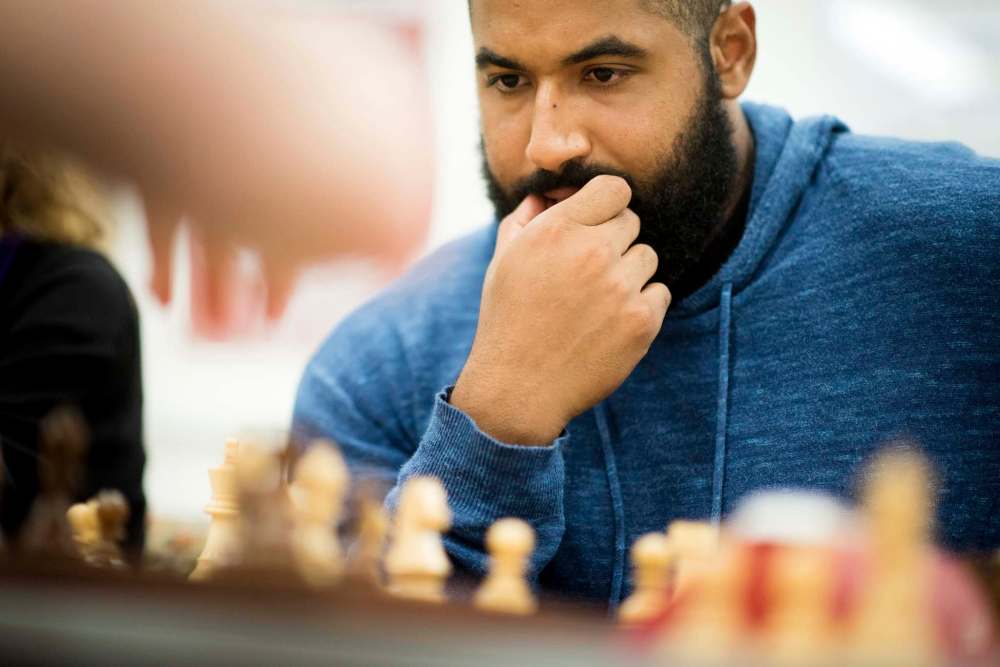
Urschel was best known, however, for his off-field pursuit of a PhD in mathematics from prestigious MIT.
An award-winning mathematician whose work and research in the field of mathematics has been published in major journals, Urschel was crack for NFL reporters: an uncommonly intelligent and thoughtful man with an unexpected off-field interest that didn’t fit the stereotype of the neanderthal NFLer.
Reporters found Urschel in every city the Ravens travelled to and his unusual story — not to mention his unusual birthplace — made him a household name despite the fact he played a position — offensive guard — that usually banishes a guy to a career in obscurity.
But all that ended last week with the release of the results of a study by researchers at Boston University, who examined the brains of 111 deceased NFL players and found evidence of CTE, the brain-wasting disease linked to repetitive concussions, in 110 of them.
While Urschel didn’t publicly draw a link between CTE and his decision to abruptly retire just as NFL training camps were opening — he’s refused numerous interview requests — several news outlets over the weekend cited sources close to the player in reporting Urschel’s decision to retire was directly linked to last week’s release of the study.
A mind is a terrible thing to waste and Urschel apparently concluded that after investing so much in his, he didn’t want to risk it anymore than he already has by pounding out another season in the NFL trenches.
Urschel had made clear in the past that he had serious misgivings about what his NFL career was doing to his long-term health, admitting in a piece he penned for The Players Tribune in 2015 that he knew “objectively” that he shouldn’t be playing football, but he just couldn’t help himself.
‘‘There’s a rush you get when you go out on the field, lay everything on the line and physically dominate the player across from you,’’ Urschel wrote. ‘‘This is a feeling I’m (for lack of a better word) addicted to, and I’m hard-pressed to find anywhere else.’’
Urschel apologized for his use of the word, but I’d argue ‘addiction’ is actually the perfect descriptor of continuing to engage in a self-destructive behaviour long after you know it’s bad for you.
Football is unquestionably bad for you and it shouldn’t take the release of that BU report — or, for that matter, a doctorate in mathematics — to figure that out.
Indeed, even the NFL has said as much, structuring a recent billion-dollar settlement with players affected by CTE-related brain diseases so that it applied only to players who’d already retired at the time of the settlement.
New players joining the NFL now, the league argues, are fully aware — or should be — of CTE and the associated risks they are taking with their health by choosing to play pro football.
It’s an astounding position to take, the equivalent of your boss announcing tomorrow that your entire workplace is hazardous to your health, but hey, you’ve been warned so don’t come crying later when those grommets you’re punching out every day give you cancer.
If your boss told you that, you’d quit — if you could. And there’s the rub that the NFL is counting on: Sure, a guy like John Urschel, with some big paydays already banked and a bright career in academia in front of him, can simply pack up and walk away from football.
But most NFLers don’t have the options Urschel does, just as a lot of inner-city kids in the U.S. didn’t have the options growing up that Urschel did as the son of a doctor.
For many disadvantaged people like that, a career in the NFL is their one and only ticket out, a dream worth chasing no matter what the risks are.
And that, it seems, is the supremely cynical NFL survival strategy: there will always be men and boys in America desperate enough to risk even their brains for a ticket out.
If that sounds familiar, it should: the U.S. military has operated for a generation now on the same premise, which is why rich American kids don’t enlist and minorities and the socio-economically disadvantaged so disproportionately provide the fodder that keeps the American war machine running.
And football? Carolina Panthers receiver Russell Shepard told Associated Press last week that he accepts brain injuries as the price to pay for a better life.
“At the end of the day, the money that you make, the people that you meet and the experience you get from playing this game — I will take against CTE.”
Shepard says that now. And the entire NFL industrial complex — fans and all those TV networks, owners and corporate sponsors that grow rich off people playing a game that makes them sick — desperately need Shepard to keep saying it.
Because the alternative is the very powerful statement John Urschel made with his actions last week.
And there’s no money to be made in watching people do math.
paul.wiecek@freepress.mb.ca
Twitter: @PaulWiecek