

Get out and stay out
Communities can ban residents, but may lack legal footing

Advertisement
Read this article for free:
or
Already have an account? Log in here »
To continue reading, please subscribe:
Digital Subscription
One year of digital access for only $75*
- Enjoy unlimited reading on winnipegfreepress.com
- Read the E-Edition, our digital replica newspaper
- Access News Break, our award-winning app
- Play interactive puzzles
*Billed as $5.77 plus GST every four weeks. After 52 weeks, price increases to the regular rate of $19.95 plus GST every four weeks. Offer available to new and qualified returning subscribers only. Cancel any time.
Monthly Digital Subscription
$4.99/week*
- Enjoy unlimited reading on winnipegfreepress.com
- Read the E-Edition, our digital replica newspaper
- Access News Break, our award-winning app
- Play interactive puzzles
*Billed as $19.95 plus GST every four weeks. Cancel any time.
To continue reading, please subscribe:
Add Free Press access to your Brandon Sun subscription for only an additional
$1 for the first 4 weeks*
- Enjoy unlimited reading on winnipegfreepress.com
- Read the E-Edition, our digital replica newspaper
- Access News Break, our award-winning app
- Play interactive puzzles
*Your next Brandon Sun subscription payment will increase by $1.00 and you will be charged $17.95 plus GST for four weeks. After four weeks, your payment will increase to $24.95 plus GST every four weeks.
Read unlimited articles for free today:
or
Already have an account? Log in here »
Hey there, time traveller!
This article was published 26/08/2017 (3184 days ago), so information in it may no longer be current.
The bright orange sign is the first thing you notice as you approach the Pelican Nest restaurant in Grand Rapids.
It’s hard to miss, given the prominent placement on the front door of the popular diner and VLT lounge in this community of about 280, located on the northwestern shore of Lake Winnipeg about 430 kilometres from Winnipeg.
Is it a heads-up about new hours? An alert about employment opportunities?
“…Band councils can’t rule by decree. A band council resolution is a record of a decision made of a duly convened meeting of the band council. In and of itself, it’s not law, it’s not an order. The decision isn’t enforceable unless there’s some law that can be applied.”
– Winnipeg lawyer Michael Paluk
Not quite.
“Barred Out List” reads the title in black, bold type. Underneath are the names of eight local citizens. Four of them have the word “Life” after their names. Three say “Until Further Notice.” The last one is marked “Indefinitely.”
“They’re not allowed on the premises at all,” Monica, the manager, tells the Free Press. She asks that her full name not be published for fear of potential reprisal from angry locals.
“The only problem is, sometimes I don’t remember what they look like, but we all work together. It’s punishment for them because there’s nowhere to go. We’re pretty much the only restaurant around. They can’t gamble. They can’t do nothing.”
One by one, we go through the names with Monica. She explains, to the best of her memory, what each person did to earn their place on the list.
“He was bugging people all the time, bothering people, swearing. So we can’t have him around,” she says of one of the “until further notice” names.
“He tried to steal money from the gas bar. I think he’s in jail now,” she says of another.
“He tried to rob the gas bar. He’s a no-good guy,” Monica says of one of the lifers.
“I really don’t remember what he did, but it wasn’t very good, otherwise he wouldn’t be for life,” she explains of another.
Monica has been running the restaurant, which is owned by the Misipawistik Cree Nation, for the past eight years. The band chief and council have the final say about who makes the list, and whether they come off it, she says.
A few names have been removed, and a few new ones have been added, in recent years. Not all are former customers — a handful are former employees.
“We’ve had people five times on that list. They never learn,” she says.
This isn’t about bad table manners. Complaining about the food or service, or even walking out without paying, won’t get someone barred.
No, the people on the list have done something criminal, regardless of whether they were charged or convicted. However, this isn’t a court order being enforced, but rather a civil one.
And in a medieval sort of way, it strikes at the core of who we are.
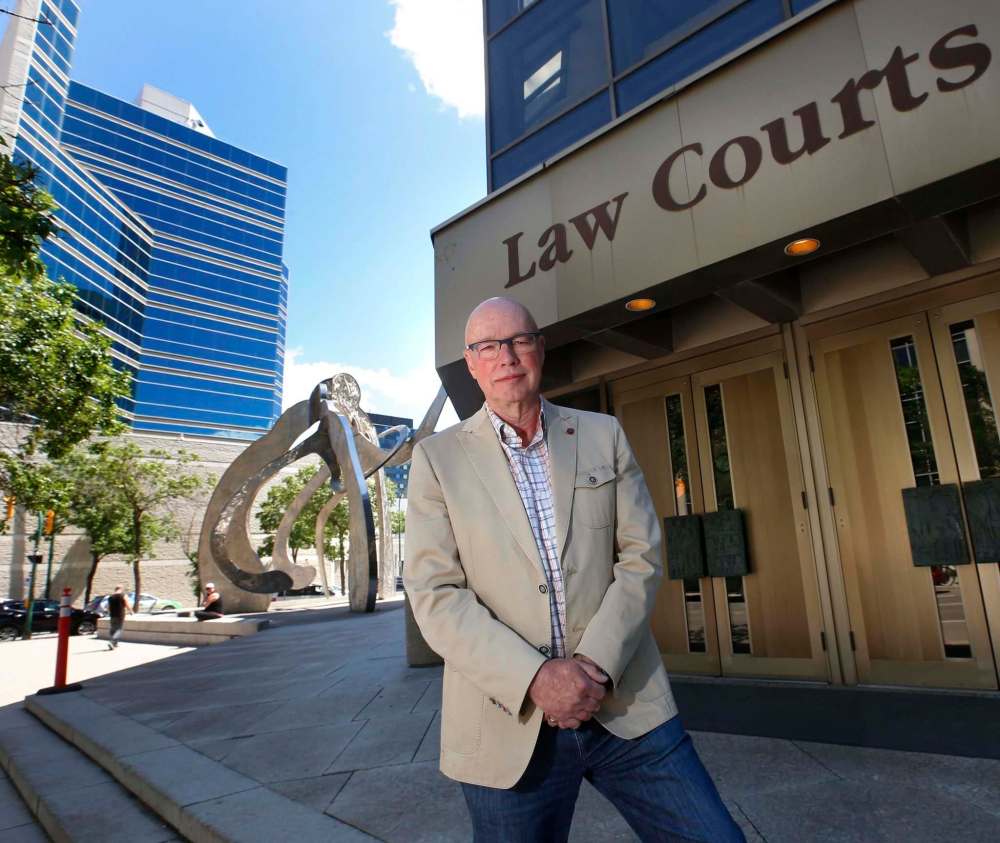
“If you look at the history of humans and society, you’ll see the exclusion of others from spaces or places or some kind of geographic region is pretty common,” says Lorne Neudorf, a Manitoba-born law professor who recently moved to Australia from British Columbia to accept a teaching position.
He has studied the issue for years. His interest was piqued when former Toronto Mayor Rob Ford vowed to banish anyone convicted of a gun crime from continuing to live in the city. It never came to fruition. But the tough talk generated plenty of buzz.
Religious communities have long practised “shunning or ex-communicating others,” he says.
Private clubs and gyms do it as well.
“The idea of excluding others is something we all do to a certain degree. If you have a home and lock your doors, you’re excluding others to a certain degree,” Neudorf says.
“I think our whole society in many ways is really premised on this idea of who are you and are you in the right place. This is like an extension of that.”
As a private property or business owner, you have every right to exclude someone — as long as you’re not violating their basic human rights by discriminating “against a particular class of individuals or a group that may be protected by law,” he says.
So in the case of the Grand Rapids restaurant, it can control who is allowed to enter. And while this example is the first of its kind he’s heard of, Neudorf likens it to businesses that have posted the names of people who post bad cheques in an attempt to shame them.
The Pelican Nest may be somewhat unique in its approach, but several Indigenous communities in Manitoba, and across Canada, have been issuing “banishment” orders for decades.
Band council resolutions have been the source of much controversy, and even legal challenges.
Winnipeg lawyer Michael Paluk was involved in a landmark legal challenge in 2001 on behalf of a Norway House man kicked out of that northern community after being charged with possession of marijuana.
Norway House Cree Nation had passed a band council resolution adopting a “no-tolerance” approach towards drug and alcohol use aimed squarely at the man, Tron Gamblin.
Paluk appealed to the Federal Court, which ruled the band didn’t have the legal authority to banish Gamblin.
“The whole point of that case was to show band councils can’t rule by decree. A band council resolution is a record of a decision made of a duly convened meeting of the band council. In and of itself, it’s not law, it’s not an order,” Paluk says. “The decision isn’t enforceable unless there’s some law that can be applied.”
Despite that court victory 16 years ago, Paluk says such orders continue to be passed and enforced by communities — typically against people who have no ability to hire a lawyer and challenge them.
“Unfortunately, I don’t think that (2001) decision had much of an impact,” Paluk says. “I don’t think very many people challenge it. I don’t think it’s something, for example, that Legal Aid would cover. I think it’s just become part of the accepted paradigm.”
Paluk no longer works in criminal law, focusing most of his efforts on child protection issues. He questions what would happen if a person banished from a community decided to ignore it.
“What should happen? Should police come down and put them in handcuffs and drive them to the end of the reserve and tell them not to come back?” he asks.
The person wouldn’t be violating any law and therefore, there should be no grounds for arrest or enforcement, he says.
The Free Press put in multiple interview requests to the Assembly of Manitoba Chiefs and Manitoba Keewatinowi Okimakanak asking for details about the number of band council resolutions passed each year in the province and how they are being enforced.
They did not respond.
Although rare, there are a handful of examples of extreme court-ordered banishments within the criminal justice system.
Earlier this summer, a Newfoundland case made national headlines after a man was kicked out of the province for a year as part of a unique sentence.
Gordie Bishop was exiled following the latest in a long line of convictions for dragging a police officer with a vehicle. His punishment includes a year of probation, which ordered him to move to another province. Bishop told the court he was headed to Alberta, which was met with plenty of anger from those out west.
Closer to home, Manitoba provincial court Judge Marva Smith once banished a domestic abuser from Winnipeg for a year as part of his sentence. He was given 16 months behind bars, followed by a probation order that required him to find a new home after his release.
Smith said at the time she wanted to try to break a seemingly endless cycle of domestic violence by forcing the man into a change of scenery.
“Something more than the traditional no-contact order is required,” she said in suggesting Brandon or Thompson might be nice places to plant roots. She said the provincial economy was robust and the man should be able to secure a job wherever he settles.

On a smaller scale, Canadian courts issue forms of banishment on a daily basis.
Orders to stay away from victims and witnesses, abstain from drugs and alcohol, not attend parks, playgrounds and pools and even avoid certain businesses and neighbourhoods within a community or city are routine in bail and probation orders.
They are typically aimed at protecting the integrity of a case, providing comfort to a victim and trying to push an offender towards rehabilitation.
Ray Wyant, a veteran Manitoba provincial court judge, says he’s not a big fan of heavily restrictive or broad sweeping orders that seem destined to fail. He uses examples of a chronic solvent abuser who frequents a certain area and is ordered to stay away or a sex-trade worker forced out of the neighbourhood where she typically works.
“The argument is all this really does is push the problem to another area, but it doesn’t really solve the issue,” he says. “They can just set people up for failure and ignore the problem. I think a lot of judges, it’s fair to say, see those orders as quite inappropriate.”
Wyant says the Liquor Control Act used to have a legal provision where judges could banish someone from attending a dry reserve if they had been caught with liquor in the community.
“That’s long since been repealed,” he says. However, there are provisions under the Petty Trespass Act for a person or business to seek a court order barring someone — with the consequences for breaching being an arrest and charge.
Wyant says the type of banishment orders typically passed by First Nations communities, or the one in effect at the Pelican Nest restaurant, have “no force of law.”
As for booting someone out of a city or province?
“I think an argument could be made it is unconstitutional,” Wyant says. “What you’re doing is sending your problem somewhere else.”
Neudorf agrees that a First Nations community giving someone a one-way ticket out without any basis in law is legally dicey but appreciates the reason behind it.
“These are often done to try and protect the community and also encourage the person to rehabilitate themselves and maybe change the life pattern they’re stuck in,” he says.

Extreme banishment cases such as Bishop’s in Newfoundland and the Manitoba domestic case are rare and may not pass inspection if challenged in a higher court, he says.
“A judge has to think very, very carefully. It requires exceptional facts to justify large-scale banishment,” Neudorf says. “But judges do, on occasion, remove offenders from communities. It is a tool in the tool kit.”
And for a restaurant in Grand Rapids, it has proven to be an effective tool at maintaining law and order while people chow down on eggs and toast.
“They won’t be back,” Monica says of those on her banned list.
mike.mcintyre@freepress.mb.caTwitter: @mikeoncrime
Mike McIntyre is a sports reporter whose primary role is covering the Winnipeg Jets. After graduating from the Creative Communications program at Red River College in 1995, he spent two years gaining experience at the Winnipeg Sun before joining the Free Press in 1997, where he served on the crime and justice beat until 2016. Read more about Mike.
Every piece of reporting Mike produces is reviewed by an editing team before it is posted online or published in print — part of the Free Press‘s tradition, since 1872, of producing reliable independent journalism. Read more about Free Press’s history and mandate, and learn how our newsroom operates.
Our newsroom depends on a growing audience of readers to power our journalism. If you are not a paid reader, please consider becoming a subscriber.
Our newsroom depends on its audience of readers to power our journalism. Thank you for your support.
Mike McIntyre is a sports reporter whose primary role is covering the Winnipeg Jets. After graduating from the Creative Communications program at Red River College in 1995, he spent two years gaining experience at the Winnipeg Sun before joining the Free Press in 1997, where he served on the crime and justice beat until 2016. Read more about Mike.
Every piece of reporting Mike produces is reviewed by an editing team before it is posted online or published in print — part of the Free Press‘s tradition, since 1872, of producing reliable independent journalism. Read more about Free Press’s history and mandate, and learn how our newsroom operates.
Our newsroom depends on a growing audience of readers to power our journalism. If you are not a paid reader, please consider becoming a subscriber.
Our newsroom depends on its audience of readers to power our journalism. Thank you for your support.
Advertisement Advertise With Us
Advertisement Advertise With Us
History
Updated on Sunday, August 27, 2017 9:13 AM CDT: cutline edit