

More about cash than care: survey
Advertisement
Read this article for free:
or
Already have an account? Log in here »
To continue reading, please subscribe:

Digital Subscription
One year of digital access for only $205*
- Enjoy unlimited reading on winnipegfreepress.com
- Read the E-Edition, our digital replica newspaper
- Access News Break, our award-winning app
- Play interactive puzzles
*First annual payment billed as $205.00 + GST for one year. This annual subscription will automatically renew at $233.00 + GST every 52 weeks (10% off the regular annual price of $259.35). Offer available to new and qualified returning subscribers only. Cancel any time.
To continue reading, please subscribe:
Add Free Press access to your Brandon Sun subscription for only an additional
$1 for the first 4 weeks*
- Enjoy unlimited reading on winnipegfreepress.com
- Read the E-Edition, our digital replica newspaper
- Access News Break, our award-winning app
- Play interactive puzzles
*Your next Brandon Sun subscription payment will increase by $1.00 and you will be charged $17.95 plus GST for four weeks. After four weeks, your payment will increase to $24.95 plus GST every four weeks.
Read unlimited articles for free today:
or
Already have an account? Log in here »
Hey there, time traveller!
This article was published 28/08/2017 (3303 days ago), so information in it may no longer be current.
Most Manitobans are convinced dramatic changes to health-care delivery have less to do with improving care and more to do with the province’s bottom line, according to a new Probe Research/Winnipeg Free Press survey.
Sixty per cent of people surveyed said they believe the changes stem from the Progressive Conservative government’s pledge to reduce the deficit, not a desire to build a higher quality, more efficient health-care system.
The survey confirms what many have been vocalizing for months. Not even Health Minister Kelvin Goertzen, who has championed the change since it was first announced in April, was surprised by the results.
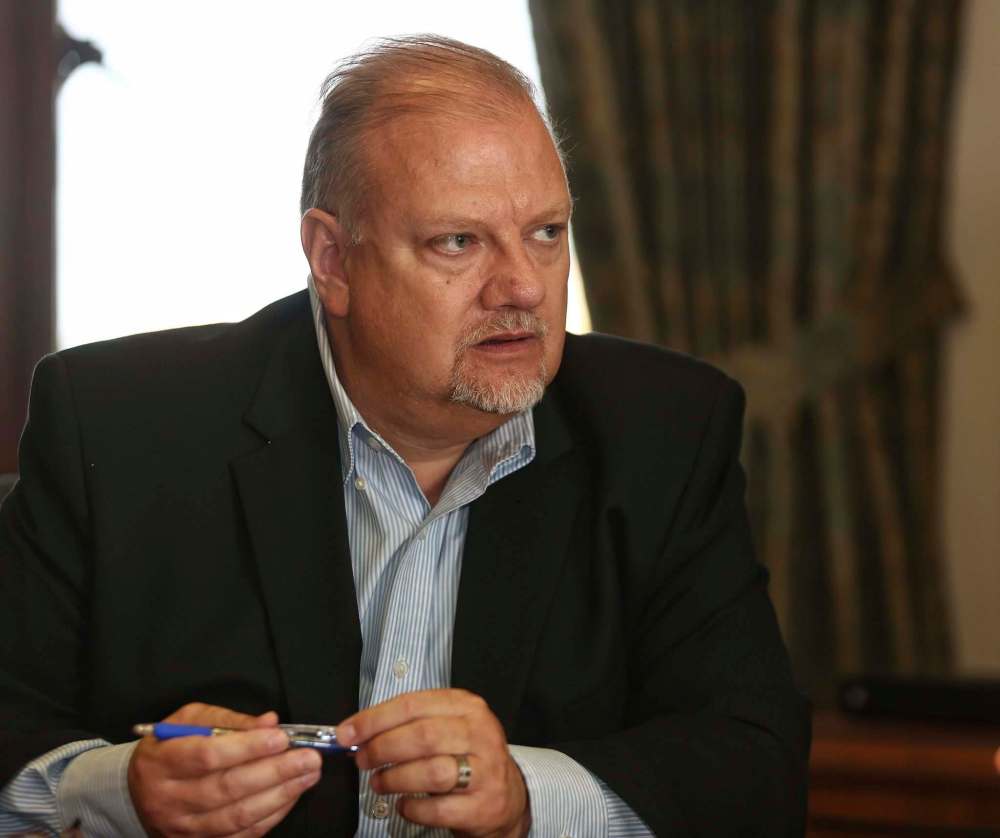
“I’m not expecting it to go perfectly,” Goertzen said in an interview with the Free Press. “There are a lot of changes that are happening, and it’s a system that hasn’t changed for a long time.”
What is surprising, according to Mary Agnes Welch, a Probe Research associate, is how deep skepticism of the reforms cross party lines, as well as the typical urban-rural divide.
Of the 60 per cent of people who said the changes are motivated by savings, 43 per cent identified as Progressive Conservative supporters. As well, 46 per cent of those surveyed who identify as Conservative backers think the changes will result in worse health care.
And there’s virtually no difference between how Winnipeggers feel about the changes and how the rest of Manitoba feels. Fifty-seven per cent of rural Manitobans think the changes are about the deficit, just four per cent less than the figure for Winnipeg alone.
Usually, Welch said, there’s a 10-point difference.
“Part of that is political; it’s Tories versus NDP,” she said, but, “we didn’t see that here, so rural people — including many Tories — are just as worried about these changes.”
Tories are just like other voters, Goertzen noted, and “change can be difficult for people.”
While the health minister hasn’t been blasé about the disruptions associated with the overhaul, he has been resolute in their need to happen.
“When I’m challenged and sitting there at two in the morning and thinking about a lot of these things, at least I know that we acted on the evidence,” he said.
His comment is a nod largely to the Peachey report, commissioned by the former NDP government, although only submitted to Goertzen’s deputy minister earlier this year. The evidence he refers to also includes a health-care sustainability report the government paid KPMG to conduct, promised to release with redactions and then, ultimately, refused to release.
“We’ve seen nothing but spin,” said NDP health critic Matt Wiebe, MLA for Concordia. The survey, he said, is an indication that Manitobans are seeing right through it.
“They understand that the cuts that have been made are part of an austerity agenda by this government,” he said. “They’re part of a cut agenda and not about improving patient care, which is what this government has been saying they’re trying to do.”
Wiebe called for the government to put the brakes on health-care reforms. He wants the province to release the KPMG report and conduct a thorough review of the system, in line with the Peachey report, instead of doling out changes “piece by piece.”
That’s not possible, Goertzen said.
“In a perfect world, we would have looked at doing Dr. Peachey first, those recommendations first, for a couple of years and then looking at the sustainability for a couple of years,” he said.
The report was co-authored by Dr. David Peachey, a Nova Scotia-based principal with Health Intelligence Inc.
Even then, Goertzen noted, that would have been largely to help the public more clearly separate the province’s demand each regional health authority find millions in annual savings from the overhaul to Winnipeg health care delivery.
Ultimately, Goertzen said, “we didn’t inherit a perfect world.”
Although Manitoba finally signed on to Ottawa’s health-funding agreement last week after a months-long stalemate, it didn’t succeed in overturning the federal government’s decision to cut annual increases in health transfers to 3.5 per cent from the previous six per cent.
That decrease coupled with the province’s own rising health-care costs meant making the changes in tandem “was somewhat of a matter of necessity,” Goertzen said.
Still, he acknowledged there’s been considerable confusion about where cuts do and don’t overlap with reforms.
To be clear, the Winnipeg Regional Health Authority was instructed to find $83 million in annual savings. It says $21 million will come from reforms, although those reforms will require nearly $20 million in infrastructure upgrades to be feasible.
“I accept some of that criticism,” Goertzen said. “All of us could learn to do a better job of communications. I mean, you don’t get a lot of trial runs at this, right? This is the largest change in the health-care system in a generation.”
Lori Lamont, the WRHA vice-president spearheading the change, agreed.
“I wouldn’t necessarily say that your poll results are surprising to me either given the magnitude of the change,” she said.
Far from being a plan tied to a specific savings amount, Lamont stressed, “the consolidation plan was really developed by our clinical leadership in the region to design a system that better met the needs of, particularly, our most acute patients.”

It’s in the nature of health care to evolve, she said, with staff always looking for new technologies and new methodologies to improve care and excising old ones that “maybe aren’t at the cutting edge.”
Still, the doors at the Victoria General Hospital ER and the Misericordia Urgent Care Centre haven’t even shut yet and Manitobans are already frustrated.
“If two-thirds of Manitobans right now think that things are going to get worse thanks to these changes and the changes haven’t even happened yet,” Welch said, “how much is this a harbinger of even more anger to come?”
jane.gerster@freepress.mb.ca
Survey Highlights:
60 per cent think the government is making these changes in order to save money, whereas 17 per cent think it’s to improve the system’s efficiency and quality
Men are more likely than women to think the changes are to improve health care (21 per cent vs. 13 per cent)
Women are more likely than men to think the changes will make the system much worse (45 per cent vs. 31 per cent)
Younger adults (18-34) are most likely to think the changes are to improve health care, as opposed to saving money
28 per cent of provincial Progressive Conservative supporters think the changes are to improve health care, compared with just four per cent of NDP supporters
Question No. 1: As you may know, the Manitoba government has been making a number of changes to the province’s health-care system, including closing three Winnipeg emergency rooms. Based on whatever you may have seen, read or heard about these changes, what do you think is the main reason the government is making these changes? Is it to save money and help the government to meet its deficit-reduction commitments; to improve the overall efficiency and quality of the health-care system; or both/neither.
Question No. 2: And do you think these changes to Manitoba’s health-care system will result in better or worse health care services for Manitobans overall?
Poll Methodology:
Probe Research surveyed more than 1,000 adult Manitobans using an online survey between Aug. 8 and Aug. 20. Due to the online nature of the survey, there is no margin-of-error. Probe used minor statistical weighting to ensure that the respondents reflect the known demographics of Manitoba’s adult population.
How Women Feel About Winnipeg Health Reforms:
Probe Research’s survey of Manitobans found women more than men are concerned by health-care changes currently underway. Sixty-three per cent of women believe the changes are geared toward curbing the deficit rather than improving health care. That is, perhaps, unsurprising given multiple service changes announced in July whose impact will be felt most keenly by women.
The WRHA announced it would close the Mature Women’s Centre, which had more than 5,000 patient visits last year, to save $160,000 per year. It also announced the two lactation consultant positions at Health Sciences Centre would be terminated and their work largely shifted back to the general nursing population.
Earlier this month, the executive director of the Women’s Health Clinic wrote a blog post addressing the issues.
“The cuts are hard, and I will admit, I take some of them personally,” wrote Theresa Oswald, who is also a former health minister.
“It is my hope that in the days ahead, we are able to reiterate the importance of focusing on the evidence that clearly shows that when women have access to good health care, so do their families; in this way, they are the key to improving the health status of entire communities.”

Advertisement Advertise With Us
Advertisement Advertise With Us
History
Updated on Monday, August 28, 2017 6:31 AM CDT: Adds photo