

Manitoba senators brace for battle with Ottawa over Indian Act status
Advertisement
Read this article for free:
or
Already have an account? Log in here »
To continue reading, please subscribe:

Digital Subscription
One year of digital access for only $205*
- Enjoy unlimited reading on winnipegfreepress.com
- Read the E-Edition, our digital replica newspaper
- Access News Break, our award-winning app
- Play interactive puzzles
*First annual payment billed as $205.00 + GST for one year. This annual subscription will automatically renew at $233.00 + GST every 52 weeks (10% off the regular annual price of $259.35). Offer available to new and qualified returning subscribers only. Cancel any time.
To continue reading, please subscribe:
Add Free Press access to your Brandon Sun subscription for only an additional
$1 for the first 4 weeks*
- Enjoy unlimited reading on winnipegfreepress.com
- Read the E-Edition, our digital replica newspaper
- Access News Break, our award-winning app
- Play interactive puzzles
*Your next Brandon Sun subscription payment will increase by $1.00 and you will be charged $17.95 plus GST for four weeks. After four weeks, your payment will increase to $24.95 plus GST every four weeks.
Read unlimited articles for free today:
or
Already have an account? Log in here »
Hey there, time traveller!
This article was published 21/09/2017 (3292 days ago), so information in it may no longer be current.
OTTAWA — Two Manitoba senators say they’re bracing for yet another showdown with Ottawa in a years-long dispute over who is entitled to Indian Act status, amid confusion over the government’s plans.
“The issue of whether discrimination exists is pretty clear-cut,” Sen. Murray Sinclair said. “The question of what to do about it is to change the law.”
An August 2015 court decision ruled the Indian Act discriminates by excluding women who marry non-Indigenous men, as well as their descendants.
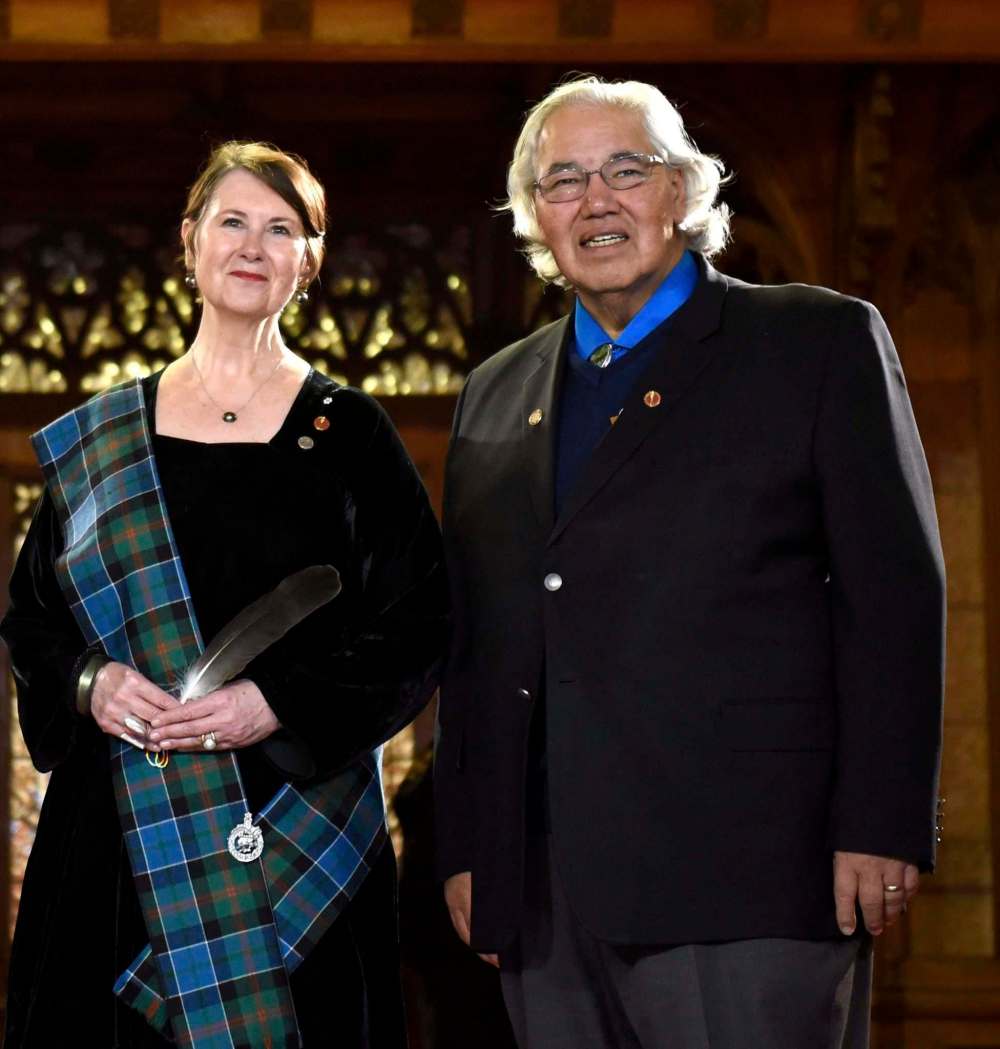
In November 2016, the federal Liberal government tabled Bill S-3, which would fix Indian Act lineage rules for those who lost their status from 1951 onward, and their descendants.
Ottawa says that would offer Indian status to roughly 35,000 Canadians, and kick off a consultation process to look at expanding the bill later.
But Manitoba Sen. Marilou McPhedran amended the legislation in May so it would apply to cases dating to 1876, as First Nations activists have long demanded. That sparked a dramatic showdown with the government.
On June 21 — National Aboriginal Day — the government gutted McPhedran’s amendment and sent it back to the Senate for a vote, insisting it meet a July court deadline. But senators dug in their heels, prompting the Liberals to pull the bill off their parliamentary schedule before the June recess.
“I continued to be mystified why the Trudeau government is taking this approach,” McPhedran said Thursday.
This August, a Quebec court gave the government another extension, to Dec. 22, in a scathing ruling that accused the Liberals of dragging their feet.
The government argues McPhedran’s so-called “all the way” amendment would lead to a sudden onslaught of First Nations band members with voting rights.
Sinclair said a staggered approach would solve those concerns, by defining gradual implementation dates.
“They need to make the law compliant with the Charter,” said Sinclair, who doubts band councils would see their voting rolls swell.
“The impact is largely going to be upon urban, Indigenous people who no longer live on reserves, because they’ve not been allowed to,” he said. “They’re not likely to move back to reserve lands; they’re largely urbanized people.”
Sinclair also doubts the bill would cost Ottawa much money. Some senators suggest a wider Bill S-3 could help low-income Indigenous people in cities such as Winnipeg, because Indian status provides benefits such as mental-health care and some prescriptions. However, Sinclair believes such people are already poor enough to qualify for social-assistance programs.
The Senate resumed its fall session this week, and the government delayed debate on the bill for all three sitting days.
McPhedran met Wednesday with the Liberals’ Senate head, Peter Harder. She claims Harder is waiting on Prime Minister Justin Trudeau to issue the “mandate letters” for the two ministers whose roles he changed Aug. 28, to learn who’s in charge of the bill. Trudeau split Indigenous issues between practical services and Crown disputes.
Harder declined to comment on what he believed to be a private conversation.
In any case, the office of Crown-Indigenous Minister Carolyn Bennett said she’s the one steering the bill “for now.”
“We are absolutely committed to ensuring gender equality in the registration provisions of the Indian Act,” wrote spokeswoman Sabrina Williams.
She said that “Bill S-3 is the first step,” and that whether it gets amended, the government will start a consultation process in early 2018 to “end the misguided piecemeal approach of successive governments.”
Sinclair said that’s exactly what the Liberals are doing, by not fixing all parts of the law that violate the Charter. Instead, “their process was to talk to First Nations leaders to see if they can negotiate a solution. You can’t negotiate discrimination, and shouldn’t even try.”
This summer, the government commissioned Stewart Clatworthy, a renowned Winnipeg demographer, to tabulate hypothetical iterations of the bill, including McPhedran’s amendment, to see how many people would be affected.
Clatworthy said he submitted his written results in early September, which had a national scope, but bureaucrats didn’t ask for the more specific digital files he used to tabulate the reports. Those include “provincial, regional-level” data that show how many Manitobans would be eligible under the various amendments.
On Thursday, Trudeau placed Indigenous and women’s issues front-and-centre during his address to the United Nations General Assembly.
“He stood in front of the world as a champion of human rights,” McPhedran said, adding his approach to those issues at home “needs to align and reach the threshold that his speech implicitly promised.”

McPhedran, a former human rights lawyer, said foreign diplomats have claimed Canada’s discrimination against Indigenous women could impede the Liberals’ high-priority quest to clench a UN Security Council seat.
Four UN human rights bodies are compiling routine reports on Canada, and she says all of them have raised the issue of Indigenous women losing their lineage.
McPhedran said more senators have supported her amendment since the June break.
“I have no reason to believe that we are less strong in our concern about what this does to the soul of the Canadian nation, to perpetuate this discrimination.”
dylan.robertson@freepress.mb.ca
History
Updated on Friday, September 22, 2017 7:46 AM CDT: Minor changes, amends headline