

Feds propose $40-billion strategy to end homelessness
Advertisement
Read this article for free:
or
Already have an account? Log in here »
To continue reading, please subscribe:
Digital Subscription
One year of digital access for only $1.44 a week*
- Enjoy unlimited reading on winnipegfreepress.com
- Read the E-Edition, our digital replica newspaper
- Access News Break, our award-winning app
- Play interactive puzzles
*Billed as $5.77 plus GST every four weeks. After 52 weeks, price increases to the regular rate of $19.95 plus GST every four weeks. Offer available to new and qualified returning subscribers only. Cancel any time.
To continue reading, please subscribe:
Add Free Press access to your Brandon Sun subscription for only an additional
$1 for the first 4 weeks*
- Enjoy unlimited reading on winnipegfreepress.com
- Read the E-Edition, our digital replica newspaper
- Access News Break, our award-winning app
- Play interactive puzzles
*Your next Brandon Sun subscription payment will increase by $1.00 and you will be charged $17.95 plus GST for four weeks. After four weeks, your payment will increase to $24.95 plus GST every four weeks.
Read unlimited articles for free today:
or
Already have an account? Log in here »
Hey there, time traveller!
This article was published 25/10/2017 (3286 days ago), so information in it may no longer be current.
Ottawa’s first comprehensive federal housing strategy in a generation is a multibillion-dollar commitment over a decade, one of its key architects told a national homelessness conference in Winnipeg.
“It’s well north of $35 billion and closer to $40 billion over a 10-year period, and that includes everything from social to private housing, direct spending, support services and tax support. When it’s all said and done, we’re going to spend close to $40 billion,” Liberal MP Adam Vaughan said in an interview following his remarks Wednesday.
The Toronto-area MP, who spoke on the first day of the fifth annual National Conference on Ending Homelessness, is the parliamentary secretary to Jean-Yves Duclos, the federal minister of Families, Children and Social Development.
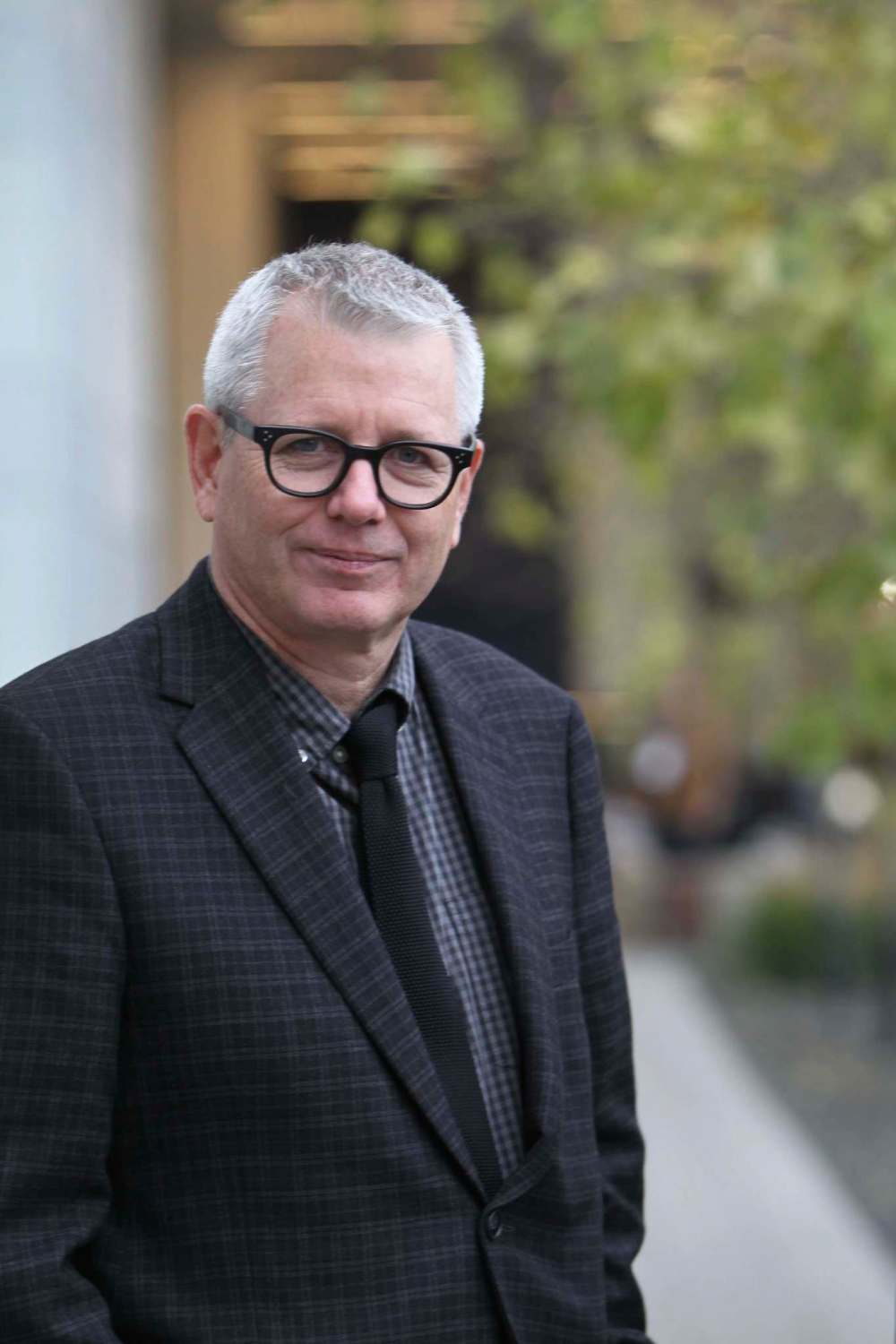
The three-day conference has drawn more than 1,000 housing experts – including policy strategists, decision makers and front line workers – from across the country. Vaughan enjoys broad support within the sector, with one delegate from Alberta confiding he’s a politician who “gets it.”
Conference themes meanwhile are focused on Indigenous people who make up 37 per cent of the homeless in Canada, and the Residential Schools Truth and Reconciliation Commission and it’s calls for actions.
In Canada, some 35,000 couch-surf or bed down in temporary shelters on the streets on any given night, according to statistics from the conference.
“The national housing strategy is about how to house people, not just about meeting targets for housing. We have to think about housing people, not just about building houses,” Vaughan said.
The MP also raised the idea of a portable housing benefit, which is when money for rent is pegged to individuals and not the buildings they live in. This allows people to move for work opportunities and personal reasons without being tied to a social-housing project.
It is unclear whether such a credit would follow Canadians as they move provinces, or if Ottawa wants provinces to implement such programs. Manitoba is one of the few places in Canada that provides such credits, in addition to subsidizing buildings.
Vaughan described the proposed massive federal funding bundle as a combination of direct spending that crosses sectors of the housing market, private and public, as well as a range of ancillary support services and tax measures.
Ottawa will earmark approximately $25 billion for social housing and homelessness, Vaughan said.
“It’s the largest investment in housing in the country’s history,” he said in remarks after his speech.
By comparison, federal funding for housing stood at approximately $2 billion under the previous Conservative government in keeping with a trend that dated back decades. Ottawa largely abandoned the housing file, leaving it to the provinces in the 1990s.
Canadians can expect Ottawa to announce the formal strategy in about a month, Vaughan said. “We’re putting the finishing touches on it now.”
Vaughan cautioned the success of such a housing strategy won’t depend only on Ottawa — the strategy is designed to be integrated into provincial and territorial levels of government.
It also includes an Indigenous component and calls for services to be folded into programs across a broad range of government departments, not just housing.
“The First Nations component is critical to the way we approach this issue,” Vaughan said, citing the phrase frequently repeated by Indigenous leaders: “Nothing about us, without us,” as a watchword for the way Ottawa envisions the strategy to roll out.
In March, the federal Liberals earmarked $11 billion in their 2017 budget for housing over the next decade, with most of the funding set to kick in towards the end of that time frame. Those funds were on top of a base of $4.8 billion, including the $2 billion under the previous Conservative government.
Since the spring, Ottawa has announced an additional $10.2 billion in a combination of mortgage guarantees and loan programs, largely through the Canada Mortgage and Housing Corp., which guarantees a portion of homeowners’ mortgages.
That envelope also included tax measures, as well as various other calculations that affect the way mortgages are managed. It even added in the value of surplus land in Canada.
On top of that, there are federal forecasts of approximately $5 billion more for various Indigenous programs, including construction of homes and community buildings. The balance is divided up over a range of support services across various funding envelopes, including health care for addictions and veterans’ services, Vaughan said.
The broad scope of the federal funding program was in keeping with a new definition of Indigenous homelessness in Canada released Wednesday at the Winnipeg conference.
Solving Indigenous Homelessness requires measures that recognize and encompass Indigenous cultures, perspectives and knowledge, the Canadian Observatory on Homeless said.
“Indigenous homelessness is not just lacking a place to live,” said Jesse Thistle, resident scholar on Indigenous homelessness for the Observatory.

Thistle, who was himself once homeless, said the new definition is broader than the roof over your head.
“It is better understood as a lack of healthy social, spiritual, emotional, and personal relationships, known in the Anishinaabe worldview (as) ‘All my relations,’ where everything is interrelated,” he said.
— with files by Dylan Robertson
alexandra.paul@freepress.mb.ca