

Seeking homelessness solutions in a supportive setting

Advertisement
Read this article for free:
or
Already have an account? Log in here »
To continue reading, please subscribe:

Digital Subscription
One year of digital access for only $205*
- Enjoy unlimited reading on winnipegfreepress.com
- Read the E-Edition, our digital replica newspaper
- Access News Break, our award-winning app
- Play interactive puzzles
*First annual payment billed as $205.00 + GST for one year. This annual subscription will automatically renew at $233.00 + GST every 52 weeks (10% off the regular annual price of $259.35). Offer available to new and qualified returning subscribers only. Cancel any time.
To continue reading, please subscribe:
Add Free Press access to your Brandon Sun subscription for only an additional
$1 for the first 4 weeks*
- Enjoy unlimited reading on winnipegfreepress.com
- Read the E-Edition, our digital replica newspaper
- Access News Break, our award-winning app
- Play interactive puzzles
*Your next Brandon Sun subscription payment will increase by $1.00 and you will be charged $17.95 plus GST for four weeks. After four weeks, your payment will increase to $24.95 plus GST every four weeks.
Read unlimited articles for free today:
or
Already have an account? Log in here »
Hey there, time traveller!
This article was published 25/10/2017 (3219 days ago), so information in it may no longer be current.
When Sharon Redsky was 13, she would head downtown to look for her mother — and she’d usually find her at the Main Street Project.
“I used to visit her in places like that,” Redsky told about 400 people gathered Tuesday in Winnipeg on the eve of the fifth National Conference on Ending Homelessness.
“I just wanted my mom to be better — to stop drinking,” Redsky said at a pre-conference summit on Indigenous homelessness.
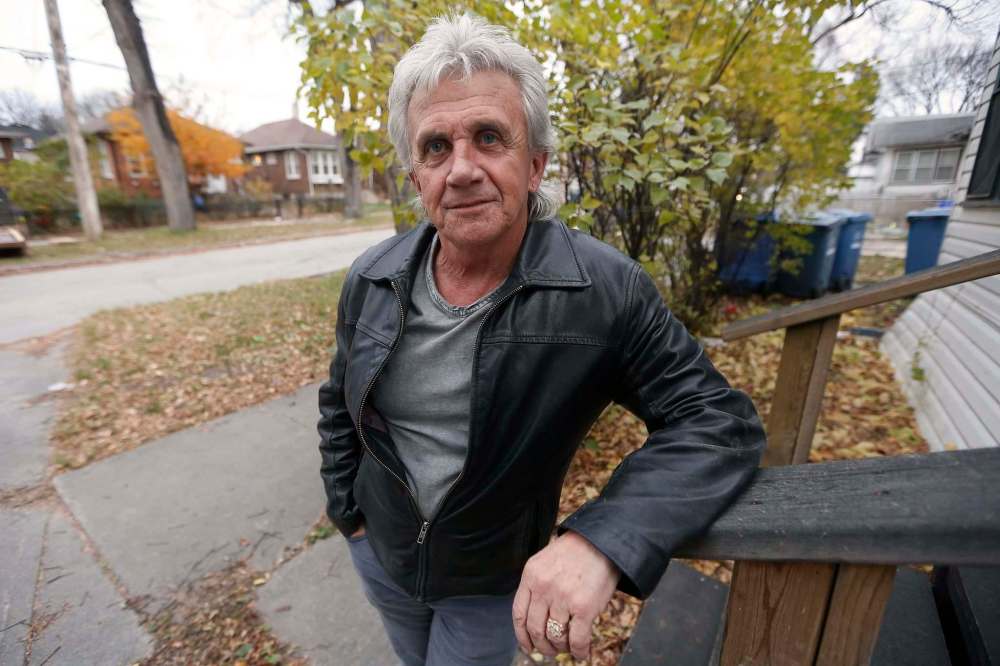
Decades later, little has changed, said Phil Goss, a peer advocate at Main Street Project, which shelters and supports people experiencing homelessness and addiction. Goss works with homeless clients and tries to find them places to live.
Close to 90 per cent of the people he works with are Indigenous, said Goss, who used to live on the streets until Main Street Project took him in, helped him get into detox and get the supports he needed.
“The housing crisis is a crisis,” said Adrienne Dudek, director of supportive and transitional housing at Main Street Project.
A national housing strategy is scheduled to be revealed Nov. 22, and will have five main targets: Indigenous people, seniors, refugees, veterans and low-income people, sources have told the Free Press.
Dudek said she hopes it offers housing with supports that are “person-centred, so you’re not making decisions for them — that’s how you create buy-in,” while connecting them to the community with a sense of belonging.
For five years, Main Street Project has used that approach at the Bell Hotel, where residents previously were chronically homeless.
It delivers health, eviction prevention, harm reduction, life skills, capacity building, counselling, goal-setting and advocacy services through the lens of independence and tenant-defined success.
With weekly meetings and daily mentoring, there’s been a significant decline in the residents’ contact with Winnipeg emergency services and law enforcement, Main Street Project figures show.
For Redsky, whose mother sought shelter at Main Street Project and died at 49 after turning to solvent abuse, homelessness is very much an Indigenous issue. End Homelessness Winnipeg estimates 74 per cent of the city’s homeless are Indigenous.
Now on the board of the Canadian Alliance to End Homelessness (organizer of the three-day national conference) and on the staff of Dakota Ojibway Child and Family Services, Redsky said she understands how her mother and so many Indigenous people end up battling addiction and homelessness.
Her mom was from Shoal Lake 40 First Nation, which was stripped of its rights by the federal government, cut off and left without safe water to drink when Winnipeg wanted Shoal Lake to be its source of drinking water.
It has taken 100 years and thousands of people to advocate three levels of government to “do the right thing” and approve the construction of “Freedom Road” to safely connect the First Nation near the Ontario-Manitoba border to the rest of the world, Redsky said.
“It’s indicative of Canada’s relationship with Indigenous people,” said Redsky.
When she was young, her mother was sent to an Indian residential school near Kenora, Ont., and, when she contracted tuberculosis, she was sent to an “Indian hospital” near Brandon.
As a child, her mother was kept away from her community for seven years, Redsky said.
It’s a shared legacy many are feeling the effects of today. Generations of Indigenous children were taken away from their families and now Manitoba has 11,000 children in care, said Redsky. Children aging out of foster care make up a large percentage of Manitoba’s homeless population, she said.
“We’ve just got to do better,” said Redsky.
“We need to have a voice and we need to be at the table,” she said, calling on boards to make room for Indigenous members.
“It’s going to take all of us to challenge the government in so many ways so we don’t have to beg for the things that are a foundation to who we are as a people.”
Jesse Thistle, who went from street poverty and drugs to an award-winning career in academia, says any solutions to Indigenous homelessness must take into account historical displacement and cultural loss caused by ruptured spiritual connections to the land.

At the conference Thursday, Thistle will present his research on a “revolutionary” definition of Indigenous homelessness, one that goes further than simply lacking a home.
“It’s a more nuanced way. It’s really about a lack of healthy relationships,” said Thistle, whose Saskatchewan roots include Cree-Métis and Algonquin. He hopes the new definition will help craft policies that will can help Indigenous people gain stability.
“We had to dispossess people to create the country that exists now. And through that lens it makes a lot of sense,” he said. “It’s totally new way to look at the issue; it’s kind of turning the lens around.”
— with files from Dylan Robertson
carol.sanders@freepress.mb.ca
Carol Sanders
Legislature reporter
Carol Sanders is a reporter at the Free Press legislature bureau. The former general assignment reporter and copy editor joined the paper in 1997. Read more about Carol.
Every piece of reporting Carol produces is reviewed by an editing team before it is posted online or published in print — part of the Free Press‘s tradition, since 1872, of producing reliable independent journalism. Read more about Free Press’s history and mandate, and learn how our newsroom operates.
Our newsroom depends on a growing audience of readers to power our journalism. If you are not a paid reader, please consider becoming a subscriber.
Our newsroom depends on its audience of readers to power our journalism. Thank you for your support.
What’s going on?
The fifth annual National Conference on Ending Homelessness is happening at the RBC Convention Centre, Oct. 25-27. Nationwide, 1,000 participants are expected to attend.
This year’s conference is focusing on Indigenous homelessness and the Truth and Reconciliation Commission’s recommendations and call to action.
What does homelessness look like in Winnipeg?
A street census conducted in 2015 counted 1,400 people experiencing homelessness in the city:
— 347 were staying at an emergency shelter;
— 333 were staying at another’s house;
— 281 were in transitional housing;
— 242 were in an institution;
— 65 were staying in a hotel/motel;
— 132 were sleeping outside.
— Seventy-four per cent of homeless Winnipeggers were identified as Indigenous.
— sources: Canadian Alliance to End Homelessness, End Homelessness Winnipeg, International Institute for Sustainable Development
Carol Sanders
Legislature reporter
Carol Sanders is a reporter at the Free Press legislature bureau. The former general assignment reporter and copy editor joined the paper in 1997. Read more about Carol.
Every piece of reporting Carol produces is reviewed by an editing team before it is posted online or published in print — part of the Free Press‘s tradition, since 1872, of producing reliable independent journalism. Read more about Free Press’s history and mandate, and learn how our newsroom operates.
Our newsroom depends on a growing audience of readers to power our journalism. If you are not a paid reader, please consider becoming a subscriber.
Our newsroom depends on its audience of readers to power our journalism. Thank you for your support.
Related Articles
Falling behind on homelessness
Advertisement Advertise With Us
Advertisement Advertise With Us
History
Updated on Wednesday, October 25, 2017 11:24 AM CDT: Fixes text problem.