

Cab fares to increase when province passes regulatory control to city
Mayor says industry to cover costs of running taxicab board
Advertisement
Read this article for free:
or
Already have an account? Log in here »
To continue reading, please subscribe:

Digital Subscription
One year of digital access for only $205*
- Enjoy unlimited reading on winnipegfreepress.com
- Read the E-Edition, our digital replica newspaper
- Access News Break, our award-winning app
- Play interactive puzzles
*First annual payment billed as $205.00 + GST for one year. This annual subscription will automatically renew at $233.00 + GST every 52 weeks (10% off the regular annual price of $259.35). Offer available to new and qualified returning subscribers only. Cancel any time.
To continue reading, please subscribe:
Add Free Press access to your Brandon Sun subscription for only an additional
$1 for the first 4 weeks*
- Enjoy unlimited reading on winnipegfreepress.com
- Read the E-Edition, our digital replica newspaper
- Access News Break, our award-winning app
- Play interactive puzzles
*Your next Brandon Sun subscription payment will increase by $1.00 and you will be charged $17.95 plus GST for four weeks. After four weeks, your payment will increase to $24.95 plus GST every four weeks.
Read unlimited articles for free today:
or
Already have an account? Log in here »
Hey there, time traveller!
This article was published 02/11/2017 (3230 days ago), so information in it may no longer be current.
The local taxi industry is facing more than stiff competition when the province green-lights ride-hailing services such as Uber and transfers regulation to city hall.
Taxi owners, drivers and their customers can all expect higher charges when city hall regulates the industry.
“There is a cost to running a taxicab board,” Bowman told reporters. “The costs were $700,000 to $800,000 under the previous model. The administrative costs (when the city takes over) will have to be made up from the model. It will have to be, at a minimum, revenue neutral. It can’t be put on the backs of taxpayers.”
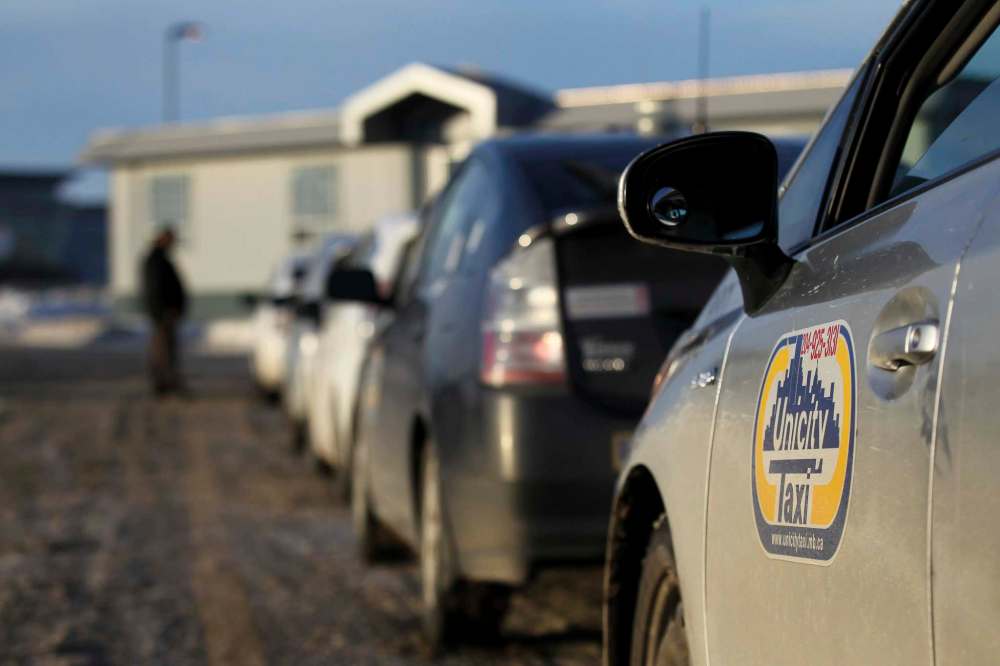
The province expects to pass legislation on Nov. 9 that would allow ride-hailing services such as Uber and Lyft in the province. The legislation will also abolish the Manitoba Taxicab Board and assign regulatory control of the industry in Winnipeg to city hall, effective March 1.
In addition to regulating taxis, Winnipeg city hall will also regulate the operation of limousine services, handi-cab operators and the ride-hailing services.
All other municipalities across the province already regulate their own taxi industry and they will, like Winnipeg, have to set rules for ride-hailing.
In the most recent fiscal year, covering 2015/2016, the Manitoba Taxicab Board incurred expenses of $754,000 and received $235,000 in revenue from taxi licence applications and fees, leaving a shortfall of $519,000 that was covered by the provincial government.
Bowman said there is no indication the Manitoba government will continue to subsidize the taxi industry regulation, adding he’s also not prepared to have those costs covered through property taxes.
Bowman said he expects an administrative report before the end of the year that will outline the regulatory process.
A spokesman for Unicity and Duffy’s taxi companies said the uncertainty surrounding how city hall will cover the expenses and what costs that will mean for the industry demonstrates the province has unnecessarily rushed the process.
Scott McFadyen said city officials have kept the taxi industry in the dark about how it plans to deal with issues affecting costs and safety, adding he doesn’t believe all issues can be addressed before the March 1 deadline.
“We have no indication at all from the city at all how they are going to proceed,” McFadyen said, adding that the industry, after two years of requests, is finally meeting with Bowman on Nov. 10.
“We’re of the opinion that more work needs to be done.”

While the taxi industry is demanding that Uber and other similar services be required to adhere to the strict safety standards imposed on the industry, Bowman was non-committal.
Bowman said that while safety is a concern of his, Winnipeg’s rules for ride-hailing services will likely follow what’s been done in other cities where the high safety standards — driver shields, driver training, in-car security camera, panic button — have not been imposed.
Uber customers are required to register ahead of time with the smartphone app and submit payment information so there is no exchange of money with a driver before or after a ride.
Both Uber drivers and customers provide ratings for each other after a transaction.
aldo.santin@freepress.mb.ca
Typical costs for taxi cab drivers and owners**
Taxi cab business licence: $200; required to be held by the vehicle owner and renewed, at the cost price, annually
Market price for a taxicab business licence: $400,000 to $500,000
Taxi cab drivers licence: $30; required to be held by a tax cab driver and renewed, at the same cost, annually
Required equipment, including taxi meter, driver shield, in-car security camera, panic button, roof-top strobe light: $4,000 to $5,000
Taxicab Driver Training program: $300
Drivers also must submit a criminal record check every four years and a child abuse registry check every two years.
** 2016 Winnipeg Taxicab Services Review by MNP
Manitoba Taxicab Board responsibilities to be assigned to Winnipeg City hall
— Determine the appropriate number of taxis (standard, seasonal, accessible taxis, handi-cab vans) and limousines
— Set taxi and limousine fares
— Conduct public hearings into fare increases
— Approve and issue taxicab business licences
— Approve and issue taxicab driver licences
— Process applications
— Receive and process fees and fines
— Conduct vehicle inspections
— Conduct street patrols to ensure vehicle compliance
— Issue offence notices and vehicle out-of-service orders
— Conduct compliance investigations
— Set up a complaints office
— Receive, assess and resolve complaints
— Co-ordinate and conduct complaint hearings
Related Articles
City's taxi industry wants Uber to play by the same rules
Advertisement Advertise With Us
Advertisement Advertise With Us