

Make accessible cabs a top priority, advocates say
Advertisement
Read this article for free:
or
Already have an account? Log in here »
To continue reading, please subscribe:

Digital Subscription
One year of digital access for only $205*
- Enjoy unlimited reading on winnipegfreepress.com
- Read the E-Edition, our digital replica newspaper
- Access News Break, our award-winning app
- Play interactive puzzles
*First annual payment billed as $205.00 + GST for one year. This annual subscription will automatically renew at $233.00 + GST every 52 weeks (10% off the regular annual price of $259.35). Offer available to new and qualified returning subscribers only. Cancel any time.
To continue reading, please subscribe:
Add Free Press access to your Brandon Sun subscription for only an additional
$1 for the first 4 weeks*
- Enjoy unlimited reading on winnipegfreepress.com
- Read the E-Edition, our digital replica newspaper
- Access News Break, our award-winning app
- Play interactive puzzles
*Your next Brandon Sun subscription payment will increase by $1.00 and you will be charged $17.95 plus GST for four weeks. After four weeks, your payment will increase to $24.95 plus GST every four weeks.
Read unlimited articles for free today:
or
Already have an account? Log in here »
Hey there, time traveller!
This article was published 26/01/2018 (3131 days ago), so information in it may no longer be current.
As the city takes over the lion’s share of work on taxi regulation by the end of February, advocates are wondering how it will prioritize accessible rides.
The city’s current plan calls for taxi companies to have at least 10 per cent of their fleets accessible vehicles. For ride-hailing services, there is no guaranteed number of accessible vehicles or licenses.
Taxi companies that break the 10 per cent rule will have to pay to the city seven cents per ride for every trip delivered by that company during the month, said Colin Stewart, a policy analyst with the Winnipeg Parking Authority.
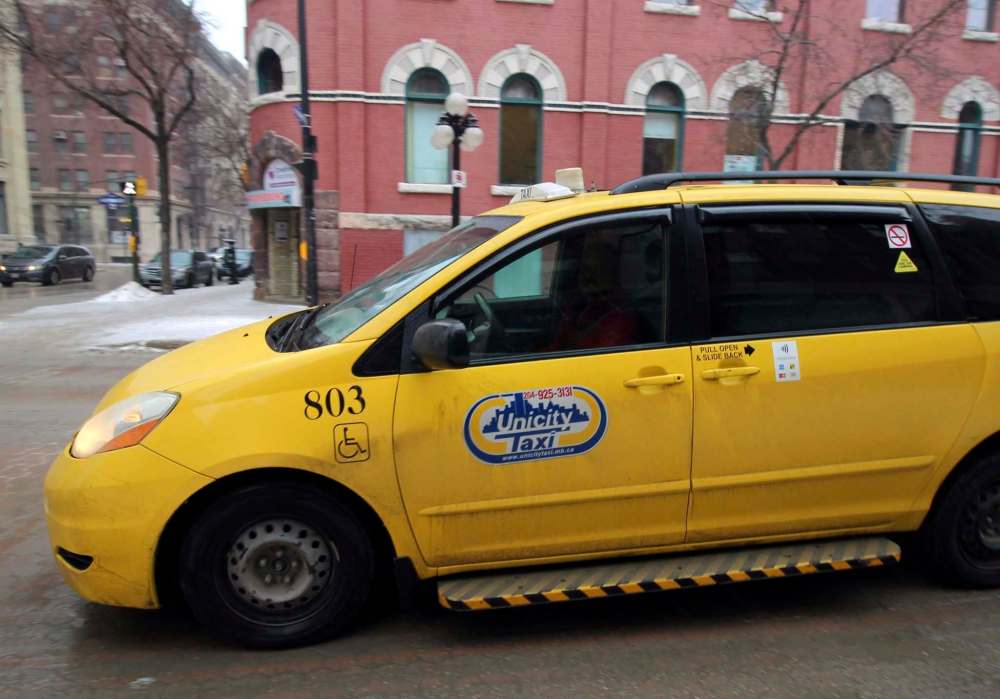
“While seven cents per trip doesn’t sound like a lot on average, in Winnipeg there are two million taxi rides per year. So there’s an economic incentive for dispatchers to make sure they have accessible taxis available,” Stewart said.
“We’re hoping we don’t actually collect any money,” he said, pointing to new reporting measures the city is installing to collect taxi data, which should keep costs top of mind.
Dispatchers will have to track the number of drivers they have on the road, requests for service and rides delivered, then relay the numbers back to the city.
“The key is they do report daily,” Stewart said.
David Kron, executive director of the Cerebral Palsy Association of Manitoba and chair of the Manitoba League for Persons with Disabilities, wonders why the city doesn’t mandate all taxis be accessible in the future.
In London, England, that’s the case. And New York City’s accessible dispatch program just expanded to its outer boroughs this week.
Kron wondered why Winnipeg doesn’t become an early adaptor, instead of phasing in accessible taxis in a slim margin of cars.
“I’m not expecting the cab industry to turn 180 degrees instantly, but in a generation the whole system could be accessible,” he said.
“There’s so many things (people with disabilities) have to fight for and advocate for. Can you just make it a universal design that fits everybody’s needs so I don’t have to find the 10 per cent of rides that might be available or on the road that day?”
A November 2017 report by Meyers Norris Penny (MNP) shows Winnipeg has the lowest number of taxis available per capita compared with other Canadian cities.
Winnipeg had one taxi per 1,155 people, compared to Hamilton (one per 1,170), Vancouver (one per 1,066), Ottawa (one per 806), Calgary (one per 647) and Edmonton (one per 611) in 2016.
As Patrick Falconer from Barrier-Free Manitoba pointed out, the accessible taxi numbers are even lower. Winnipeg’s fleet had 52 accessible vehicles in 2016, roughly 13 per cent of the 756 licenses, according to MNP.
The city plans to roll out 60 new taxi licenses through a lottery process in late February and 60 more by the end of the year. The selections will be chosen through an as-yet-undecided third party firm, Stewart said.
Two information sessions are happening Monday at the Fort Rouge Leisure Centre — from 1 p.m. to 3 p.m., and 3 p.m. to 5 p.m. — to explain the process to interested drivers or members of the public. For more information, visit winnipeg.ca/vehiclesforhire.
Falconer hopes to attend, but is still leery of the city possibly charging seven cents per ride for companies that violate the 10 per cent rule. No decision has been made yet on where that money would go, according to the city.

“It’s an approach that begs very serious human rights questions,” Falconer said. “Should taxis or anyone else be able to pay a levy in lieu of conforming to accessibility requirements?”
Before being elected, the PC government promised to have all five accessibility standards outlined in the Accessibility for Manitobans Act in place by the next provincial election in 2020. The fifth one is the yet-to-be-released transportation standard, which could throw the Winnipeg taxi situation into a tailspin.
Kron echoed Falconer’s feelings about the city’s legal implications, noting “if they pass it the way they’ve got it, someone’s going to put in a human rights complaint within the next five years.”
Stewart said the parking authority will review its vehicle-for-hire bylaw every year for the next five years to make sure it gets the system right.
jessica.botelho@freepress.mb.caTwitter: @_jessbu
History
Updated on Saturday, January 27, 2018 8:32 AM CST: Edted