

Workplace protections sought
Province accused of dragging feet on ethics policy for civil servants, lacking 'political will' to help rural councillors
Advertisement
Read this article for free:
or
Already have an account? Log in here »
To continue reading, please subscribe:

Digital Subscription
One year of digital access for only $205*
- Enjoy unlimited reading on winnipegfreepress.com
- Read the E-Edition, our digital replica newspaper
- Access News Break, our award-winning app
- Play interactive puzzles
*First annual payment billed as $205.00 + GST for one year. This annual subscription will automatically renew at $233.00 + GST every 52 weeks (10% off the regular annual price of $259.35). Offer available to new and qualified returning subscribers only. Cancel any time.
To continue reading, please subscribe:
Add Free Press access to your Brandon Sun subscription for only an additional
$1 for the first 4 weeks*
- Enjoy unlimited reading on winnipegfreepress.com
- Read the E-Edition, our digital replica newspaper
- Access News Break, our award-winning app
- Play interactive puzzles
*Your next Brandon Sun subscription payment will increase by $1.00 and you will be charged $17.95 plus GST for four weeks. After four weeks, your payment will increase to $24.95 plus GST every four weeks.
Read unlimited articles for free today:
or
Already have an account? Log in here »
Hey there, time traveller!
This article was published 04/04/2018 (3112 days ago), so information in it may no longer be current.
Manitoba’s auditor general is concerned the government isn’t acting on his recommendations to improve ethical standards for civil servants, leaving whistleblowers in rural municipalities without protection.
On Tuesday, opposition politicians also emphasized the need for legislative changes to safeguard rural councillors and staff, following a Free Press report detailing allegations of abuse in various municipalities.
In a report sent to Speaker Myrna Driedger last month, auditor general Norman Ricard provided status updates on a bevvy of prior missives from his office. They include Manitoba’s Framework for an Ethical Environment, originally addressed to the Civil Service Commission and the Department of Finance in 2014.
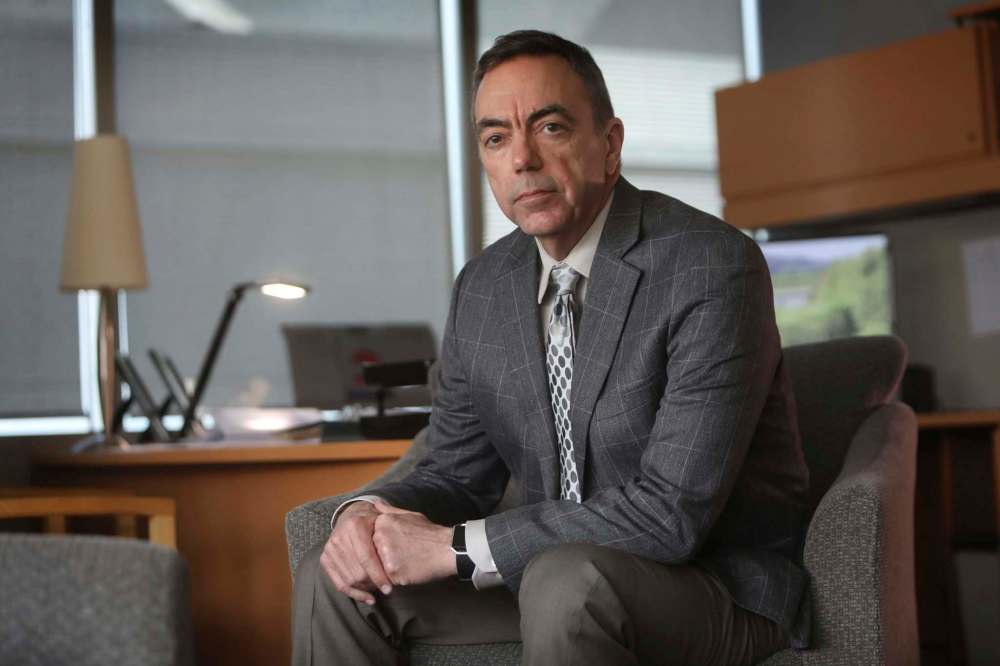
His office’s first recommendation — to develop an ethics policy or code of conduct that would include all civil servants and senior management — has had “limited progress,” the auditor general said.
“We also note that no action has been taken with respect to Recommendation 14, which is to develop and implement a process to enable employees to report concerns of ethical misconduct, including anonymous disclosures,” Ricard’s report continued.
During its initial audit in 2014, the auditor general’s office found one-third of employees surveyed were personally aware of ethical misconduct or fraudulent activity within their workplaces, but only half of the instances were reported to management.
“We continue to stress that employees need to be aware of where and how to report ethical issues and fraudulent activity that they become aware of within their workplace. Most importantly, employees need to feel safe in doing so,” Ricard wrote.
Since 2002, the auditor general’s office has investigated at least five municipalities for conflicts of interest and other breaches of the Municipal Act. It can’t, however, investigate stand-alone incidents of bad behaviour among councils or impose penalties. Many such incidents were reported in the Free Press Tuesday, including uttered threats, yelling matches, dead animals left on doorsteps and blocking a councillor from going to the bathroom.
Lots of these showdowns stem not just from personality conflicts, but from accusations of financial mismanagement or conflict of interest at councils.
Ricard wasn’t available for an interview Tuesday, but said by email his office is focused on investigating financial information.
“If allegations of abuse, harassment, or other matters beyond my mandate are brought to my attention, my office will advise these individuals to contact the proper body (for example, the provincial Ombudsman, or departmental appeal boards),” he said.
Manitoba ombudsman Charlene Paquin previously told the Free Press her office can only make recommendations to councils regarding how to deal with complaints and can’t ensure they are enforced.
In a 2012 interview, past-Manitoba auditor general Carol Bellringer said the province could use “the functions of a municipal auditor,” meaning a second auditor general focused solely on municipal issues. Such a position already exists in British Columbia, where Bellringer works today.
“When you get outside the major cities, you just can’t have an auditor in every municipality. It wouldn’t make any sense — they’re too small. So having one that covers more than one municipality (can work),” Bellringer said in an interview last week.
In Ontario, there’s also a municipal integrity commissioner appointed to investigate conflict-of-interest issues, similar to Sherri Walsh, who was appointed the City of Winnipeg’s integrity commissioner last year.
“The problem in municipalities is if the issue is because of a council member, then the council — which is the highest authority in the municipality — is going to have trouble dealing with it. So who does? Who should? Who can?” Bellringer said.
“I believe the province has quite a bit of power to intervene if they choose to. So I don’t think it’s a matter of applying more legislation. It’s a matter of whether or not the province is choosing to take action on it.”
Manitoba Liberal Leader Dougald Lamont said the matter ought to be a higher priority for provincial government.
“There are models they could be drawing from. The conflict-of-interest legislation Ontario has, has legislation to deal with protecting municipal officials. So they don’t have to reinvent the wheel,” Lamont said Tuesday. “Some of it is just a lack of political will on their part.”
Manitoba NDP Leader Wab Kinew voiced concern about reports of councillors yelling and name-calling.
“I don’t think there’s an excuse to yell at anybody in any professional context or to use disrespectful language in any professional context,” he said.
“We don’t tolerate this from our kids’ hockey coaches or basketball coaches, soccer coaches. Why would we tolerate it from our elected public officials?” he said. “The culture change that I think is needed is we should communicate to public officials, if you’re going to seek office, we expect you to be a level-headed person and someone whose going to conduct themselves respectfully.”
Premier Brian Pallister reiterated his government’s “no wrong door” policy when it comes to addressing harassment complaints Tuesday.
“The need for that (no wrong door policy), I think, was made especially clear because of recent things coming to light concerning a former cabinet minister and those behaviours. But it’s not isolated to provincial government. It affects municipalities, too,” Pallister said.

“There are different views on how to best handle it, but I’ve already had discussions with the (Association of Manitoba Municipalities) and their president in respect of how we can act in support of making sure that there’s a hassle-free workplace for municipal people.”
All three leaders said they are mulling over the kinds of legislative changes that could help rural municipalities operate more smoothly and who should investigate complaints. The next general municipal election happens Oct. 24.
— With files from Larry Kusch
jessica.botelho@freepress.mb.ca Twitter: @_jessbu
Related Articles
Law must be changed to curb 'Wild West' behaviour on councils
Advertisement Advertise With Us
Advertisement Advertise With Us