

Prison officials must explain reason behind segregation

Advertisement
Read this article for free:
or
Already have an account? Log in here »
To continue reading, please subscribe:
Monthly Digital Subscription
$1 per week for 24 weeks*
- Enjoy unlimited reading on winnipegfreepress.com
- Read the E-Edition, our digital replica newspaper
- Access News Break, our award-winning app
- Play interactive puzzles
*Billed as $4.00 plus GST every four weeks. After 24 weeks, price increases to the regular rate of $19.95 plus GST every four weeks. Offer available to new and qualified returning subscribers only. Cancel any time.
Monthly Digital Subscription
$4.99/week*
- Enjoy unlimited reading on winnipegfreepress.com
- Read the E-Edition, our digital replica newspaper
- Access News Break, our award-winning app
- Play interactive puzzles
*Billed as $19.95 plus GST every four weeks. Cancel any time.
To continue reading, please subscribe:
Add Free Press access to your Brandon Sun subscription for only an additional
$1 for the first 4 weeks*
*Your next subscription payment will increase by $1.00 and you will be charged $16.99 plus GST for four weeks. After four weeks, your payment will increase to $23.99 plus GST every four weeks.
Read unlimited articles for free today:
or
Already have an account? Log in here »
Hey there, time traveller!
This article was published 03/08/2018 (2810 days ago), so information in it may no longer be current.
Correctional officials must explain to inmates why they’re being placed in segregation, a Correctional Service of Canada representative confirmed, after one of Manitoba’s most high-profile killers recently claimed he was never shown evidence on the decision to segregate him and tighten his security classification.
Federal law and internal policies dictate the Correctional Service’s requirement to provide reasons and all information related to decisions made about a particular inmate to that inmate, a CSC Prairie region spokesperson said in a statement Friday.
“CSC has policies in place regarding the requirement to share information with offenders about their case, as well as the reasons for the decision about their case. This includes information and the reasons regarding security classification reviews and placements in segregation,” the statement reads in part.

If an inmate’s security classification has changed, the CSC is required to give the inmate the rationale as well as all information considered in coming to the decision within five working days. If an inmate is placed in administrative segregation — another term for solitary confinement — they must be notified of the reasons for doing so in writing within one working day, according to the CSC’s policies.
Inmates who believe they’ve been treated unfairly can go through an internal complaint process to file a grievance, a spokesperson said.
The CSC would not comment on the case of convicted triple murderer Denis Jerome Labossiere because of privacy concerns, the spokesperson said.
Labossiere tried to argue in Manitoba’s Court of Queen’s Bench that correctional officials failed to disclose any evidence to him, after they told him he was accused of ordering violent attacks on two other Stony Mountain Institution inmates in 2015. One of the inmates died and the other was severely injured in the attacks, which were allegedly carried out by Manitoba Warriors gang members.
Labossiere’s legal motion was dismissed this week over a lack of jurisdiction as he is currently being held in prison in Alberta.
He claims he was placed in segregation and had his medium-security classification raised to maximum security before he was transferred to a prison in Prince Albert, Sask. He claims he was not involved in either of the attacks, and says he was never shown video evidence correctional officials told him they had.

An affidavit filed in court in support of his legal challenge said he wanted to be classified as minimum security as he prepares to make a bid to be released on parole. He won’t be eligible to apply for parole until 2030 — 25 years after the murders he orchestrated.
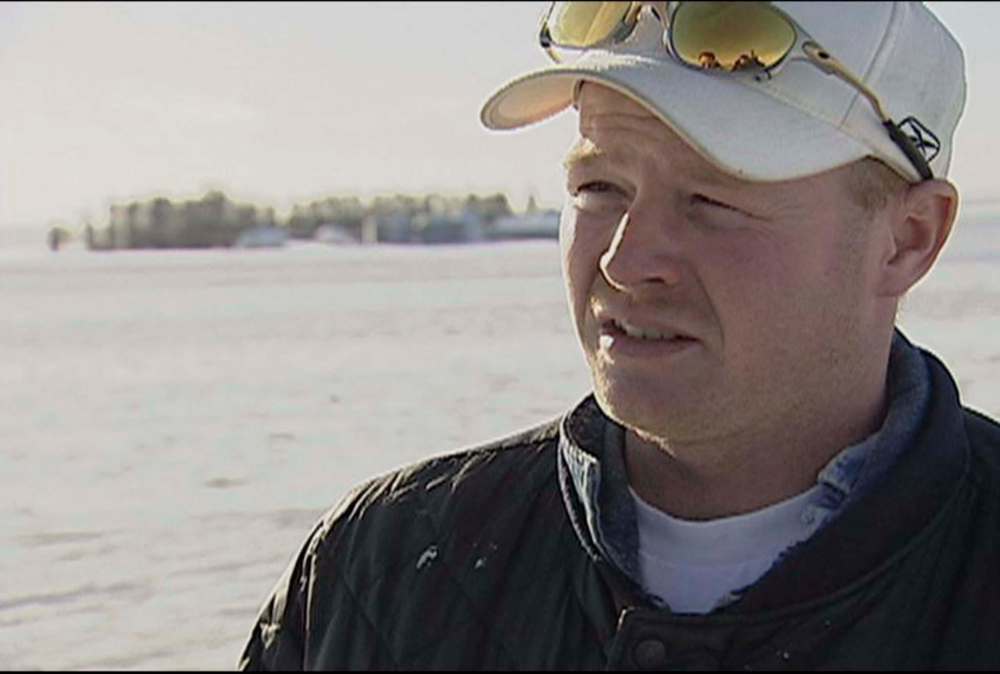
Labossiere was convicted of three counts of first-degree murder in 2012 for killing his parents, Fernand and Rita, and his brother, Remi Labossiere, in 2005. The three were shot and found dead after a fire was set at their St. Leon farmhouse.
A jury convicted Labossiere and acquitted a co-accused, after a third co-accused took a deal from the Crown and testified against Labossiere.
katie.may@freepress.mb.ca
Twitter: @thatkatiemay
Katie May is a multimedia producer for the Free Press.
Our newsroom depends on a growing audience of readers to power our journalism. If you are not a paid reader, please consider becoming a subscriber.
Our newsroom depends on its audience of readers to power our journalism. Thank you for your support.
Katie May is a multimedia producer for the Free Press.
Our newsroom depends on a growing audience of readers to power our journalism. If you are not a paid reader, please consider becoming a subscriber.
Our newsroom depends on its audience of readers to power our journalism. Thank you for your support.
Advertisement Advertise With Us
Advertisement Advertise With Us
History
Updated on Friday, August 3, 2018 6:14 PM CDT: Adds photo