

CancerCare to contact patients
Decides to inform affected patients

Advertisement
Read this article for free:
or
Already have an account? Log in here »
To continue reading, please subscribe:
Digital Subscription
One year of digital access for only $1.44 a week*
- Enjoy unlimited reading on winnipegfreepress.com
- Read the E-Edition, our digital replica newspaper
- Access News Break, our award-winning app
- Play interactive puzzles
*Billed as $5.77 plus GST every four weeks. After 52 weeks, price increases to the regular rate of $19.95 plus GST every four weeks. Offer available to new and qualified returning subscribers only. Cancel any time.
To continue reading, please subscribe:
Add Free Press access to your Brandon Sun subscription for only an additional
$1 for the first 4 weeks*
- Enjoy unlimited reading on winnipegfreepress.com
- Read the E-Edition, our digital replica newspaper
- Access News Break, our award-winning app
- Play interactive puzzles
*Your next Brandon Sun subscription payment will increase by $1.00 and you will be charged $17.95 plus GST for four weeks. After four weeks, your payment will increase to $24.95 plus GST every four weeks.
Read unlimited articles for free today:
or
Already have an account? Log in here »
Hey there, time traveller!
This article was published 19/08/2018 (2841 days ago), so information in it may no longer be current.
CancerCare Manitoba said Sunday it will contact the estimated 175 patients who may have received a lower dosage of highly concentrated intravenous medication than they were prescribed because of the way the drugs were administered.
After media reported last week CancerCare Manitoba decided not to inform patients because notifying and alarming them might cause more harm than good, its chief medical officer said Sunday they will be getting in touch with the patients identified in the underdosing.
“It could be very upsetting to patients,” Dr. Piotr Czaykowski, CancerCare Manitoba’s chief medical officer, said Sunday.
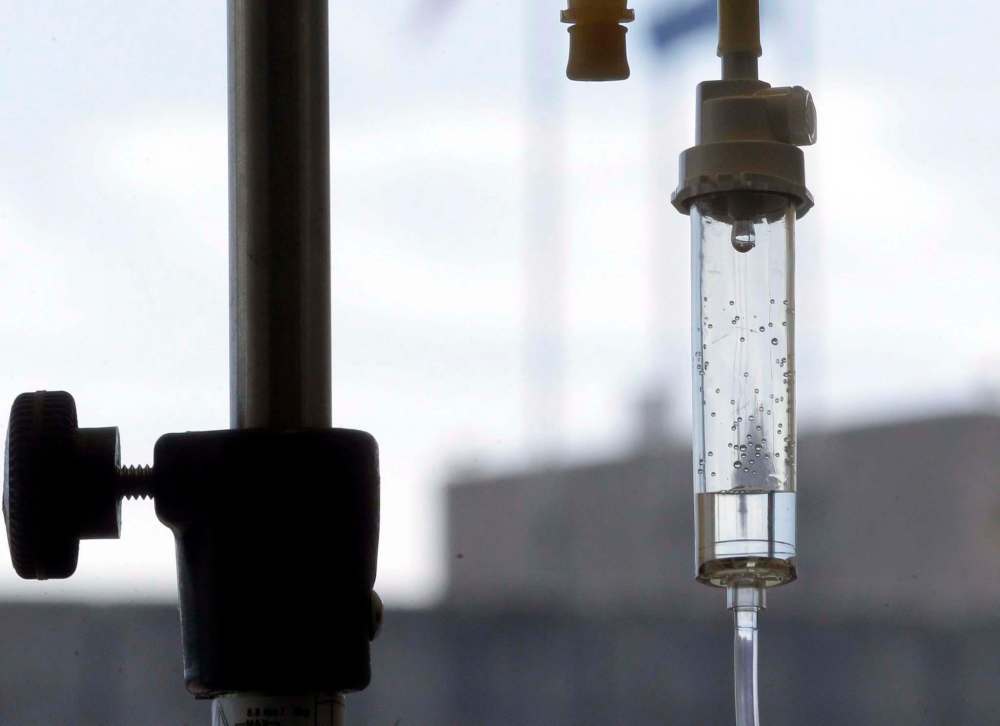
Some of the 175 Manitobans may have received as much as 15 per cent less than their prescribed dosage for one of three cancer drugs introduced in this province in the last two years. The good such a small amount might do to help patients was deemed to be much less than the harm a large amount of anxiety and stress in receiving that news would have on them, Czaykowski said.
Now, thanks to that news getting out, the affected patients have both the knowledge they received a lesser dose of the cancer-fighting drug, plus the anxiety and stress of knowing about it.
The underdosing was first reported by an Ontario nurse, who alerted Cancer Care Ontario in June about the inconsistent way cancer treatment drugs Pembrolizumab, Nivolumab and Panitumumab were being administered. Small amounts were left behind in IV tubes after treatments. The drugs are often used to treat patients in the late stages of cancer, such as advanced colon or kidney cancer or melanoma. Cancer Care Ontario passed that information along to hospitals in Ontario and their counterparts across the country, as well as Health Canada.
In Manitoba, CancerCare’s clinical team said Friday they decided not to notify patients. That decision was criticized by patients rights and medical ethics advocates. On Sunday, CancerCare was on the defensive, explaining its decision and reversing it.
“There was no desire to hide or obfuscate anything,” Czaykowski said Sunday. They were trying to do something for the patients’ own good, said the doctor. That decision not to inform patients has been criticized as “paternalistic” but that was never their intent, he said.
“We take that criticism square on the chin,” Czaykowski said. “It wasn’t our thinking that we know better than everyone else. We legitimately thought this was something that would cause anxiety and distress among the patients,” he said.
“The way these drugs are administered, they’re not finely calibrated.” Czaykowski said there’s a plus or minus 10 per cent dosing variance for administering them. Getting 10 per cent more or less “realistically” has no chance of producing an adverse outcome, he said.
Still, they’ll get in touch with patients who were potentially underdosed to tell them, he said Sunday.
“We’ll be notifying them directly by phone wherever possible,” and by other means if necessary “to make sure they all know about it,” Czaykowski said.

“We’ve been discussing the best way to get a message to our patients,” he said. Information will be posted on the CancerCare Manitoba website.
For CancerCare Manitoba, this has been a learning experience, Czaykowski said.
“It’s a fortunate thing these situations don’t arise very often. When they do arise, you have to learn from them,” he said. “Every time something like this happens, we double down and look at what processes are in place… That’s what’s happening right now. We’re analyzing the whole process,” he said.
CancerCare is looking at all of its processes for administering intravenous chemotherapy drugs “to make sure we don’t have any other surprises.”
carol.sanders@freepress.mb.ca
Carol Sanders
Legislature reporter
Carol Sanders is a reporter at the Free Press legislature bureau. The former general assignment reporter and copy editor joined the paper in 1997. Read more about Carol.
Every piece of reporting Carol produces is reviewed by an editing team before it is posted online or published in print — part of the Free Press‘s tradition, since 1872, of producing reliable independent journalism. Read more about Free Press’s history and mandate, and learn how our newsroom operates.
Our newsroom depends on a growing audience of readers to power our journalism. If you are not a paid reader, please consider becoming a subscriber.
Our newsroom depends on its audience of readers to power our journalism. Thank you for your support.
What’s a concerned cancer patient to do?
—Patients can address any questions or concerns at their usual appointments or by phoning their clinical care team.
—Contact the CancerCare Manitoba patient representative office at CCMBpatrep@cancercare.mb.ca, 204-787-2065 or toll free at 1-866-561-1026.
source: CancerCare Manitoba
Carol Sanders
Legislature reporter
Carol Sanders is a reporter at the Free Press legislature bureau. The former general assignment reporter and copy editor joined the paper in 1997. Read more about Carol.
Every piece of reporting Carol produces is reviewed by an editing team before it is posted online or published in print — part of the Free Press‘s tradition, since 1872, of producing reliable independent journalism. Read more about Free Press’s history and mandate, and learn how our newsroom operates.
Our newsroom depends on a growing audience of readers to power our journalism. If you are not a paid reader, please consider becoming a subscriber.
Our newsroom depends on its audience of readers to power our journalism. Thank you for your support.
Related Articles
CancerCare had no good excuse for keeping patients in dark
Advertisement Advertise With Us
Advertisement Advertise With Us
History
Updated on Sunday, August 19, 2018 11:11 PM CDT: Edited