

Churchill rail coalition discusses how deal was done
Advertisement
Read this article for free:
or
Already have an account? Log in here »
To continue reading, please subscribe:

Digital Subscription
One year of digital access for only $205*
- Enjoy unlimited reading on winnipegfreepress.com
- Read the E-Edition, our digital replica newspaper
- Access News Break, our award-winning app
- Play interactive puzzles
*First annual payment billed as $205.00 + GST for one year. This annual subscription will automatically renew at $233.00 + GST every 52 weeks (10% off the regular annual price of $259.35). Offer available to new and qualified returning subscribers only. Cancel any time.
To continue reading, please subscribe:
Add Free Press access to your Brandon Sun subscription for only an additional
$1 for the first 4 weeks*
- Enjoy unlimited reading on winnipegfreepress.com
- Read the E-Edition, our digital replica newspaper
- Access News Break, our award-winning app
- Play interactive puzzles
*Your next Brandon Sun subscription payment will increase by $1.00 and you will be charged $17.95 plus GST for four weeks. After four weeks, your payment will increase to $24.95 plus GST every four weeks.
Read unlimited articles for free today:
or
Already have an account? Log in here »
Hey there, time traveller!
This article was published 14/09/2018 (2944 days ago), so information in it may no longer be current.
After almost three years of effort, the lengthy, complex, sometimes bitter negotiations to put together a coalition to acquire the Hudson Bay Railway and its associated operations has been completed.
At a press conference Friday on the old railway bridge at the Forks, all parties involved — the federal government; a coalition of 30 First Nations, 11 other Northern Manitoba communities and seven communities in the Kivalliq region of Nunvut; Fairfax Financial Holdings Ltd.; and AGT Foods and Ingredients Inc. — called it an historic transaction.
Almost 16 months after rail service to Churchill was suspended, the new ownership group — called Arctic Gateway Group — has had contractors on the ground working for about a week to repair tracks that were washed out in an early thaw after significant snow storms in the spring of 2017. The hope is to have passenger service restored before this winter.
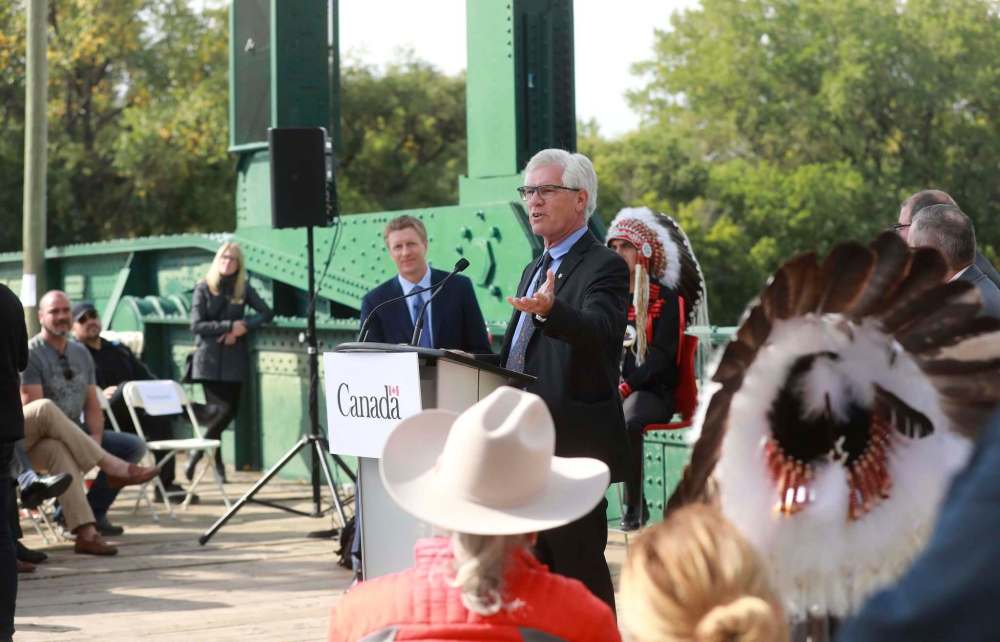
The federal government, through the department of Western Economic Diversification, has committed $117 million to the new owners, including $74 million to acquire the rail line and assets and to pay for repairs and $43 million for 10 years worth of ongoing subsidy.
No details have been disclosed as to how much the former owners, Omnitrax Canada, would receive in the deal.
“Negotiations were tough,” said Jim Carr, Winnipeg MP and federal minister of trade diversification. “I don’t know how you all persevered. What you see before you is an historic partnership. It represents a relationship founded on true collaboration and a real partnership between Indigenous people, communities, Canadian industry and the government of Canada.”
Mike Spence, the mayor of Churchill, said being locked in without ground transportation for 478 days has been hard on his community.
“This was one of the most challenging times in our community’s history,” he said. “There was a lot of stress. We woke up stressed and we went to bed stressed.”
With ownership split between the northern community coalition, Missinippi Rail Limited Partnership, and Fairfax and AGT, all parties agreed they have the kind of partnership that will ensure both reliable rail service that the people in the north depend on and the possibility of finally developing the potential of the rail line and port that has been talked about for decades.
The Hudson Bay Railway is Canada’s only rail link to the Arctic Ocean, and the Port of Churchill is its only deep water port in the Arctic.
Paul Rivet, president of Toronto-based Fairfax, an $18 billion company which owns about five per cent of Regina-based AGT, said, “It is inconceivable at this point in time – the port has been there for nearly 100 years — that there is really no GDP going through it.”
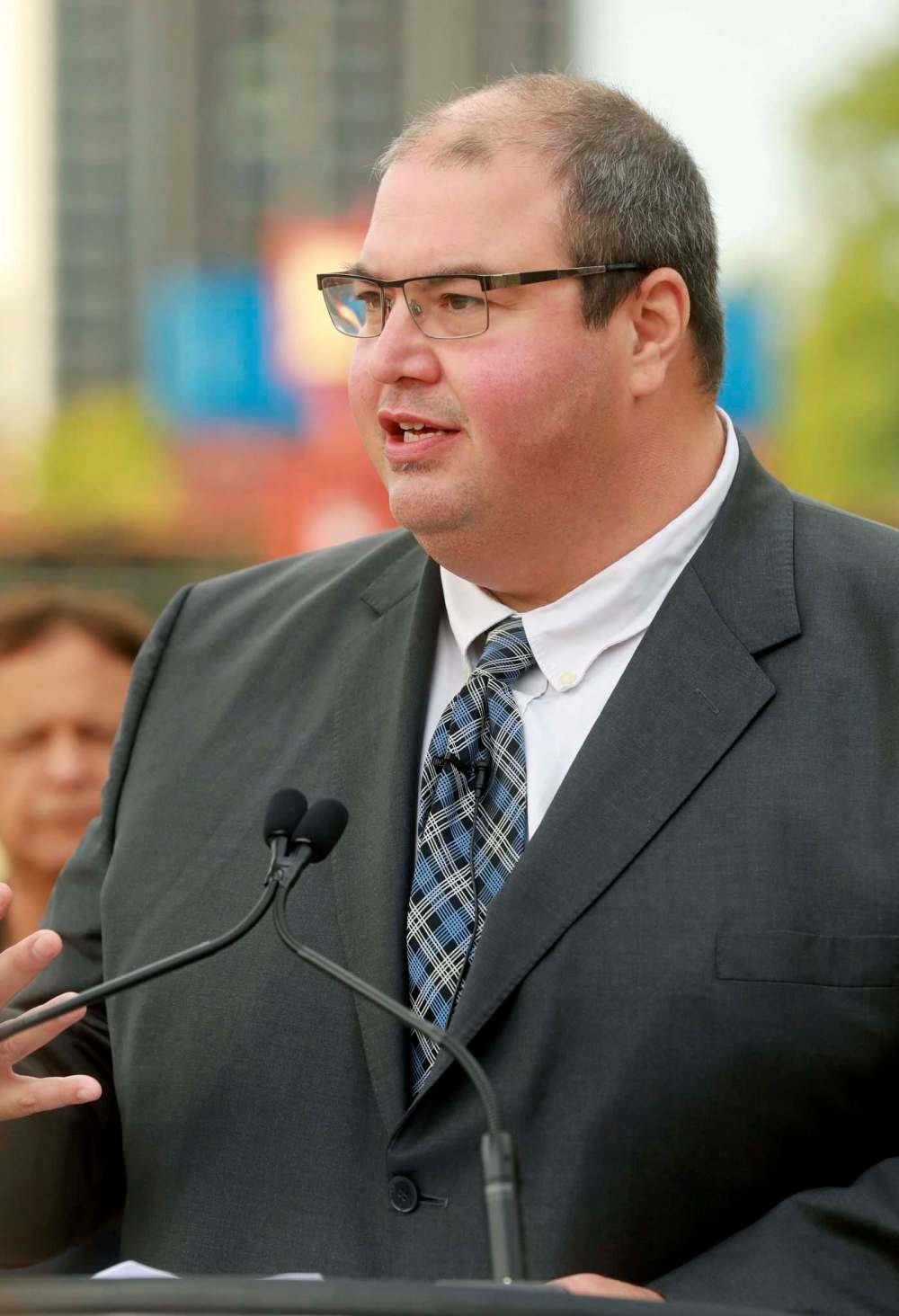
Rivet and Murad Al-Katib, who is president and CEO of AGT Foods, said the plan is to work slowly to repair and rehabilitate the rail line and start building up cargo traffic over time.
“The first thing we told the community of Churchill is we are not sprinters,” Al-Katib said. “We have stamina, reliability. We are not in it for short term cash flow. We are going to build it up back to the old days on a diversified book of business. Grain is not the saviour of this port. Grain will be just one commodity for the port.”
Arlen Dumas, grand chief of the Assembly of Manitoba Chiefs, has been working on achieving the kind of result announced Friday for close to three years, starting when he was still chief of the Mathias Colomb First Nation.
“Despite all the the obstructionists and all the naysayers and the doubters … how do you like me now?” he said. “Many, many times we almost had a deal, then something would happen. It was not a conventional business deal, that was the trouble and people had difficulty understanding or comprehending it.”
It is still not clear if the First Nation partners put up any cash in the deal, but Dumas said his exclusive negotiating rights which he held from the start “did not come for free.”
Chief Christian Sinclair of Opaskwayak Cree Nation, who was one of the leaders in organizing participation from all the Bay Line communities, said Indigenous people have never benefitted from the railway in the past and there will now be potential to take part in many service agreements with the operation that they are all now part owners of.
In addition to the federal cash, the private sector partners have also put up additional funds.
Al-Katib said, “Financial details of our initial investments have not been made public. But we have made a capital contribution and were able to secure commercial financing as well to put in the pot.”
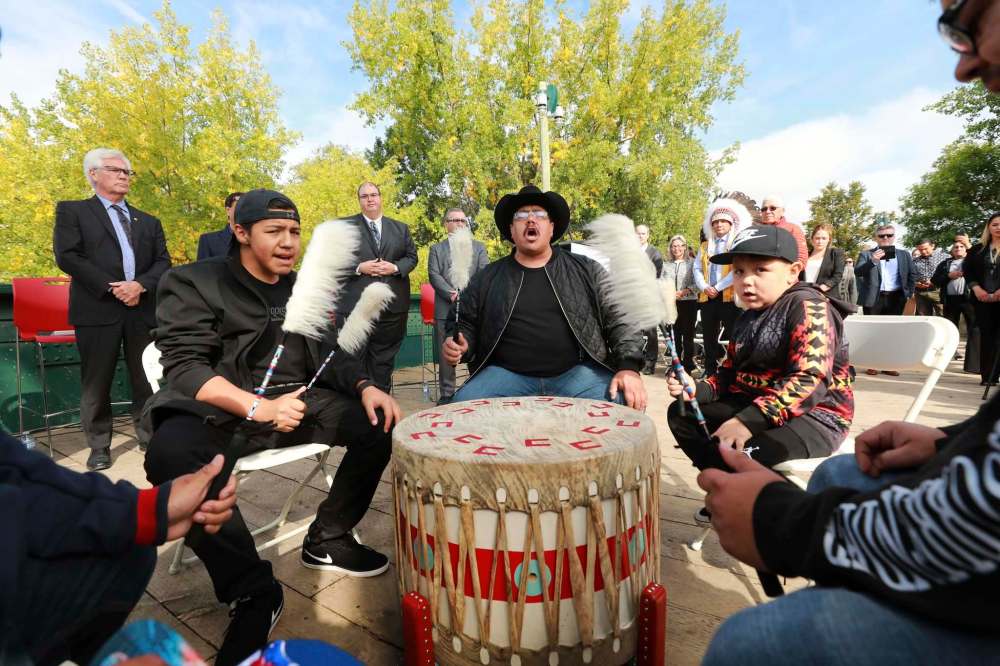

After about an hour’s worth of speeches, the word “Omnitrax” was not uttered once. Even before last year’s service disruption, the Denver-based company, which owned the Manitoba operations since 1997, had made it clear it wanted out of Northern Manitoba and was seeking a buyer. Since then it has dug in its heels, refusing to fund repairs, and a series of legal actions and counter actions with the province and federal governments ensued.
Rivet said the sabre rattling is over and “in the spirit of cooperation everyone has laid down arms and taken up shovels.”
Rivet was the only one to refer to the former owner of the rail line, saying of Omnitrax founder, Pat Broe, “Without him being a gentleman and, at the end of the day coming to the negotiating table, we would not have been able to get this done.”
In a prepared statement, Kevin Shuba, CEO of Omnitrax, Inc., said, “We have long recognized the vital role the Hudson Bay Railway plays in connecting Canada’s north, and we are very pleased to see an agreement in place that will ensure the long-term operations of the rail line. We believe this is the best outcome for all stakeholders and look forward to working with The Arctic Gateway Group to facilitate a smooth transition of ownership.”
martin.cash@freepress.mb.ca