

First Nations highway signs on road to reconciliation
Advertisement
Read this article for free:
or
Already have an account? Log in here »
To continue reading, please subscribe:

Digital Subscription
One year of digital access for only $205*
- Enjoy unlimited reading on winnipegfreepress.com
- Read the E-Edition, our digital replica newspaper
- Access News Break, our award-winning app
- Play interactive puzzles
*First annual payment billed as $205.00 + GST for one year. This annual subscription will automatically renew at $233.00 + GST every 52 weeks (10% off the regular annual price of $259.35). Offer available to new and qualified returning subscribers only. Cancel any time.
To continue reading, please subscribe:
Add Free Press access to your Brandon Sun subscription for only an additional
$1 for the first 4 weeks*
- Enjoy unlimited reading on winnipegfreepress.com
- Read the E-Edition, our digital replica newspaper
- Access News Break, our award-winning app
- Play interactive puzzles
*Your next Brandon Sun subscription payment will increase by $1.00 and you will be charged $17.95 plus GST for four weeks. After four weeks, your payment will increase to $24.95 plus GST every four weeks.
Read unlimited articles for free today:
or
Already have an account? Log in here »
Hey there, time traveller!
This article was published 09/11/2018 (2830 days ago), so information in it may no longer be current.
Calling it a step towards reconciliation with Indigenous people, the federal and provincial governments will be installing new highway signs recognizing First Nation communities in Manitoba over the next three years.
Each of the two levels of government will contribute $200,000 to the project to purchase and install directional highway and community-boundary signs that will reflect the traditional name of each community.
First Nations will be consulted to ensure the wording of signs is correct, the governments said. Currently, most signage does not reflect communities’ traditional names.
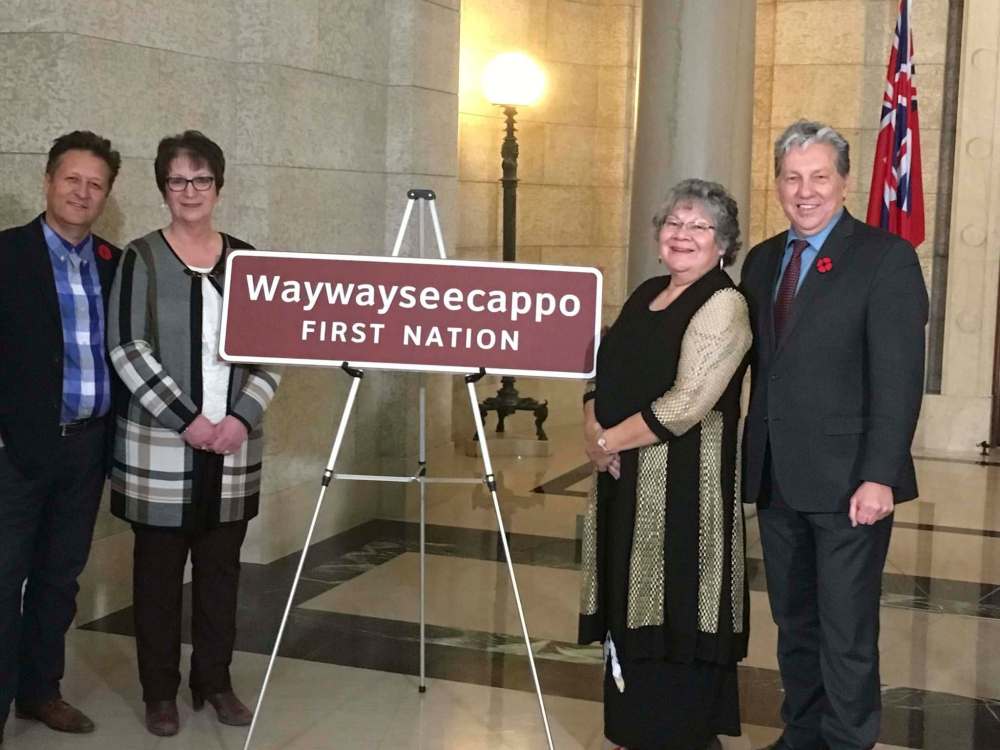
“This is a unique project. I’m very proud of it. I think this is a step towards reconciliation, a step towards recognizing the unique culture and language of First Nations in Manitoba,” Saint Boniface-Saint Vital MP Dan Vandal said at the announcement Friday at the Manitoba Legislative Building.
“With these new signs, we are recognizing the meaning and significance of traditional names, as well as the culture and language associated with them.”
Infrastructure Minister Ron Schuler, whose department will install the signs, said the province places highway signs recognizing towns that don’t even exist anymore, yet there are First Nations in Manitoba that are not marked on the province’s highways.

“Why wouldn’t we give recognition if there’s 1,600 people living in a community and they’ve never even had recognition that their community even exists, considering they were there first?” he said.
Schuler said the project will improve community visibility from the province’s major highways.
There were no First Nations leaders at Friday’s announcement. However, Belinda VandenBroeck, a member of Opaskwayak Cree Nation, who said a prayer before the event, said it was important culturally correct signage be installed.
“Our language is so, so important,” the residential school survivor said. “We can’t afford to lose it. We need to keep speaking it, thinking it, living from it.”
larry.kusch@freepress.mb.ca
History
Updated on Saturday, November 10, 2018 9:02 AM CST: Final
Updated on Saturday, November 10, 2018 10:28 AM CST: Photoadded.