

Snared cougar may be sign of repopulation, expert says
Advertisement
Read this article for free:
or
Already have an account? Log in here »
To continue reading, please subscribe:

Digital Subscription
One year of digital access for only $205*
- Enjoy unlimited reading on winnipegfreepress.com
- Read the E-Edition, our digital replica newspaper
- Access News Break, our award-winning app
- Play interactive puzzles
*First annual payment billed as $205.00 + GST for one year. This annual subscription will automatically renew at $233.00 + GST every 52 weeks (10% off the regular annual price of $259.35). Offer available to new and qualified returning subscribers only. Cancel any time.
To continue reading, please subscribe:
Add Free Press access to your Brandon Sun subscription for only an additional
$1 for the first 4 weeks*
- Enjoy unlimited reading on winnipegfreepress.com
- Read the E-Edition, our digital replica newspaper
- Access News Break, our award-winning app
- Play interactive puzzles
*Your next Brandon Sun subscription payment will increase by $1.00 and you will be charged $17.95 plus GST for four weeks. After four weeks, your payment will increase to $24.95 plus GST every four weeks.
Read unlimited articles for free today:
or
Already have an account? Log in here »
Hey there, time traveller!
This article was published 28/12/2018 (2803 days ago), so information in it may no longer be current.
THE recent accidental snaring of an adult cougar north of Swan River has put the spotlight on a species one wildlife expert believes may be making a comeback in the province.
“It’s possible we’re witnessing the recolonization of Manitoba by cougars. It’s happening across the eastern United States as well. North Dakota was recolonized 20 years ago,” Manitoba Sustainable Development zoologist Bill Watkins said Friday.
Cougars are recolonizing Saskatchewan, too, where their numbers have risen to the point where a trapping season was opened on the animals in the past two years.
Watkins said he first learned the account of a Manitoba trapper snaring a large cougar this week through photos supplied by the Winnipeg Free Press.
“It’s always kind of sad when you hear about one being killed, because they are so rare in Manitoba, but on the other hand, it is an opportunity to gain more scientific information,” Watkins said, adding he wasn’t surprised by the report, as counterparts in Saskatchewan have recorded a cougar population in the Carrot River area, which is close to Manitoba’s Duck Mountain and Porcupine Hills regions.
Watkins said he’s assembling a team to perform an official autopsy on the animal, probably at the end of January.
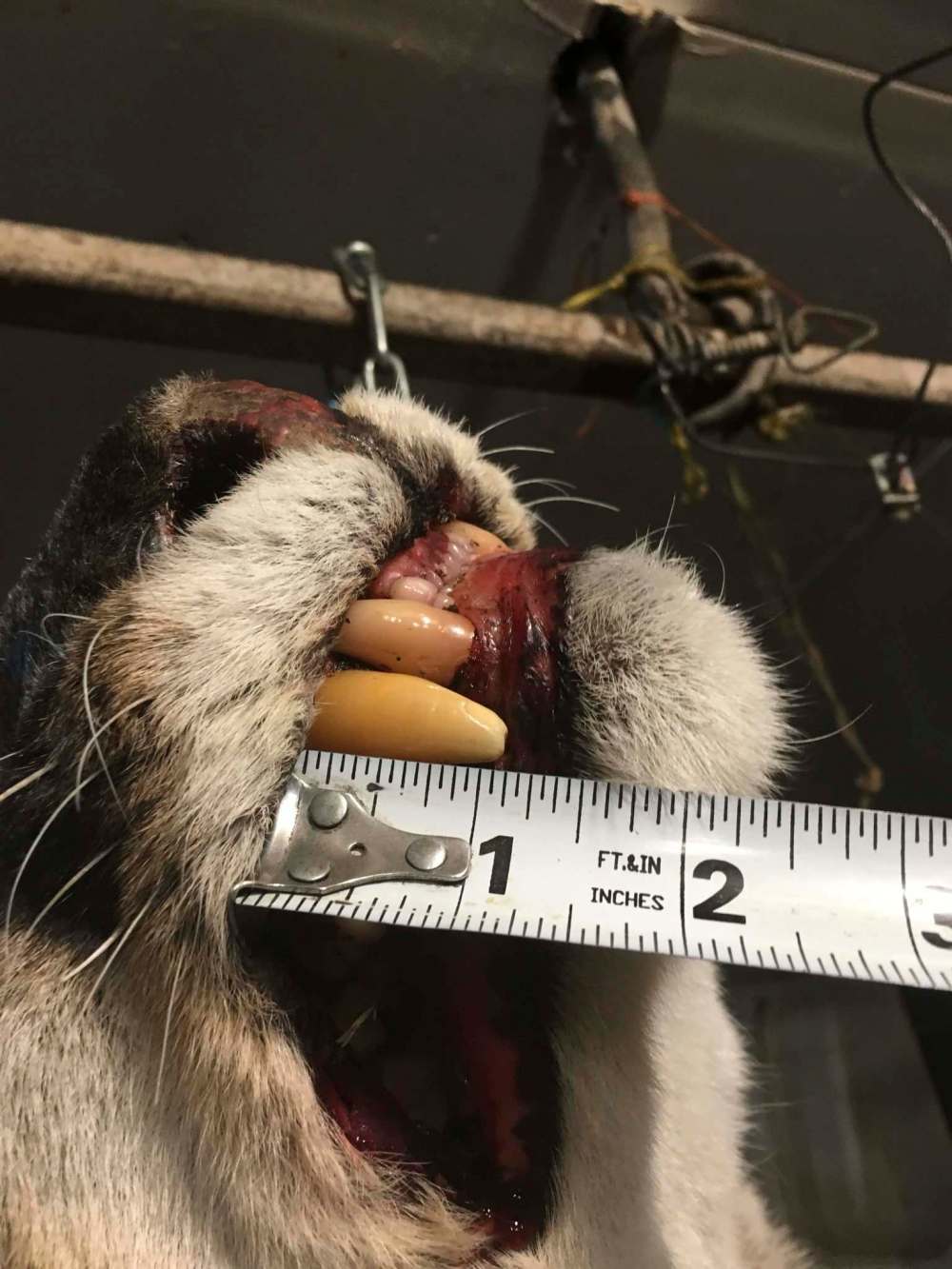
Herb Leslie, a registered trapper, arranged to turn over the animal — a 96-kilogram male, with 2.5-centimetre fangs and paws “the size of a small bear” — to provincial wildlife officials Friday in Swan River.
On Wednesday, Leslie found the cougar frozen in a snare he’d set for a timber wolf, and hauled it from his trap line in the Porcupine Hills by snowmobile.
Judging by the photographs of the fangs, the cat was probably about five or six years old, Watkins said.
Manitoba wildlife officials said it is the seventh dead cougar reported in the past 15 years, after a period of 30 years or more when none was reported.
Since 2004, there have been 28 confirmed cougar sightings, including the seven cougar carcasses — mainly through photographs of the animals and their tracks.
They’ve been reported from east of Lake Winnipeg to the Duck Mountain area, near the Porcupine Hills in western Manitoba.
The resurgence of the animals, which are protected in Manitoba because their number is so small, is occurring from Arkansas to North Dakota and also in Alberta and Saskatchewan, officials said.
Watkins said authorities have noted small populations doing well in other places, as well, and when a young cougar leaves its mother at about 18 months of age, they look for new territories.

“I suspect what we’re seeing is increasing numbers of cougars entering Manitoba from North Dakota and Saskatchewan, and establishing territories here,” Watkins said.
“If a population is growing, those young males have to go somewhere —and eventually young females. At some point, they meet up and mate and you’ve established a new population.”
alexandra.paul@freepress.mb.ca
Related Articles
Trapper accidentally snares cougar near Swan River
Advertisement Advertise With Us
Advertisement Advertise With Us
History
Updated on Saturday, December 29, 2018 8:01 AM CST: Story added.