

Type of tick linked to meat allergy found in Winnipeg
Advertisement
Read this article for free:
or
Already have an account? Log in here »
To continue reading, please subscribe:

Digital Subscription
One year of digital access for only $205*
- Enjoy unlimited reading on winnipegfreepress.com
- Read the E-Edition, our digital replica newspaper
- Access News Break, our award-winning app
- Play interactive puzzles
*First annual payment billed as $205.00 + GST for one year. This annual subscription will automatically renew at $233.00 + GST every 52 weeks (10% off the regular annual price of $259.35). Offer available to new and qualified returning subscribers only. Cancel any time.
To continue reading, please subscribe:
Add Free Press access to your Brandon Sun subscription for only an additional
$1 for the first 4 weeks*
- Enjoy unlimited reading on winnipegfreepress.com
- Read the E-Edition, our digital replica newspaper
- Access News Break, our award-winning app
- Play interactive puzzles
*Your next Brandon Sun subscription payment will increase by $1.00 and you will be charged $17.95 plus GST for four weeks. After four weeks, your payment will increase to $24.95 plus GST every four weeks.
Read unlimited articles for free today:
or
Already have an account? Log in here »
Hey there, time traveller!
This article was published 03/07/2019 (2603 days ago), so information in it may no longer be current.
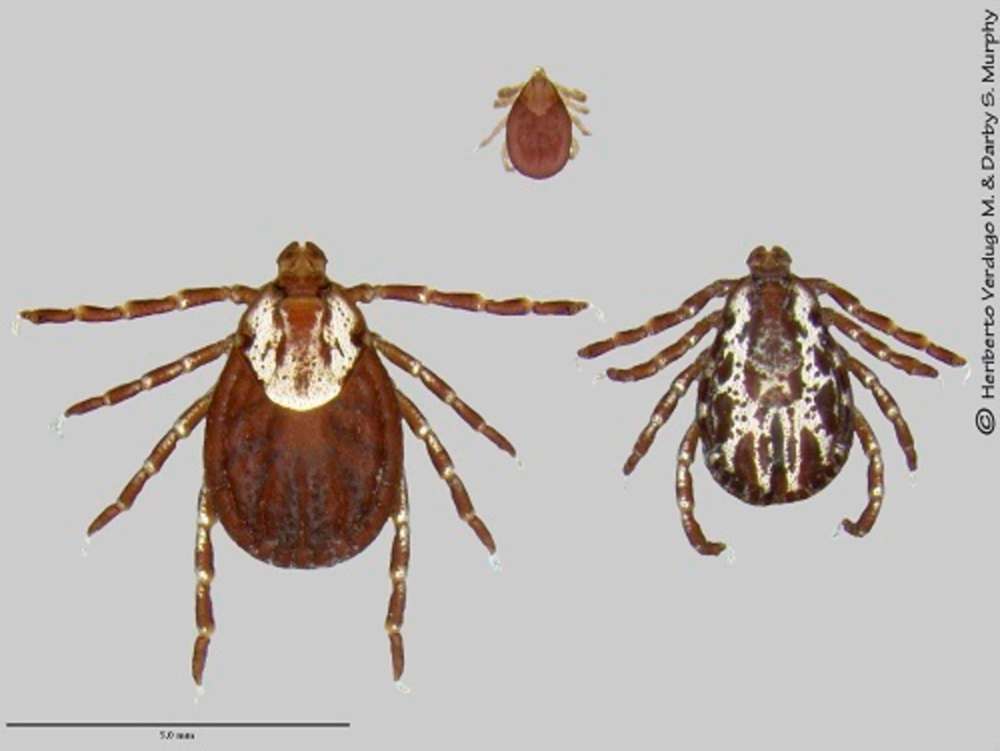
A tick that is suspected of causing people to become allergic to red meat has been found on a man in Winnipeg.
TICKS YOU SHOULD KNOW
There are more than 40 species of ticks in Canada, but two main kinds in Manitoba:
There are more than 40 species of ticks in Canada, but two main kinds in Manitoba:
Dog tick (Dermacentor variabilis): also called “wood tick” or “American dog tick,” this is bigger and has notable white markings on its back.
Blacklegged tick (genus Ixodes): a.k.a “deer tick” is smaller than other ticks. This is the tick that can transmit Lyme disease or other tick-borne diseases — and can have multiple infections at once.
Less prevalent:
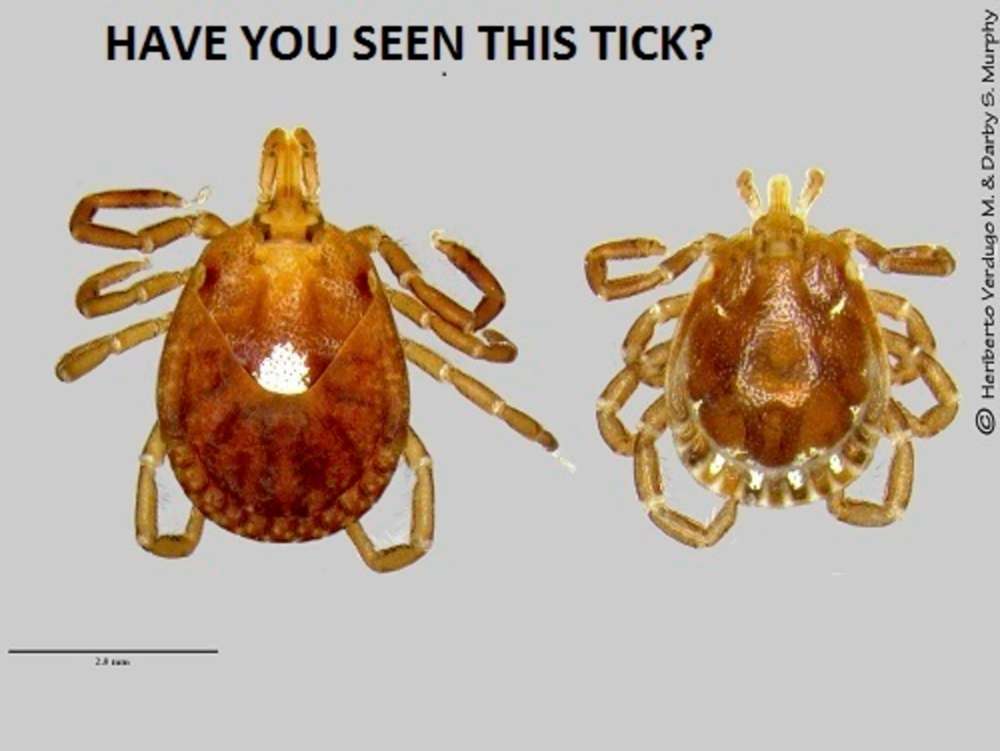
Lone Star tick (Ambloymma americanum): females have a white dot on their back. Link to meat-allergy-causing sugar being explored.
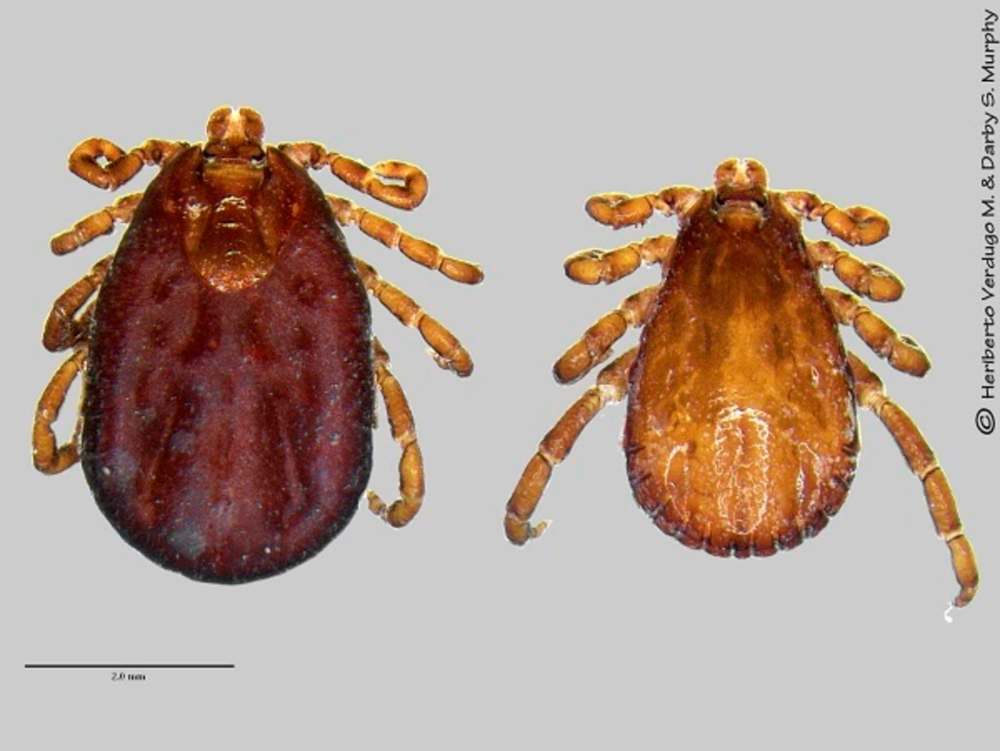
Winter tick (Dermacentor albipictus): also known as the moose tick, which is where they’re usually found, but can bite dogs as well. They’re especially large and more active in the fall.
Source: Manitoba Annual Tick-Borne Disease Report 2017, CDC TIck Identifier, Wisconsin ticks and tick-borne diseases website
Diane Skillen, who found the tick on her boyfriend on Canada Day, credits training on ticks at the vet’s office where she works, Centennial Animal Hospital, with noticing the distinctive white spot on its back that means it’s a female Lone Star tick.
The Lone Star ticks have been spreading north and west in recent years from its natural habitat in the southeastern U.S. scientists are studying the phenomenon of people becoming allergic to red meat after being bitten by these ticks — possibly caused by transmission of a carbohydrate called alpha-gal in the ticks’ saliva — but they can also carry ehrlichiosis bacteria that causes flu-like symptoms, or cause a bullseye-like bite mark that can mimic the symptoms of Lyme disease, called Southern Tick-Associated Rash Illness.
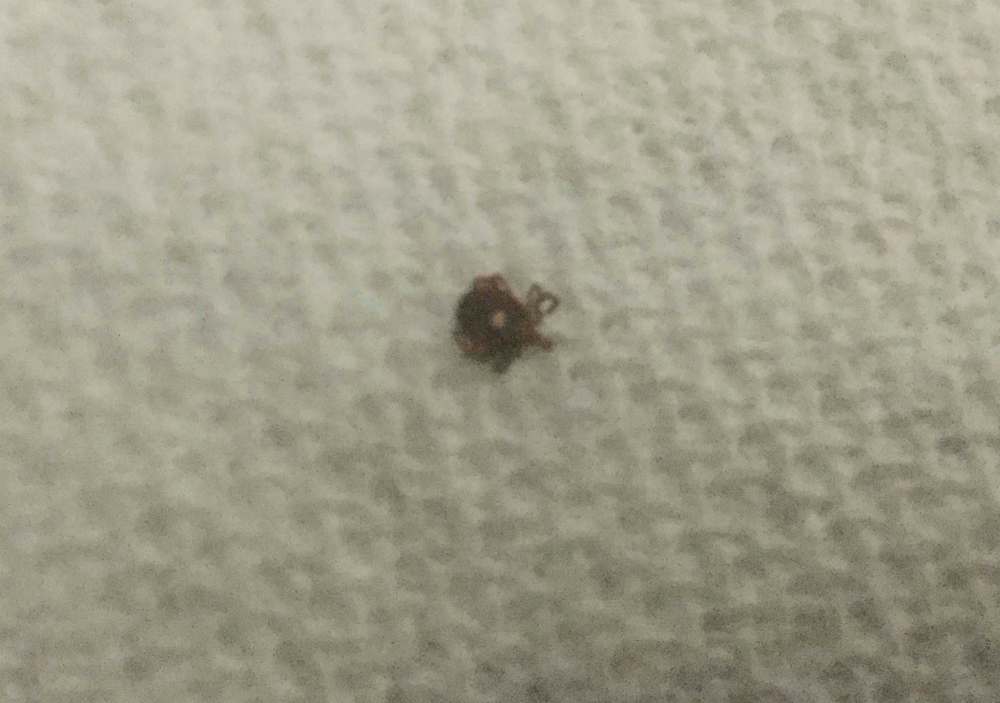
“You hear about these things being in Manitoba, but don’t realize until you see it firsthand,” Skillen said.
They’d been out for a walk on a sidewalk along a man-made lake on Willow Lake Crescent in Southdale on July 1.
“Just walking on a sidewalk and the train tracks near a baseball diamond — so not even an area with a lot of bush and trees,” Skillen said. “But we do have a lot of wildlife and deer and geese there.”
The tick hadn’t bitten him, she said, so she pulled it off and reported it through the province’s tick surveillance website.
She said she was told crews would head out to the area Wednesday to look for more.
Skillen wants people to be aware Lone Star ticks are out there and check themselves after being outside.
WHERE TO CHECK FOR TICKS
Top 10 tick hiding spots on your body, according to Health Canada:
- head and hair
- in and around the ears
- under the arms
Top 10 tick hiding spots on your body, according to Health Canada:
- head and hair
- in and around the ears
- under the arms
- back (use a mirror or ask for help)
- waist
- belly button
- around the groin
- legs
- behind the knees
- between the toes
Ticks are also very commonly found on dogs.
Source: Health Canada
“People just keep on thinking that it’s just dog ticks and wood ticks that are in Manitoba but we’re seeing more and more species of ticks that can transmit diseases. Don’t ever think that they’re not out there,” she said.
University of Manitoba tick expert and entomology professor Kateryn Rochon said it’s not the first Lone Star tick that’s been found in Manitoba, and won’t be the last. Her students have collected the ticks as far back as 2014. Three were reported to the province in 2017.
So far, it seems like Lone Star ticks are still mainly coming into Canada on birds, said Janet Sperling, an entomology PhD candidate at the University of Alberta. There’s not an established population anywhere in Canada yet, she said.
It’s also a bad year for black-legged ticks, which can carry Lyme disease, Anaplasmosis and Babesiosis.
The province issued a warning to health care providers June 11 that last year was the worst year so far for tick-borne disease and incidence rates continue to rise, particularly in the Interlake and southeast Manitoba.
Confirmed cases of Lyme disease rose from a single case in 2009 to 28 confirmed cases in 2018. Reported cases have risen sevenfold over that period.
For the first time, Borrelia miyamotoi and deer tick virus have been found in Manitoba, but a letter to health officials on June 11 stated no infections have been reported yet. It can take hours for Lyme disease to be transmitted, but deer tick virus can be transmitted in just 15 minutes, the report stated.
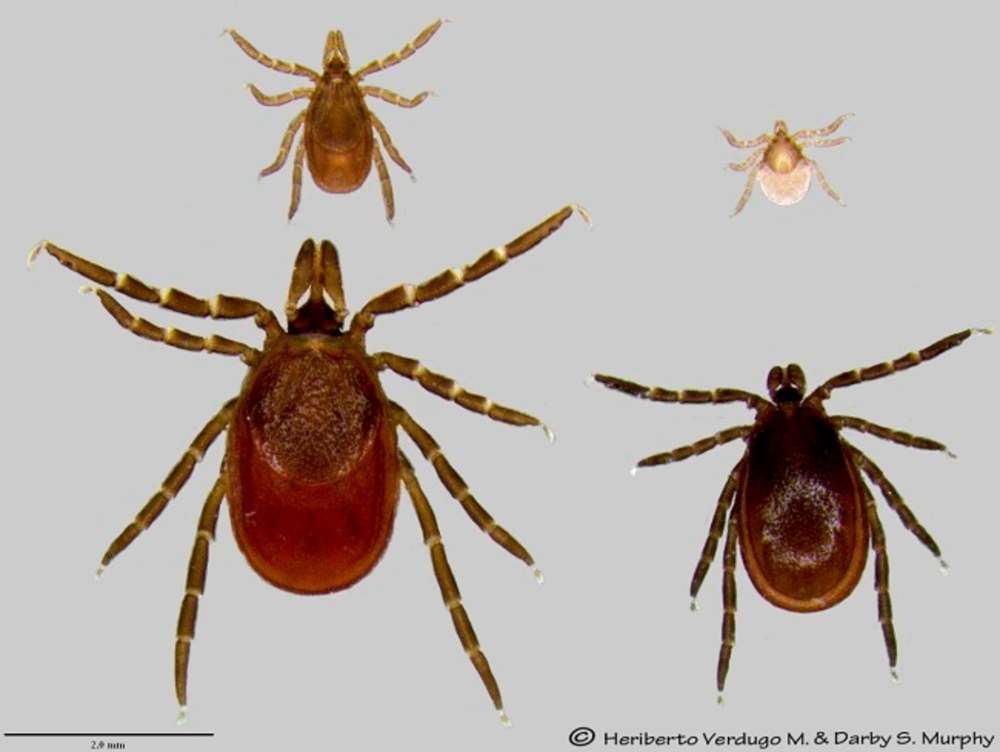
Sperling said as the climate changes, tick habitats are expanding and changing. For example, dog ticks are prevalent in Saskatchewan, though they used to be rare. She said it’s now known that black-legged ticks have been in Manitoba much longer than once was believed.
“We all knew about mosquitoes … but now we also need to be able to recognize ticks, the main types of ticks,” she said. “If you get a tick bite and you get sick, if you can tell the doctor what type of tick — that’s very helpful.”
The province is reminding people to take tick precautions, including: checking yourself, using tick repellent and wearing long pants, tucked into socks. It’s important to remove ticks when they latch on to reduce the likelihood of disease transmission.
Sightings of suspicious ticks can be reported at forms.gov.mb.ca/tickSubmission.
tvanderhart@freepress.mb.ca
@tessavanderhart
History
Updated on Wednesday, July 3, 2019 9:05 PM CDT: Fixes typo.