

Dog owners advised to speak with veterinarian about heart damage-related food concerns
Advertisement
Read this article for free:
or
Already have an account? Log in here »
To continue reading, please subscribe:

Digital Subscription
One year of digital access for only $205*
- Enjoy unlimited reading on winnipegfreepress.com
- Read the E-Edition, our digital replica newspaper
- Access News Break, our award-winning app
- Play interactive puzzles
*First annual payment billed as $205.00 + GST for one year. This annual subscription will automatically renew at $233.00 + GST every 52 weeks (10% off the regular annual price of $259.35). Offer available to new and qualified returning subscribers only. Cancel any time.
To continue reading, please subscribe:
Add Free Press access to your Brandon Sun subscription for only an additional
$1 for the first 4 weeks*
- Enjoy unlimited reading on winnipegfreepress.com
- Read the E-Edition, our digital replica newspaper
- Access News Break, our award-winning app
- Play interactive puzzles
*Your next Brandon Sun subscription payment will increase by $1.00 and you will be charged $17.95 plus GST for four weeks. After four weeks, your payment will increase to $24.95 plus GST every four weeks.
Read unlimited articles for free today:
or
Already have an account? Log in here »
Hey there, time traveller!
This article was published 09/07/2019 (2627 days ago), so information in it may no longer be current.
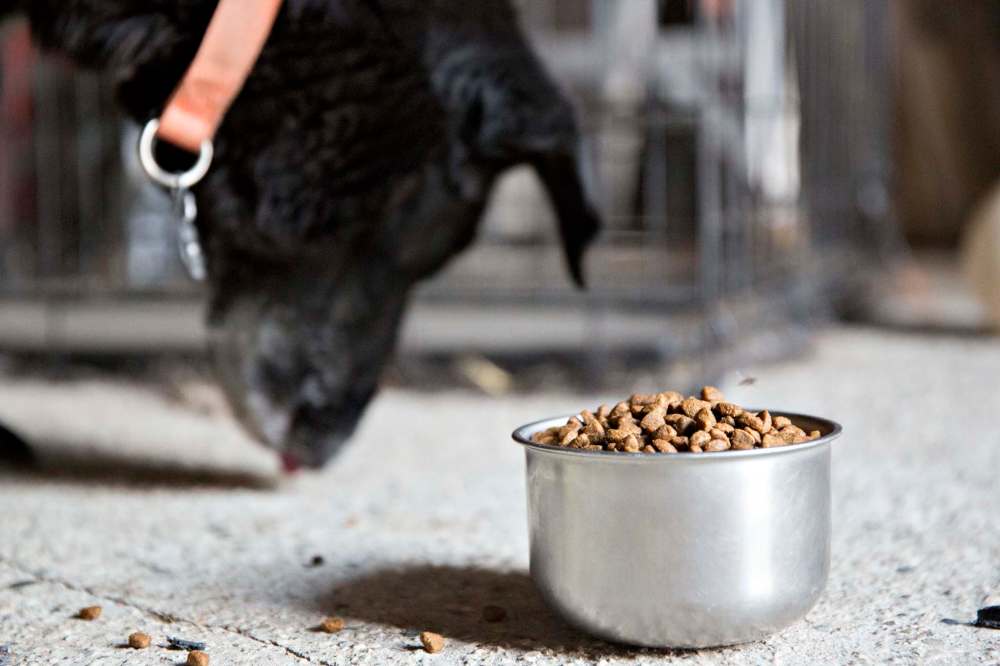
Dog owners who want to feed a grain-free diet to their canine companions should stay calm and ask their veterinarian.
The U.S. Food and Drug Administration released a report recently that shows dogs eating a grain-free diet may be at greater risk of developing canine dilated cardiomyopathy (DCM), a life-threatening condition that causes the heart muscle to become enlarged and have difficulty pumping blood.
Dr. Gina Bowen, head of veterinary services at the Winnipeg Humane Society, said the FDA study shouldn’t be cause for panic but dog owners should speak with thier veterinarian.
“I don’t think there’s enough cases to be panicked, but there is enough… to consider why you think your dog needs to be grain-free. With this new research coming out, I would encourage you not to put your dog (on a) grain-free (diet) unless you have a real, tangible reason to do it,” Bowen said, adding most dogs do well with grains in their diet.
“It doesn’t mean that it’s the grain-free (food) that’s causing the problem. We don’t even know that there is a problem; we just know that there is an association right now that they’re looking into.”
A deficiency in taurine, an amino acid that is one of building blocks of protein, was the culprit when DCM turned up in cats, so it needs to be considered in canine DCM, said Dr. Lea Stogdale of Aesops Veterinary Care in Winnipeg. Cats’ bodies can’t make their own taurine so it is added to manufactured food.
Dogs can make their own but it’s possible that some grain-free dog foods contain compounds that reduce taurine availability to some dogs. Stogdale said the FDA reports shows dilated cardiomyopathy in some dog breeds in which it has not previously been seen and most of these dogs were eating grain-free diets — a correlation but as yet not a causation.
“In some of these dogs that have been tested, their taurine levels were low. Therefore, it may be that some breeds of some dogs — and I really do mean it may be as we do not have proof yet — that some of these dogs require an adequate level of taurine in their diets. This is a breed-associated taurine dietary requirement,” Stogdale said. “(Some grain-free foods) may be interfering with taurine availability.”
Stogdale recommends taurine supplements for all dogs weighing 22 kilograms or more who are eating grain-free dog kibble — about 1,000 milligrams daily, which is affordable at any nutrition or supplement store.
The FDA report acknowledges that the DCM cases can’t simply be explained by whether or not the dogs eat grains, or by the brand or manufacturer involved. There were complaints of DCM linked to diets with grains but significantly fewer than those linked with grain-free diets. The prevalence of DCM cases among grain-free dogs might correlate to the increase in popularity of that type of food.
Bowen said the grain-free food fad for dogs started with their owners about 15 years ago.
“Because of the connection between people and their dogs these days — which is great — they think that what makes them feel better will make their dog feel better. There actually wasn’t any evidence that dogs needed to be on a grain-free diet but the fad started because some people were changing their diet and so dogs’ diets changed, as well.”
“There are many dogs who do fine on any dog food. If your dog is doing fine, keep feeding them that food.”–Dr. Lea Stogdale
While the report has intensified doubts about grain-free diets for dogs, the FDA also admits that any possible link is “a complex scientific issue that may involve multiple factors.”

Stogdale advised dog owners to talk to their veterinarians before changing dog food and remember that choosing the right food can be a trial-and-error process; different dogs do better on different foods.
Dog owners need to read labels of dog food to determine its quality. Typically, a quality dog kibble has protein and complex carbohydrates as its top two ingredients and don’t include preservatives.
“There are many dogs who do fine on any dog food. If your dog is doing fine, keep feeding them that food,” she said.
ashley.prest@freepress.mb.ca
-with files from Canadian Press
Food under investigation
Here are the brands under investigation and the number of canine heart-disease cases reported to the FDA for each:
Acana: 67
Zignature: 64
Taste of the Wild: 53
4Health: 32
Earthborn Holistic: 32
Blue Buffalo: 31
Nature’s Domain: 29
Fromm: 24
Merrick: 16
California Natural: 15
Natural Balance: 15
Orijen: 12
Nature’s Variety: 11
NutriSource: 10
Nutro: 10
Rachael Ray Nutrish: 10

Advertisement Advertise With Us
Advertisement Advertise With Us