

Making the shift… to thrift
Stores and Winnipeggers warming to idea of reusing quality, vintage clothing
Advertisement
Read this article for free:
or
Already have an account? Log in here »
To continue reading, please subscribe:
Monthly Digital Subscription
$1 per week for 24 weeks*
- Enjoy unlimited reading on winnipegfreepress.com
- Read the E-Edition, our digital replica newspaper
- Access News Break, our award-winning app
- Play interactive puzzles
*Billed as $4.00 plus GST every four weeks. After 24 weeks, price increases to the regular rate of $19.95 plus GST every four weeks. Offer available to new and qualified returning subscribers only. Cancel any time.
Monthly Digital Subscription
$4.99/week*
- Enjoy unlimited reading on winnipegfreepress.com
- Read the E-Edition, our digital replica newspaper
- Access News Break, our award-winning app
- Play interactive puzzles
*Billed as $19.95 plus GST every four weeks. Cancel any time.
To continue reading, please subscribe:
Add Free Press access to your Brandon Sun subscription for only an additional
$1 for the first 4 weeks*
- Enjoy unlimited reading on winnipegfreepress.com
- Read the E-Edition, our digital replica newspaper
- Access News Break, our award-winning app
- Play interactive puzzles
*Your next Brandon Sun subscription payment will increase by $1.00 and you will be charged $17.95 plus GST for four weeks. After four weeks, your payment will increase to $24.95 plus GST every four weeks.
Read unlimited articles for free today:
or
Already have an account? Log in here »
Hey there, time traveller!
This article was published 04/08/2019 (2470 days ago), so information in it may no longer be current.
Clothes can tell you a lot about a person. In Delta Hirsch’s case, her clothes tell you about her values.
Hirsch is one of many Winnipeggers choosing to mainly forgo “fast fashion,” which is described as “cheaply-produced and priced garments that copy the latest catwalk styles and get pumped quickly through stores in order to maximize on current trends” by the University of Queensland.
Leaving a smaller footprint
As Delta Hirsch said, thrifting and choosing to be a part of the “slow fashion” movement can be an effective way of reducing one’s carbon footprint.
As Delta Hirsch said, thrifting and choosing to be a part of the “slow fashion” movement can be an effective way of reducing one’s carbon footprint.
Buying used leads to less clothing littering landfills. Americans throw away 10.5 million tons of attire every year, statistics collected by the University of California Berkeley’s Student Environmental Resource Centre show.
“We are buying four times as much clothing as we used to but are spending 17 per cent less because we buy clothes that quickly fall apart or goes out of style, or both,” the centre’s Leonela Leon wrote earlier this year. “…So we throw them in the trash and buy something new.”
Globally, people purchase approximately 80 billion new pieces of clothing annually, a 400 per cent jump from twenty years ago, the University of Queensland Sustainability Office says.
People’s penchant for chucking clothes quickly is compounded by the fact 60 per cent of clothing items are made with synthetic materials that don’t biodegrade.
Buying second-hand is also better for mother nature because it uses less resources, Leon wrote, citing a pair of jeans takes nearly 7,000 litres of water to make and generates, during production, the same amount of greenhouse gases driving 130 kilometres does.
The process of fabric dyeing alone commands five trillion litres of water per year worldwide, the World Resource Institute says.
Through thrifting, you keep the resources invested in all of these clothing items from going to waste,” Leon wrote.
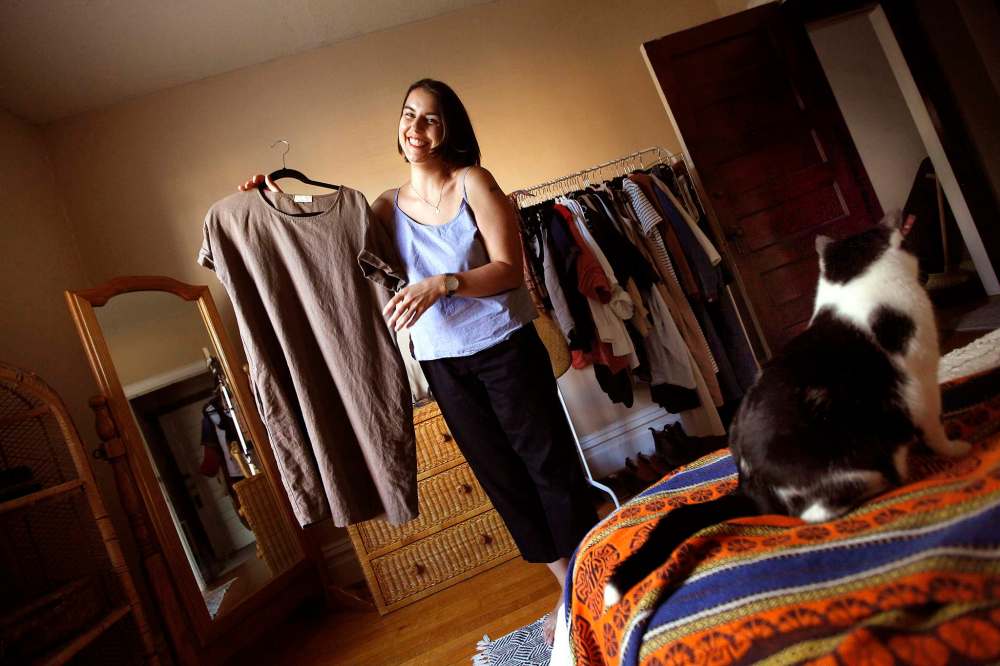
Instead, she’s a “thrifter” — someone who chooses to buy mostly second-hand. Her reasons for doing so are nuanced; more complex than simply a desire to save.
Hirsch thrifts as part of her personal ethos to live sustainably and waste less. The positive impacts shopping second-hand can have are endless, the 27-year-old said.
“Environmentally, you’re helping keep clothes out of landfills or from being burned, which is terrible when clothes are made of chemical dyes and unnatural fibres. If I’m not thrifting, I’m buying from a sustainable brand, which is expensive, (but) worth every penny when you have those pennies though.”
A sustainable brand is “one that has successfully integrated environmental, economic and social issues into its business operations,” Forbes Media says, such as paying employees a living wage and reducing the impact its production has on Earth.
“The way we consume in North America, clothes, food, beauty products, it’s completely selfish,” Hirsch said. “Saying ‘I need a new pair of jeans’ because your current ones have a hole in them is b.s., especially when the woman who made those jeans can’t feed her family after working a twelve-hour day with no breaks.”
Shopping second-hand is key to living a more sustainable lifestyle; one just has to look at the number of stores in the city— Redeemed, The Closet Chick, Plato’s Closet, among others — to see the demand for “pre-loved” garb.
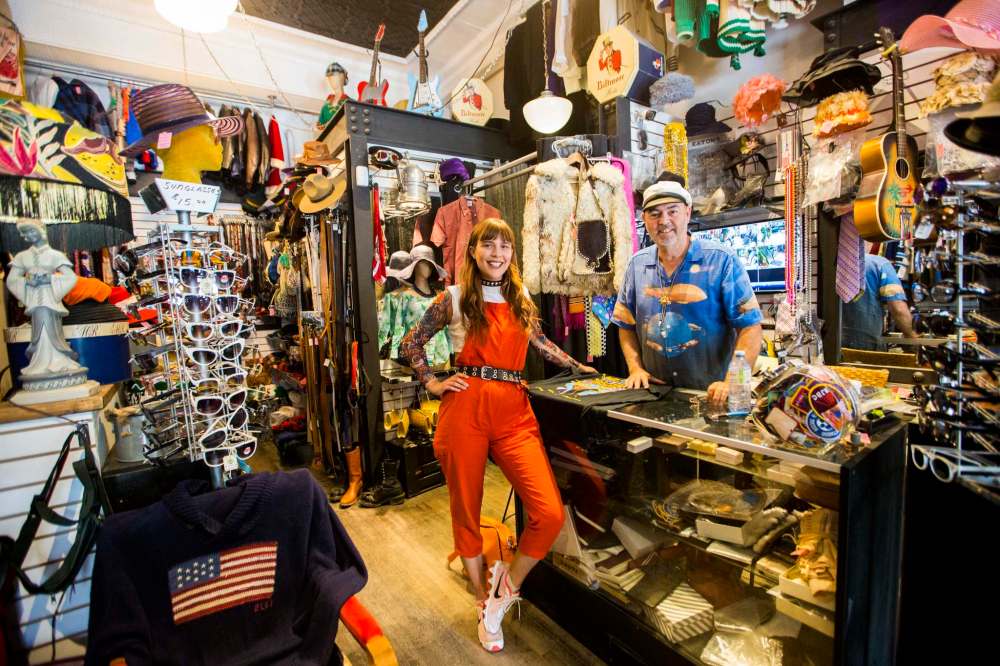
At Donald St. clothier Vintage Glory, owner Doug Shand said while he can’t know for certain his customers shop there for ethical reasons, he has noticed thrifting has become increasingly trendy over the last decade.
‘If you don’t know who made your clothes, how they were treated, or if materials are harmful to the Earth, you can’t say your outfit is beautiful. You can say it’s stylish, but not beautiful’– proud thrifter Delta Hirsch
“I find a lot of people have really chosen to… not buy off the rack like at Polo Park or any big mall,” Shand, a longtime curator and purveyor of vintage clothing, said.
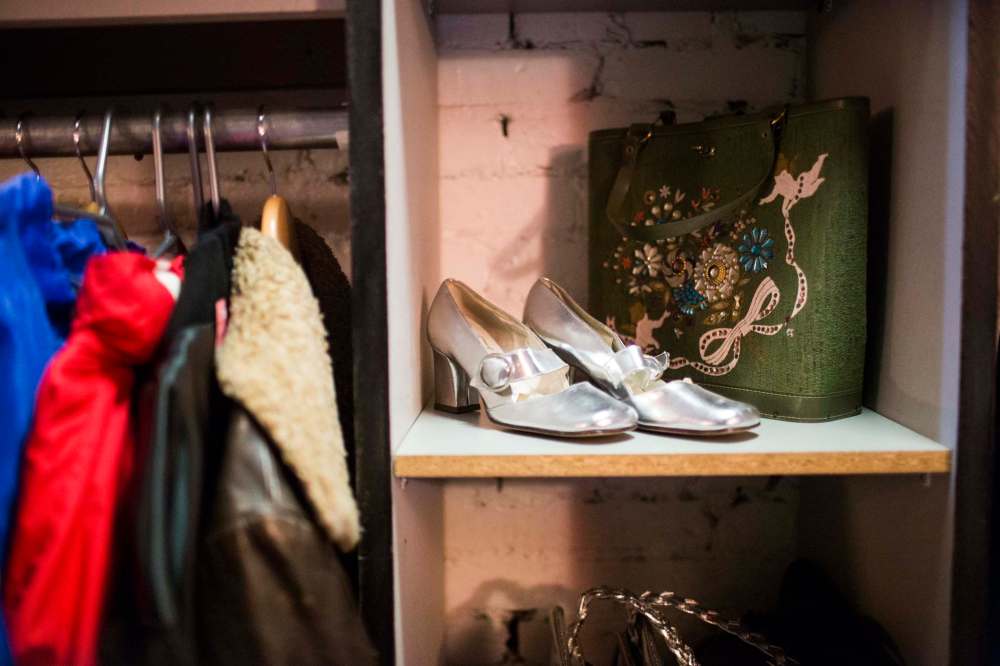
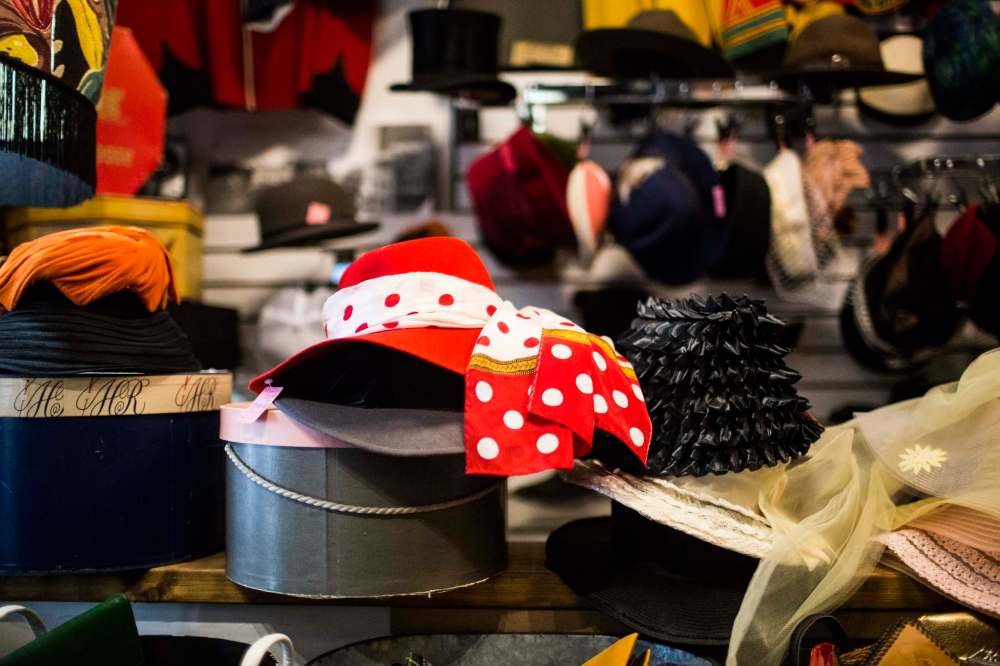
Shand sells all sorts of attire from yesteryear from his Exchange District spot, from bolo ties and old band shirts to ladies’ purses and leather jackets.
“They have found that finding a really cool piece of vintage just sets them apart,” he continued. “People want to be individuals and not follow all the current trends, right, which are moving… like every six months there’s a new fashion.”
“My favourite pieces usually aren’t the unique ones,” Hirsch admitted, “rather the perfect staple that fits well and is spot-on my style.”
She estimates more than half of her wardrobe is second-hand (as is her entire house, which she said she enjoys thrift shopping for even more than for her wardrobe.)
Shand set himself apart with his natty apparel on a recent weekday morning. He looked ready to set sail for a tropical locale, sporting an antique yacht captain hat, a ring he bought in Saint Martin made from silver found in the Nuestra Señora de Atocha shipwreck (a Spanish galleon that sank in a hurricane near the Florida Keys in 1622), a nautical blue-and-white-striped polo shirt, and deck shoes.
“People are really thrifty,” he said. “When someone comes in looking for a shirt, I’ll have a shirt in here for $15. In the (chain) stores, if the same copy of that shirt is $30, then they’re going to buy the real thing.” Shand said, adding vintage clothing is often much better in quality.
“I can buy clothes at the thrift store for ten per cent of the price I’d pay for it new,” Hirsch said. “I also alter some of the clothes too, which just makes the item even more unique.”
Hirsch often modifies clothing — she hides stains by dyeing with indigo and other natural dyes — and uses them as rags when they become threadbare to wear.
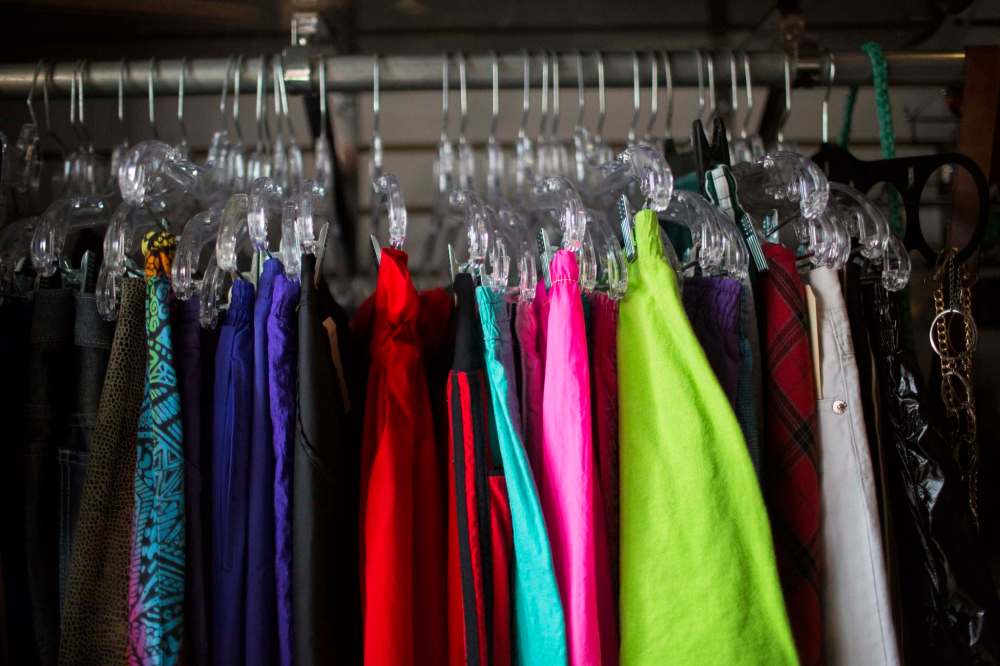
Shand said he’s often “totally surprised” by the prices of new clothes when he walks through malls. Many others, young people especially, also seem to recognize that and are searching for cheap vintage to either wear or sell.
“Whenever I go into any second-hand store, there’s a picker in front of me, and there’s a picker in the checkout paying for their stuff, and there’s more coming in behind me, and there’s pickers coming in when I’m leaving,” he said. “Ten years ago, it wasn’t like that.”
“I think younger generations are more conscious of their impact in the world and use thrift stores to add originality to their wardrobe,” Hirsch agreed.
Vintage Glory is far from a usual thrift shop. Every article is in tip-top shape, carefully curated by Shand himself. Using his keen eye and experience, he scours estates, garage sales, and even takes trips to the U.S. to search for hidden treasures to display and sell.
“It has to be clean, it can’t have any odours. It has to be mint…” Shand said. “I’m always buying and I’m always selling.”
Shand’s interest in vintage clothing goes back to the 1970s when he met his first wife Lana — who wore plenty of vintage — at a Kennedy Street coffee shop.
They got married in 1977 and every time they got a paycheque, they’d go thrifting at one of two stores: Corydon Avenue’s If You Have to Get Dressed in the Morning, and Ragpickers, which still exists today.
The couple went on to own a number of successful stores in the early 2000s, including the first incarnation of Vintage Glory, after their son Remy — yes, the Grammy-nominated and Juno-winning R&B singer — gave them some money to “semi-retire” after signing with Motown Records in 2002.
Lana died in 2010 after a battle with cancer and Doug opened Vintage Glory in its current location in 2012. He’s since remarried — his wife Lori Litz Shand is a collector of women’s handbags.
You’d think thrifting would be old hat to Shand by now. Not so, he said.
“It’s always fun. It is fun for everyone who is searching, because when they find their find, it’s like a treasure hunt, right? That’s what keeps people going — maybe there’s a special something just around the corner.”
One of Hirsch’s all-time favourite clothing finds (she’s had many over 15 years) is a 100 per cent silk earth-toned dress she found for $10. A near-identical dress from one of her favourite designers runs more than $200, she said.
“The people that actually collect vintage are super nice people,” Shand said. “They share their happiness when they come in here and find something they were looking for. We kind of bond over it…
“We have the same joy,” he said later. “When you hand-pick all your stuff, and then someone comes in and appreciates it the same way as you do, and then offers you money for it, it’s a great feeling.”
Shand sees the scene changing as more people are selling online and doing pop-ups instead of paying expensive rent for permanent storefronts.
For example, Mandi Kokesh (@zimmerslarket.wpg on Instagram) has two racks at Vintage Glory but also sells at Tiny Gallery Projects and online. “There are some amazing accounts on Instagram where you can get high-quality, ethically-made pieces second-hand,” Hirsch said.
Shand is dabbling in Instagram sales himself to increasing success.

The internet is not just a virtual marketplace to Hirsch, though: it’s also a tool she uses to try and effect change.
“If you like a store that is fast fashion or isn’t transparent in its practices, don’t boycott it,” she said, when asked to give advice to someone looking to take the first steps to wasting less. “Certain countries rely on our exportation and trying to… completely shop local or thrift could really hurt their economy. Instead, ask questions like: ‘who made my clothes?’ ‘What factory was it?’ ‘How are those workers treated?’ ‘Were they paid fair wages?’”
“Social media is a powerful tool our generation is lucky to have. Use it. Call them out.”
To Hirsch, true beauty comes from more than just the look of something.
“If you don’t know who made your clothes, how they were treated, or if materials are harmful to the Earth, you can’t say your outfit is beautiful,” she summed up. “You can say it’s stylish, but not beautiful.”