

…Hey, hey goodbye
Lack of support, lack of success among reasons behind short lifespan of various local sports teams
Advertisement
Read this article for free:
or
Already have an account? Log in here »
To continue reading, please subscribe:
Digital Subscription
One year of digital access for only $75*
- Enjoy unlimited reading on winnipegfreepress.com
- Read the E-Edition, our digital replica newspaper
- Access News Break, our award-winning app
- Play interactive puzzles
*Billed as $5.77 plus GST every four weeks. After 52 weeks, price increases to the regular rate of $19.95 plus GST every four weeks. Offer available to new and qualified returning subscribers only. Cancel any time.
Monthly Digital Subscription
$4.99/week*
- Enjoy unlimited reading on winnipegfreepress.com
- Read the E-Edition, our digital replica newspaper
- Access News Break, our award-winning app
- Play interactive puzzles
*Billed as $19.95 plus GST every four weeks. Cancel any time.
To continue reading, please subscribe:
Add Free Press access to your Brandon Sun subscription for only an additional
$1 for the first 4 weeks*
- Enjoy unlimited reading on winnipegfreepress.com
- Read the E-Edition, our digital replica newspaper
- Access News Break, our award-winning app
- Play interactive puzzles
*Your next Brandon Sun subscription payment will increase by $1.00 and you will be charged $17.95 plus GST for four weeks. After four weeks, your payment will increase to $24.95 plus GST every four weeks.
Read unlimited articles for free today:
or
Already have an account? Log in here »
Hey there, time traveller!
This article was published 24/05/2020 (2187 days ago), so information in it may no longer be current.
Did you once root, root, root for these home teams?
Winnipeggers are spoiled when it comes to options for hometown sports. Between the Jets, Blue Bombers, Goldeyes, Moose, Ice, and Valour FC, there’s no shortage of teams to get behind year-round.
However, not every Winnipeg sports franchise found success — either at the gate or in the standings — like the aforementioned squads have. Some were here for neither a good time nor a long time, their tenures brief and mostly futile. These are the teams that have been reduced to brief Wikipedia entries, dusty programs in people’s attics and long-ago penned pieces in this paper.
With the sports world at a complete standstill owing to the COVID-19 pandemic, it’s the perfect time to look back at a few of these franchises that once repped the River City.
It was Winnipeg’s return to the Western Hockey League, but it was not a triumphant one.
Winnipeg was granted an expansion WHL franchise in spring, 1980, bringing the ‘Dub back to the city for the first time since 1977 when the Winnipeg Monarchs moved to Calgary.
Efforts to bring a new club to the then-11-team circuit were spearheaded by Harry Bueckert, Marsden Fenwick, and former NHL and WHA forward Fran Huck. When the trio were lobbying and “turning cartwheels,” as Free Press writer Larry Tucker put it, to secure a squad, former WHL president Ed Chynoweth remarked that “I think they will have a great chance, so long as our league will give them some help. Winnipeg will support a winner.”
Perhaps that’s why Winnipeggers, by in large, had trouble supporting the Warriors.
The Warriors adopted the same moniker as a team that played in the WHL’s previous incarnation between 1955-1961, but were largely abysmal between 1980-1984.
While the Jets — who had joined the NHL a season prior to the Warriors’ arrival on the scene — lurched toward respectability and drew around 13,000 per game, the Warriors bumbled to a combined 102-184-2 record in four seasons in front of smatterings of supporters.
The Warriors began their inaugural campaign on Sept. 26, 1980, with a 6-5 loss to the Brandon Wheat Kings and ultimately finished the season 28-43-1.
That’s perhaps understandable given some players, especially Americans, were reluctant to play in Tier 1 major junior leagues such as the WHL, because it would make them ineligible to play U.S. college hockey if they did.
The next season, Huck was replaced behind the bench by Bruce Southern, but the team won five fewer games. An article by Scott Taylor, which recounted a January 1982 tilt, serves as an example of how Warriors’ games usually went.
“It was the case of a team riddled by injuries attempting to beat a team with the best defensive record in the Western Hockey League. And it was a futile exercise. While Calgary Wranglers’ goaltender Mike Vernon kept the Warriors at bay, the home team reciprocated by taking only 17 shots at the Wrangler net. It all added up to a 4-2 (Wrangers’) victory in front of 1,651 yawning fans at Winnipeg Arena.”
The Warrior’s third season was not as much of a bore as they captured a franchise-best 42 wins and qualified for the playoffs for the first and only time, but were swept in the first round by the Lethbridge Broncos.
By 1983-84, the Warriors were losing a lot of games and a lot of money. In late December, 1984, their fate was sealed as GM Tom Thompson announced the team had been sold for $260,000 to a Moose Jaw-based consortium and would relocate there at the end of the season. By that time, the Warriors were only drawing 1,800 fans per game and needed 3,000 to break even.
When the sale was announced, the Warriors were 7-24. The dead team walking won only two more games all season and finished 9-63, last in the East Division by 54 points.
“I can’t see (Tier 1) junior hockey returning to Winnipeg in the foreseeable future,” Thompson said at the sale announcement. Strangely, just days before — after the deal had been signed — Thompson himself said “it’s absolutely ridiculous for anyone to think that we’re folding or moving.”
Thompson was right about the former. Junior hockey didn’t return to these parts for 35 years, when the Kootenay Ice relocated to Winnipeg before the start of the 2019-20 WHL campaign.
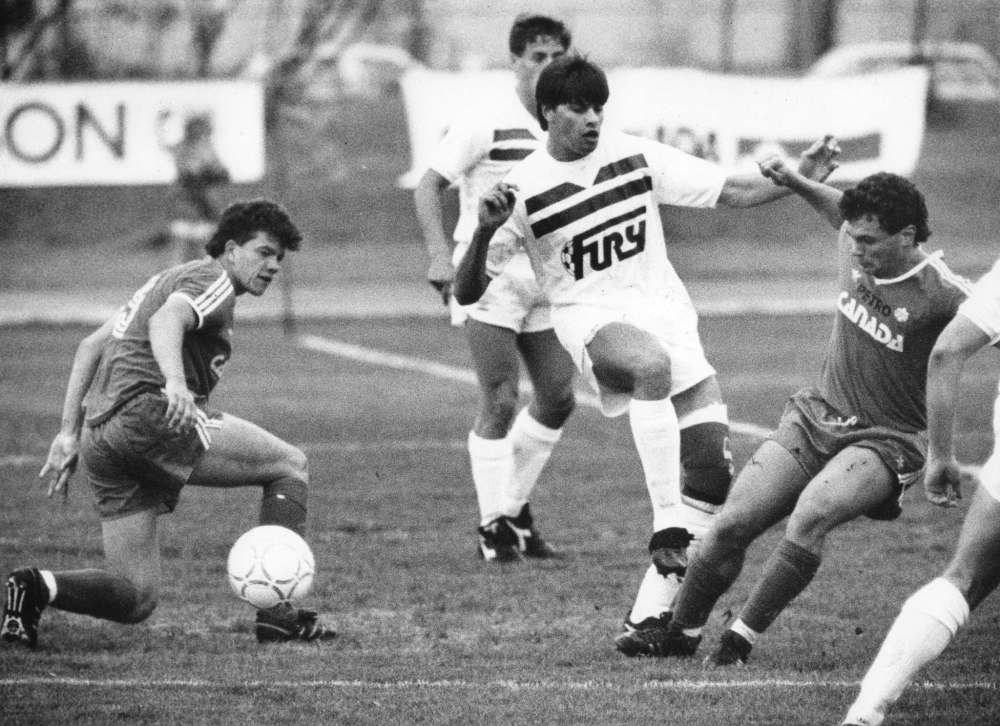
Long before Valour FC took to the pitch in front of enthusiastic and diverse crowds at IG Field, another pro soccer team kicked around these parts.
That team was the Canadian Soccer League’s Winnipeg Fury. The Division 1 league was founded after the 1986 FIFA World Cup; Canada was the only country represented at the tournament without a domestic league.
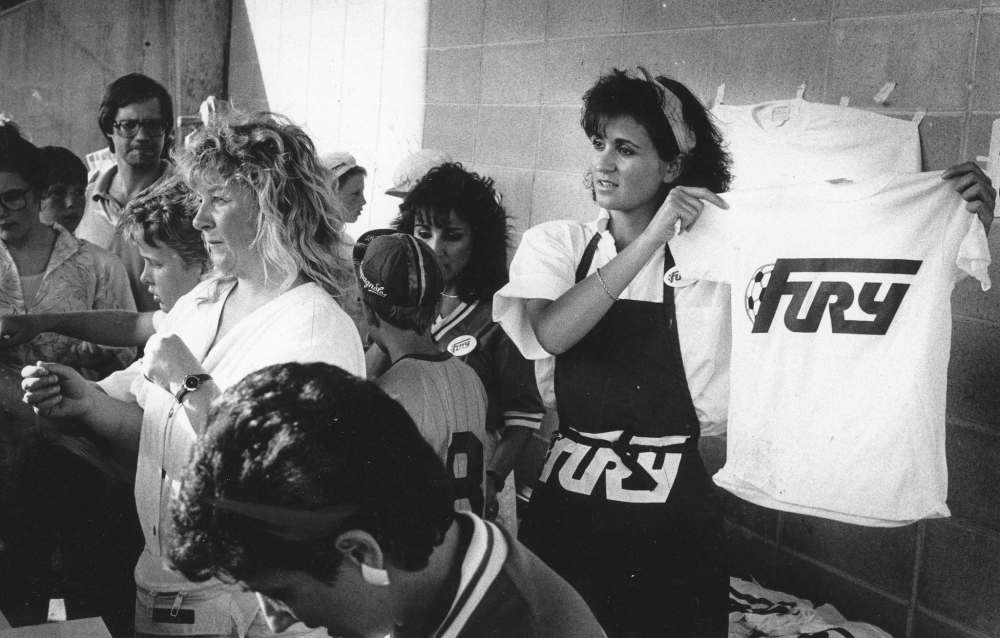
Founded by Ralph Cantafio — a longtime soccer proponent who immigrated to Winnipeg from Italy in 1950 — the team didn’t have much success in its first five seasons between 1987-91. They failed to qualify for the playoffs three times, advanced to the semifinals just once, and had no fewer than five different coaches.
However, things changed in 1992.
“The 1991 Fury lacked speed, toughness, and depth,” head coach Tom McManus said at May 1992’s training camp. (The Fury finished dead last in 1991.)
“There was a great deal of talent to choose from. As expected, the cream of the crop did rise to the top.”
Although their books were less than stellar — Free Press sportswriter Ashley Prest wrote the team’s debt was somewhere between $300,000 and half a million — and the entire organization had restructured, the team was good on the pitch. They finished with eight wins, 11 losses, and one draw, good for third in the six-team circuit. They were especially strong late in the season, going undefeated in their final eight games.
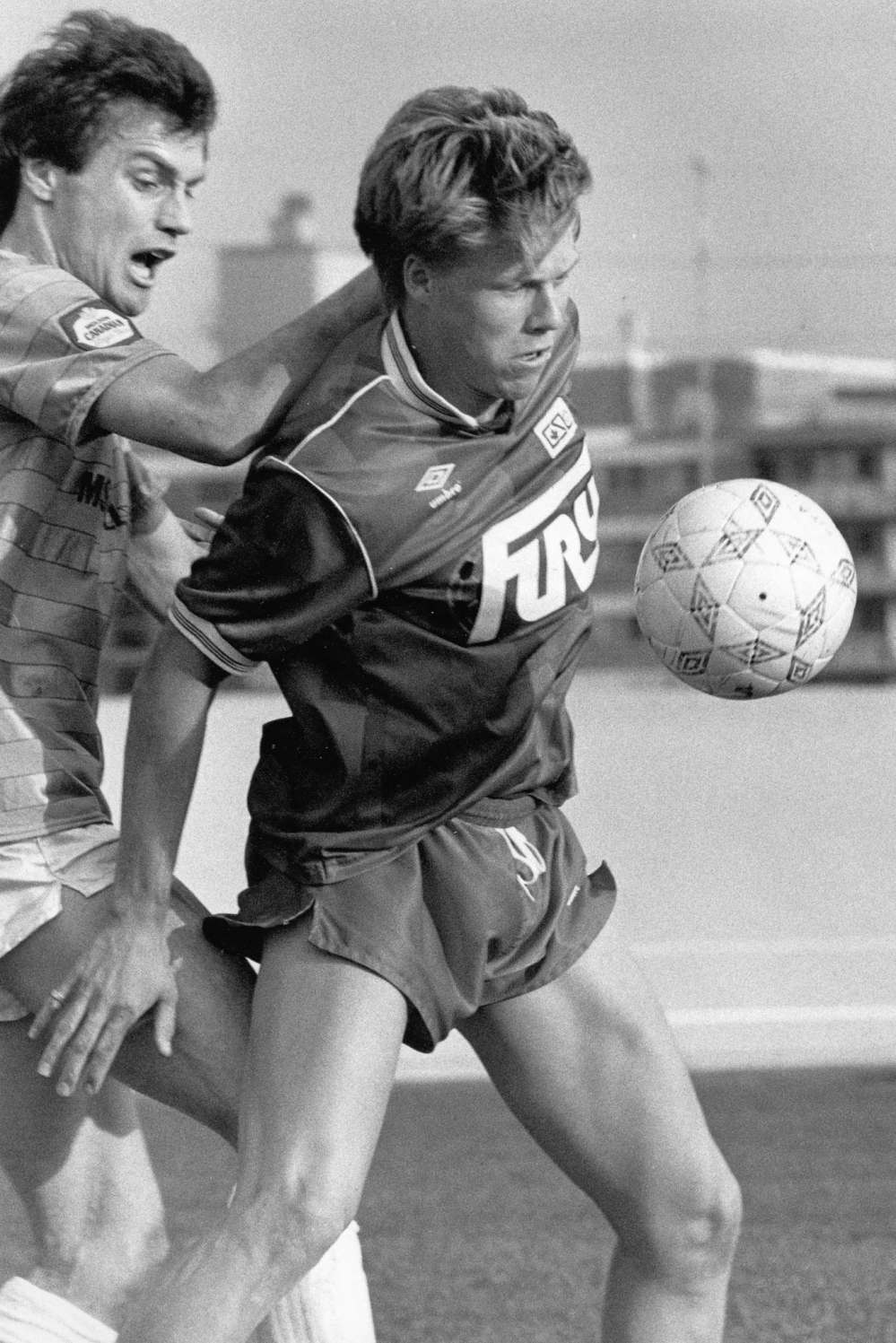
The Fury conquered the North York Rockets in the semis before going on to beat the Vancouver 86ers — who had won four straight championships — by a 4-1 aggregate score in the two-game final series.
“Miracle on grass. That’s what it looked like last night as time ran out and jubilant Winnipeg Fury soccer club players hoisted the Mita Cup over their heads for the first time in the team’s six-year history,” Prest wrote on Oct. 5.
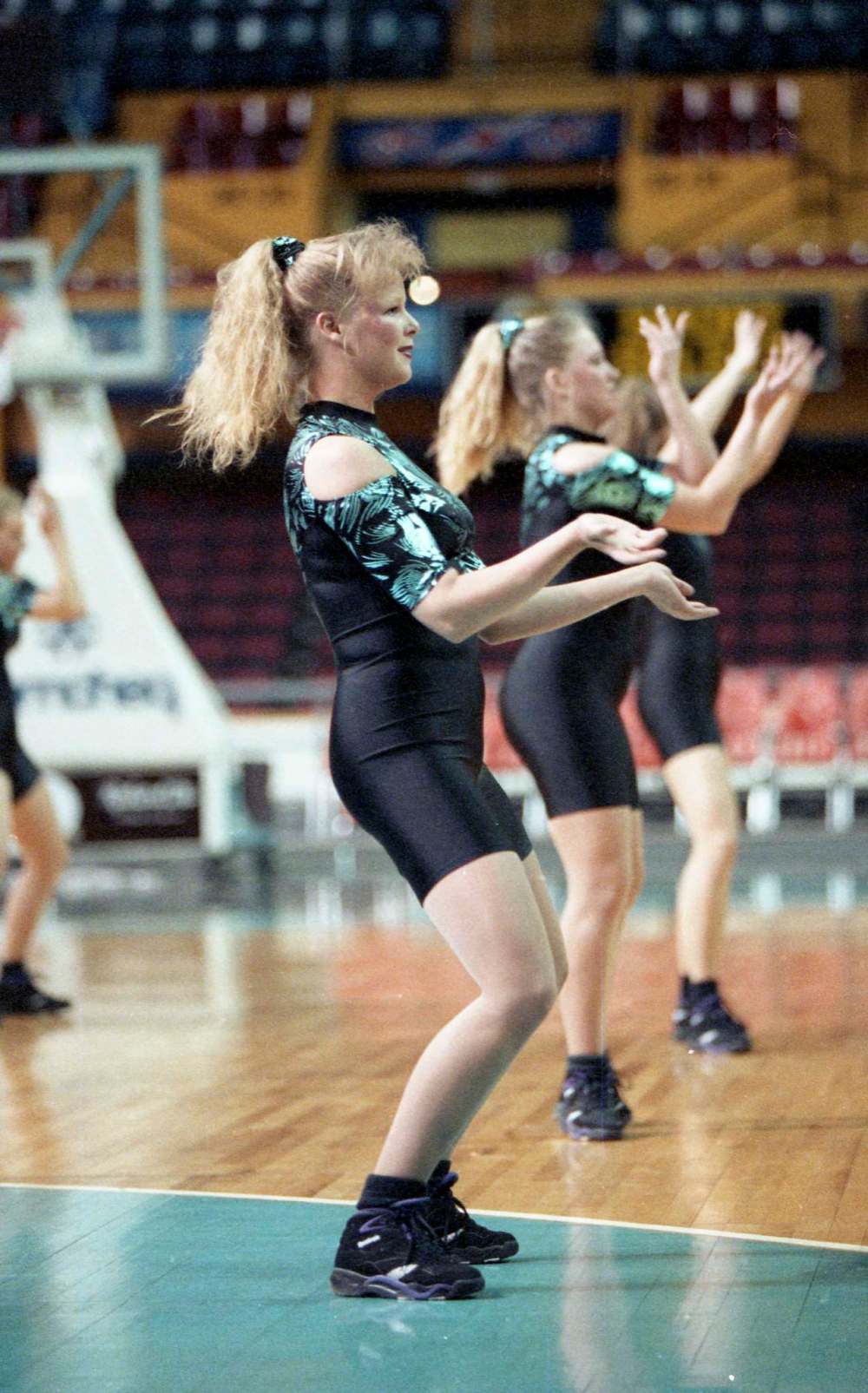
Unfortunately, the Fury did not have a chance to defend their title. The league had been in dire financial straits for years and finally folded.
Three CSL clubs joined the American Professional Soccer League, but the Fury were told by APSL president Bill Sage — just two days after their championship victory — that Winnipeg was too small of a market to join his league.
“Does Sage know the Fury just finished winning the CSL championship and created a considerable local stir with a truly Cinderella season?” Free Press sports columnist Hal Sigurdson asked in a column.
“Sure,” was Sage’s quoted reply. “We would love to have the Fury in our league, but their city isn’t big enough.”
Winnipeg footie fans got just one more season of the beautiful game thereafter. The Fury joined the Canadian National Soccer League for 1993 and finished last before folding.
It turns out a basketball league founded by an embezzler is not the best one for an expansion team to join.
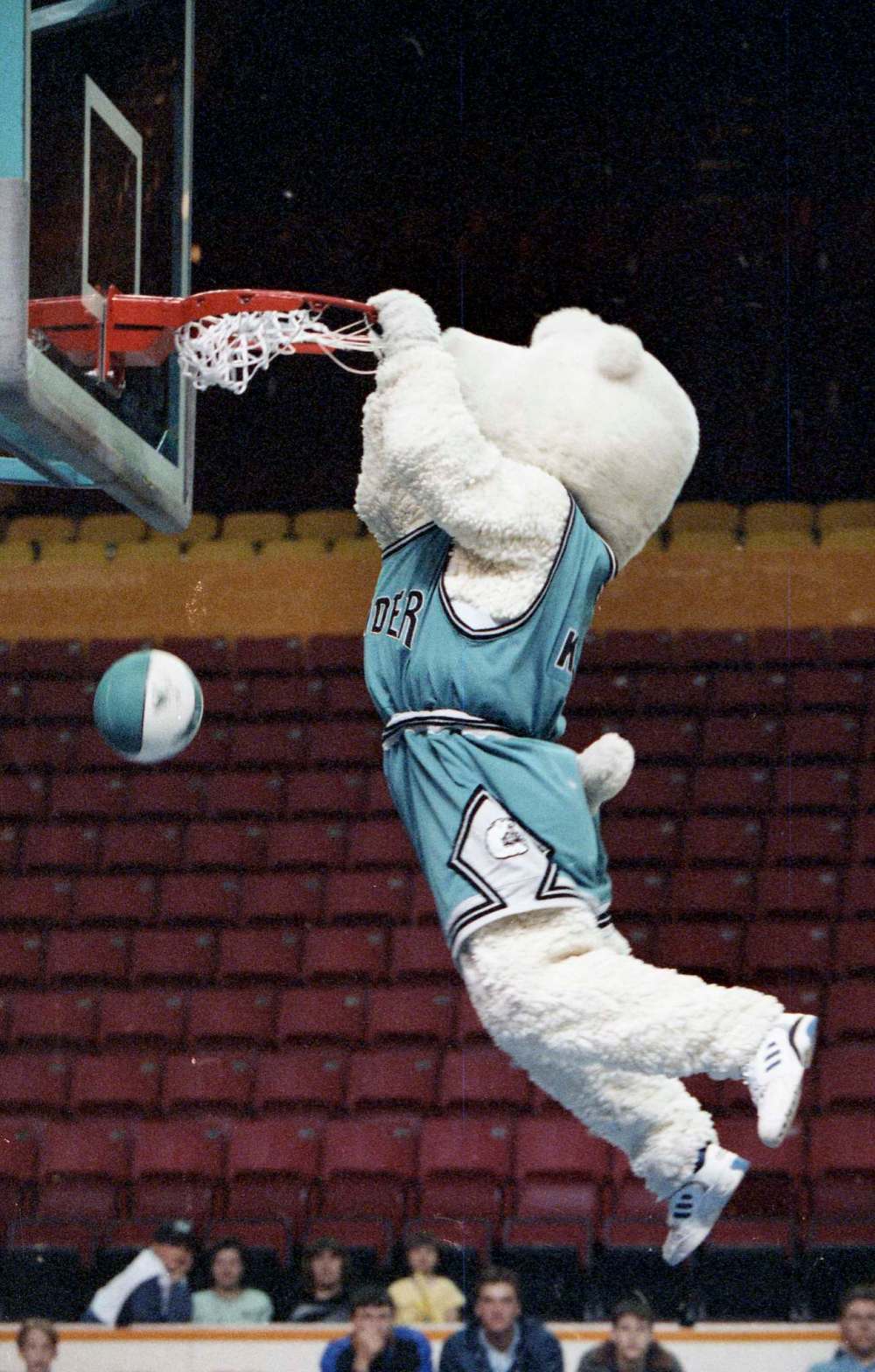
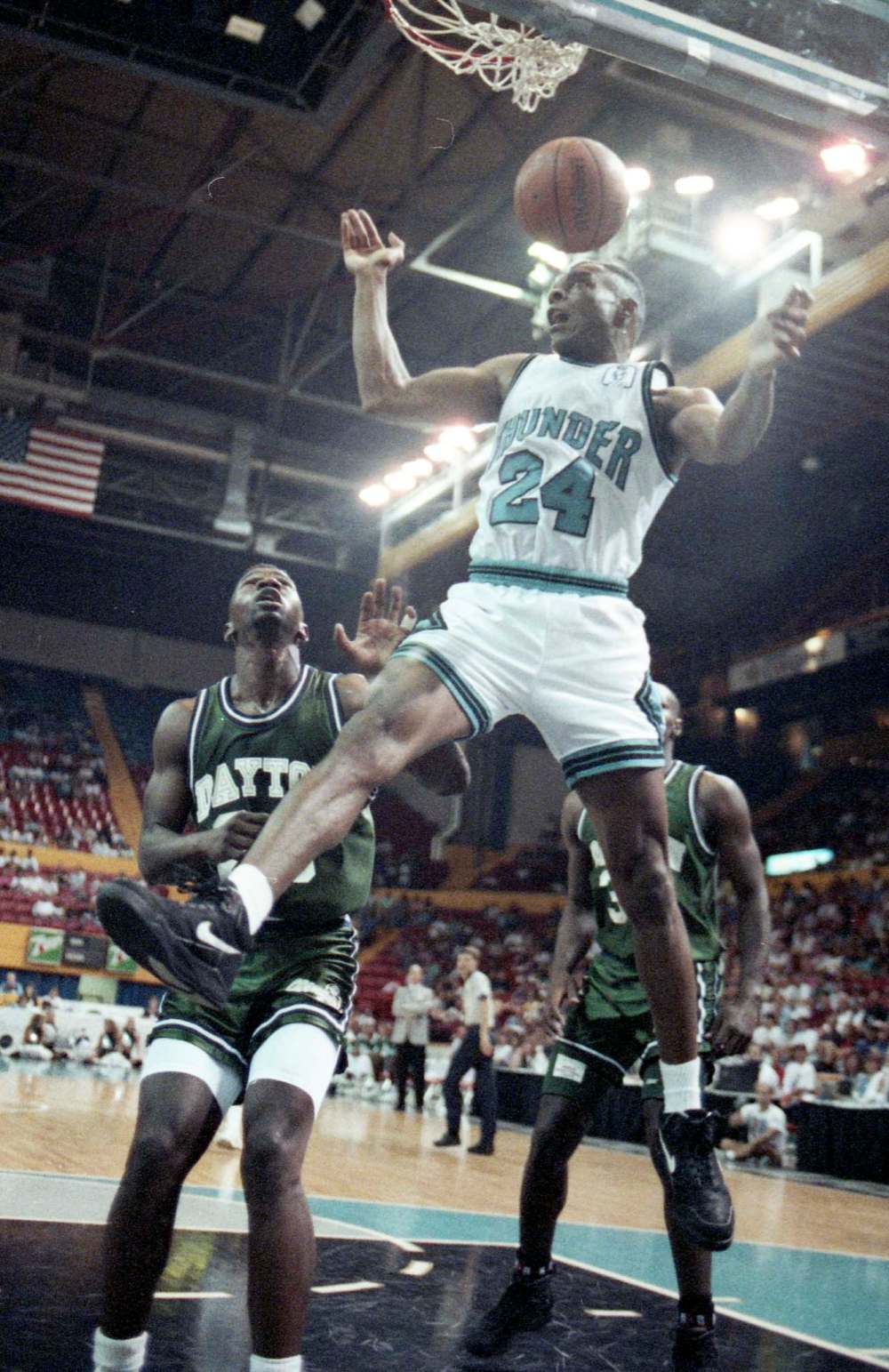
That’s the type of league the Winnipeg Thunder — established by Sam Katz prior to his days owning the Winnipeg Goldeyes and decade-long term as mayor — and Winnipeg businessman John Loewen unfortunately became a member of when they joined the World Basketball League in 1992. The WBL was a sprawling circuit featuring teams from coast to coast in Canada and the U.S.
The two notable things about the WBL were that it had a height restriction — no one taller than 6-7 was allowed to play — and that one of its founders, Michael “Mickey” Monus, embezzled US$10 million dollars from his discount drug store chain Phar-Mor to fund the league.
When the fraud came to light in July 1992, the league immediately went kaput and the Thunder could not complete their inaugural season, finishing with 15-22 record.
“Now that the smoke and mirrors have cleared, we can see more clearly now,” Hal Sigurdson wrote, noting Monus and the league owned a slice of every team with exception for the Thunder. “What we can see is the World Basketball League was just a pyramid scheme gussied up in sneakers and a jockstrap.”
The Thunder — who played at the Winnipeg Arena and rocked a busy, teal-backed logo featuring no less than a snarling polar bear clutching a basketball, another basketball going through a hoop, and an inverted triangle with the team’s wordmark above it — were not dead, however.
The team was actually popular, especially with the under-30 crowd, with Sigurdson noting “Katz and his staff did a great promotional job,” “basketball fans loved the style of game they played” and that “the Thunder have shown us there is a vibrant market for pro basketball in this town.” That led Katz and the three other Canadian WBL teams to form the National Basketball League.
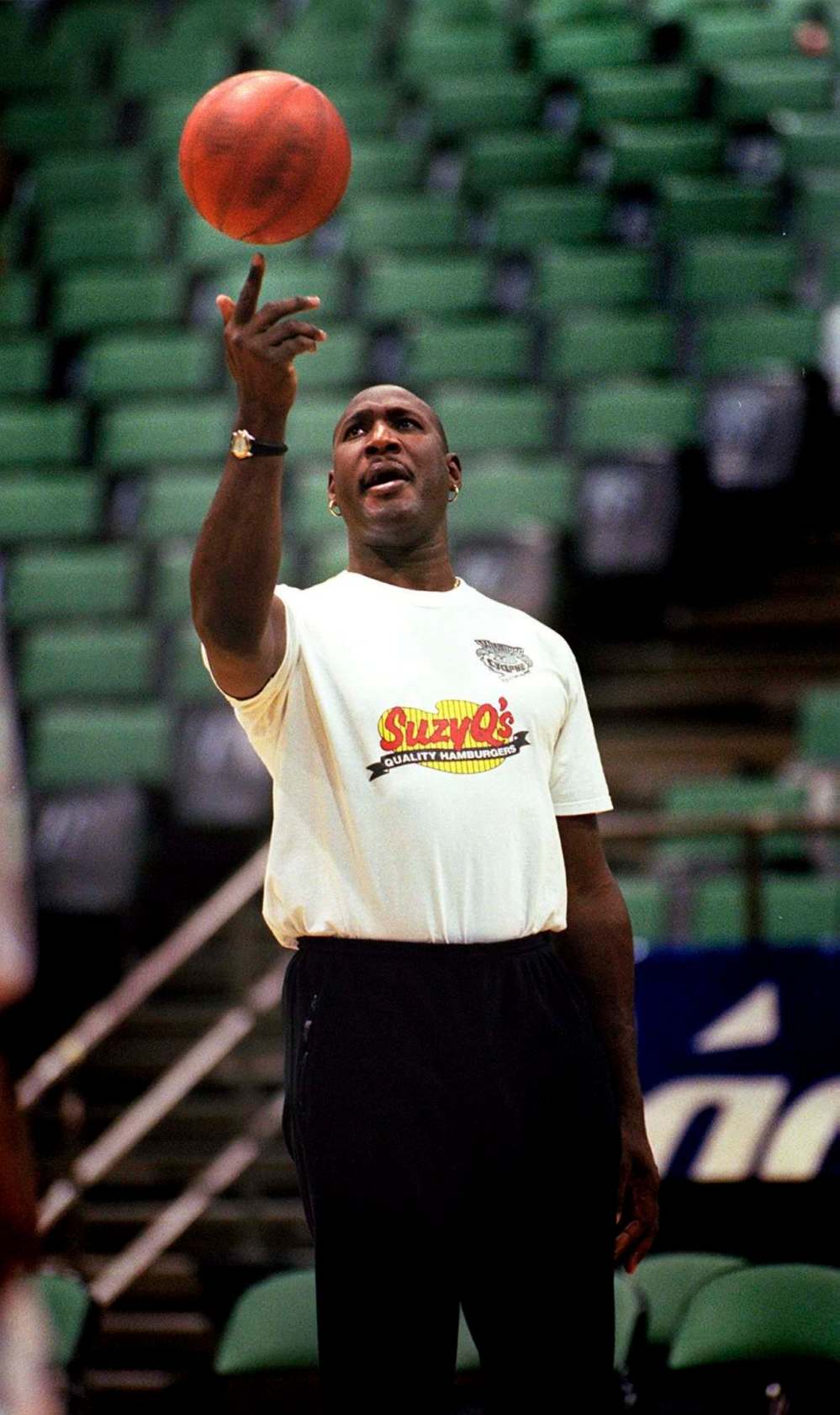
The Thunder finished the maiden NBL season in second place at 29-17 but lost in the semifinals in five games to the Saskatoon Slam.
Unfortunately, the NBL’s hoop dreams were short-lived and fan support dwindled leaguewide. By May 1994, the league was reported to be on life support and by July, Katz had resigned, the Edmonton Skyhawks failed to pay their league fees, and the Cape Breton Breakers unsuccessfully tried to move to Saint John. Even Loewen conceded the league had continued “simply because no team wanted to be the first to fold,” Scott Taylor reported.
On July 9, the board of governors voted to suspend operations and the league disbanded. By then, the Thunder were in last place at 10-15 and the first-place Halifax Windjammers were declared champions.
A year later, a new basketball team emerged that attempted to fill the hardwood hole the Thunder left behind.
The Winnipeg Cyclone, backed by businessman Earl Barish — who helped establish Dickie Dee ice cream and owns the Salisbury House restaurant chain to this day — and once again, Sam Katz, played in the International Basketball Association between 1995-2001.
“Team storms onto scene,” an article in the Free Press sports section on Oct. 4, 1995, read. “Any team who starts this season is going to finish this season and that’s the first way to gain credibility,” Katz was quoted as saying, no doubt remembering back to the Thunder days.
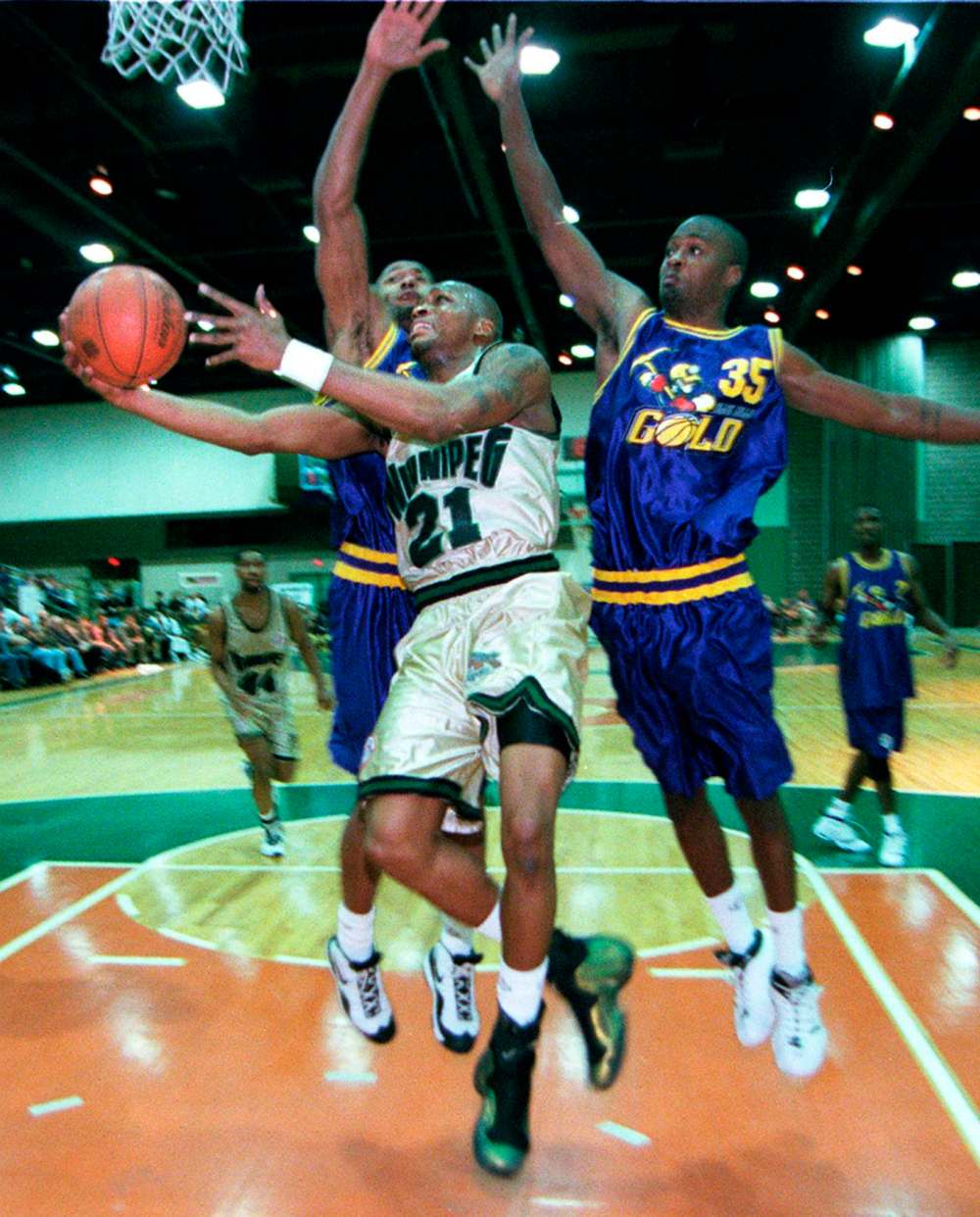
Unlike the Thunder, the Cyclone — whose logo was a uni-browed brown basketball with arms in the epicentre of a tan dust cloud — played at the Winnipeg Convention Centre, which was dubbed “The Wind Tunnel” and had a 2,900 capacity. The league was comprised mainly of teams in the northern and Midwestern U.S.: The Des Moines Dragons, Fargo-Moorhead Beez and St. Cloud Rock’n Rollers, to name a few.
The Cyclone played their first-ever game on Dec. 5, 1995, falling 100-91 to the Black Hills Posse in Rapid City, S.D. “They didn’t exactly take the International Basketball Association by storm last night,” Prest wrote the next day.
In an ironic omen, the Cyclone home-opener scheduled for Dec. 8 had to be postponed because a blizzard shut down the highways and the team couldn’t make it back to Winnipeg. Tip-off at the Convention Centre was delayed until Dec. 11, with the Cyclone losing 100-87 in front of “small but enthusiastic” crowd of 1,062.
The Cyclone never particularly blew anyone away in six seasons of existence — the team went 90-108 all-time — but did have a number of notable players, including Darryl Dawkins.

That’s right, “Chocolate Thunder” himself, the 6-11, 250-pound rim-breaker who played for the Philadelphia 76ers, New Jersey Nets, Detroit Pistons, and Utah Jazz, was a player/coach for the team between 1998-2000. Andrell Hoard, a 6-3 guard and the winner of the 1997 EPSN College Slam Dunk Championship, won MVP honours in both 1998 and 1999.
By their final season, fan support had dried up — their best crowd of the season was a paltry 150 — the team was a rock-bottom 11-29, had high player turnover, and no local talent. Barish wrote a letter to the city’s sports editors, blaming a lack of newspaper coverage for the team’s failure to draw fans downtown.

“When you’ve reached the point where there is no one but the media left to blame for your problems, you’ve hit rock bottom,” Taylor wrote in March 2001.
The IBA ceased operations in August 2001 and the Cyclone joined the new Continental Basketball Association with plans to take the year off before hitting the court again in 2002. Barish hoped the team would play one more year at the Convention Centre before playing in the proposed downtown arena that became the MTS Centre.
However, in April 2002 — after his search for someone to buy the team was unsuccessful — Barish announced the Cyclone would dribble and dunk no more.