

Discrimination against disabled Indigenous child shows little has changed: advocate
Advertisement
Read this article for free:
or
Already have an account? Log in here »
To continue reading, please subscribe:

Digital Subscription
One year of digital access for only $205*
- Enjoy unlimited reading on winnipegfreepress.com
- Read the E-Edition, our digital replica newspaper
- Access News Break, our award-winning app
- Play interactive puzzles
*First annual payment billed as $205.00 + GST for one year. This annual subscription will automatically renew at $233.00 + GST every 52 weeks (10% off the regular annual price of $259.35). Offer available to new and qualified returning subscribers only. Cancel any time.
To continue reading, please subscribe:
Add Free Press access to your Brandon Sun subscription for only an additional
$1 for the first 4 weeks*
- Enjoy unlimited reading on winnipegfreepress.com
- Read the E-Edition, our digital replica newspaper
- Access News Break, our award-winning app
- Play interactive puzzles
*Your next Brandon Sun subscription payment will increase by $1.00 and you will be charged $17.95 plus GST for four weeks. After four weeks, your payment will increase to $24.95 plus GST every four weeks.
Read unlimited articles for free today:
or
Already have an account? Log in here »
Hey there, time traveller!
This article was published 20/08/2020 (2233 days ago), so information in it may no longer be current.
OTTAWA — A recent ruling that Manitoba racially discriminated against a disabled Indigenous child illustrates an ongoing disparity governments pledged to rectify a decade ago, according to the province’s independent watchdog.
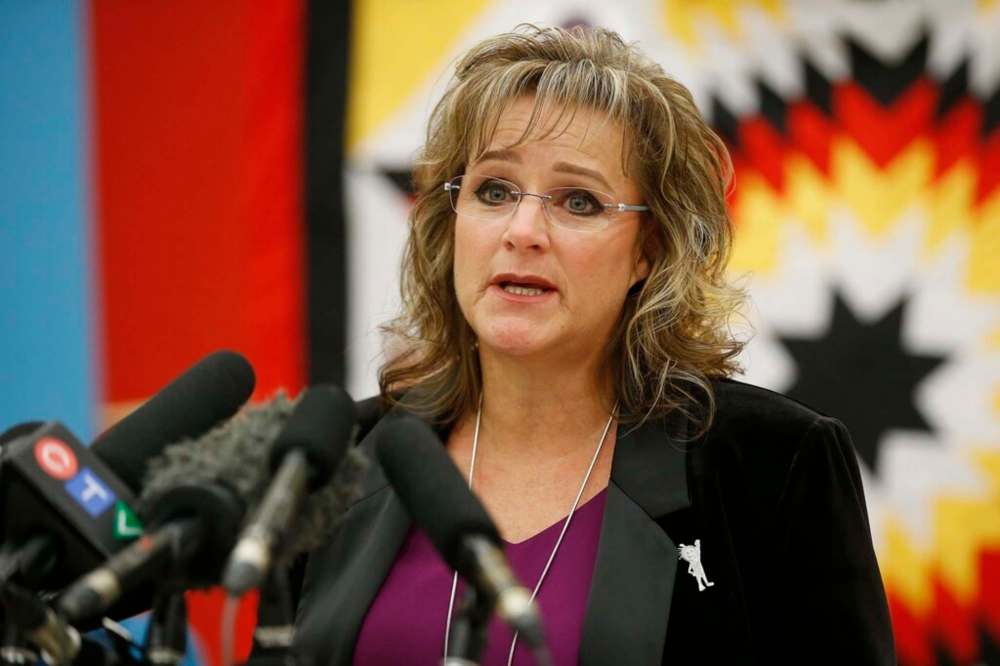
“There continues to be inequity for children who are living on First Nations communities, with respect to accessing services for disabilities,” Daphne Penrose, Manitoba advocate for children and youth, told the Free Press.
“If we have those services here, they should be able to access them, and (yet) there are so many barriers.”
In a decision released Monday, the Manitoba Human Rights Commission ruled the province discriminated against a disabled Anishinaabe child and his mother on the basis of their ancestry and his disability.
Alfred (Dewey) Pruden, who was 16 as of an early 2019 hearing, suffers from various neurological disorders. His mother, Harriet Sumner-Pruden, claimed the province has delayed or withheld care numerous times.
The family lives at Pinaymootang First Nation (240 kilometres northwest of Winnipeg), and health care on reserves generally falls under federal jurisdiction.
That arrangement furthers “systemic discrimination,” adjudicator Robert Dawson ruled.
“No government or other official intended to treat the complainants differently by reason of their ancestry as Anishinaabe people. However, that was the very effect of the whole of the assorted policies, practices, and even laws that try to carve out the concurrent jurisdiction of the federal and provincial governments in respect of health,” reads the ruling.
He ordered the province to pay $42,500 in damages.
A spokeswoman said the province is speaking with the federal government, Indigenous leaders and internal departments about the ruling.
The family filed its complaint in 2010, after Ottawa and Manitoba promised to avoid such jurisdictional disputes.
In 2007, Parliament enacted Jordan’s Principle, pledging for Ottawa to pay health and social-service costs for First Nations children upfront, and later resolve payment disputes with provinces.
The principle is named after Jordan River Anderson, who died at Winnipeg’s Health Sciences Centre and never made it home to Norway House Cree Nation. The five-year-old had multiple disabilities and neither Ottawa nor the province would pay for home care.
The Manitoba government signed an agreement with Ottawa in 2008, to respect Jordan’s Principle by offering services upfront.
“If we have those services here, they should be able to access them, and (yet) there are so many barriers.”- Daphne Penrose, Manitoba advocate for children and youth
This week’s ruling noted the family unsuccessfully tried to access disability services through that principle.
Penrose said the policy has given families a path to getting help, but “I don’t think it’s perfect by any stretch of the measure.”

She said the lack of disability support falls in line with inequitable access to mental health supports, affordable food, and safe housing on remote First Nations.
The province broadened the advocate’s mandate in March 2018 to include children receiving support for disabilities. Penrose said her office is about to launch a survey to better understand how parents access services.
The Southern Chiefs’ Organization commended this week’s ruling, noting a report last year found a widening gap in life expectancy that has First Nations people living 11 years less than non-First Nations people in Manitoba.
“Regardless of jurisdiction, no government is allowed to treat First Nation peoples differently, but that is exactly what happened,” the SCO wrote in a statement.
dylan.robertson@freepress.mb.ca
Related Articles
Children with disabilities on First Nations eligible for care after 14-year legal battle
Advertisement Advertise With Us
Advertisement Advertise With Us