

Manitoba chiefs weigh in on carbon tax, reconciliation
Advertisement
Read this article for free:
or
Already have an account? Log in here »
To continue reading, please subscribe:

Digital Subscription
One year of digital access for only $205*
- Enjoy unlimited reading on winnipegfreepress.com
- Read the E-Edition, our digital replica newspaper
- Access News Break, our award-winning app
- Play interactive puzzles
*First annual payment billed as $205.00 + GST for one year. This annual subscription will automatically renew at $233.00 + GST every 52 weeks (10% off the regular annual price of $259.35). Offer available to new and qualified returning subscribers only. Cancel any time.
To continue reading, please subscribe:
Add Free Press access to your Brandon Sun subscription for only an additional
$1 for the first 4 weeks*
- Enjoy unlimited reading on winnipegfreepress.com
- Read the E-Edition, our digital replica newspaper
- Access News Break, our award-winning app
- Play interactive puzzles
*Your next Brandon Sun subscription payment will increase by $1.00 and you will be charged $17.95 plus GST for four weeks. After four weeks, your payment will increase to $24.95 plus GST every four weeks.
Read unlimited articles for free today:
or
Already have an account? Log in here »
Hey there, time traveller!
This article was published 23/09/2020 (2199 days ago), so information in it may no longer be current.
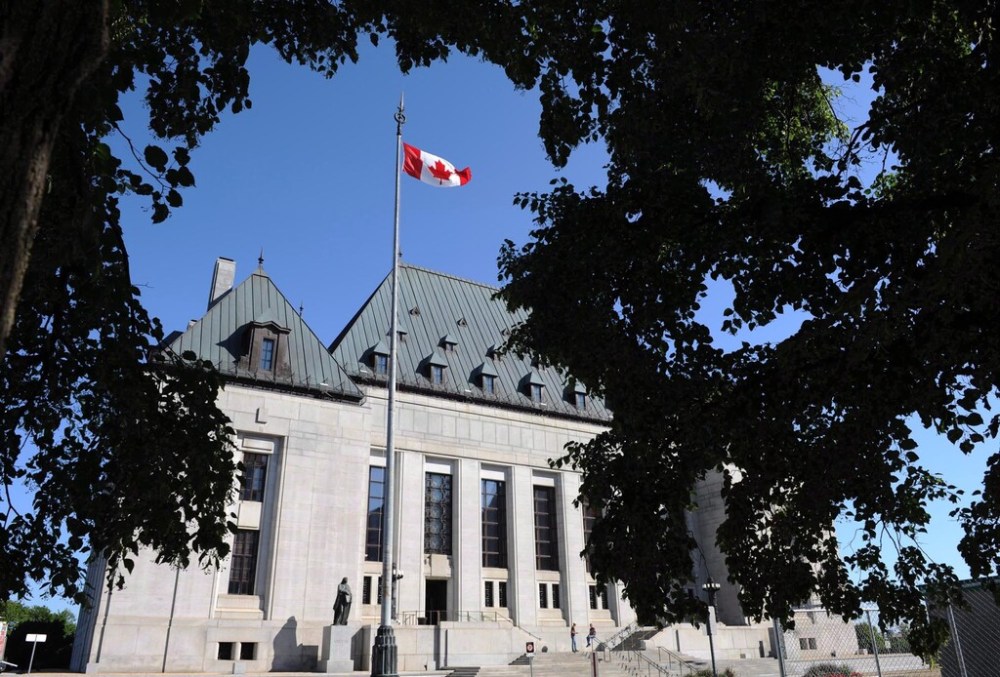
The Assembly of Manitoba Chiefs was among a host of groups representing Indigenous interests to present Wednesday before the Supreme Court of Canada on the issue of the federal carbon tax backstop.
Attorneys general from a number of provinces (including Manitoba’s Michael Conner) asserted Ottawa’s implementation of the Greenhouse Gas Pollution Pricing Act in June 2018 constituted a “massive overreach” into provincial jurisdiction — and is thus unconstitutional.
The Assembly of First Nations, acting as an intervenor in the case and represented by Stuart Wuttke, countered the carbon pricing act is constitutional, as climate change is an issue that requires all levels of government action.
“The provinces in one jurisdiction do not owe any obligations to First Nations in another province, so should a provincial government not act, the impacts are real to First Nations communities and governments in other locations across Canada,” Wuttke argued.
Athabasca Chipewyan First Nation, represented by Amir Attaran, argued climate change is upending cultural ways of life for the northern Alberta community that were established over thousands of years. Attaran said treaty rights to hunting, fishing and trapping are what’s truly on the line for First Nations communities.
“While Canada’s goal is to warm no more than 1.5 C, scientists predict my clients’ northern homeland, by the end of the century, will warm (by) as much as 7 C. Seven degrees, to illustrate, is the difference in average temperature between Vancouver and Mexico City. Seven degrees is akin to taking my clients’ homeland and immersing it and their treaty rights in a steamer basket,” Attaran said.
The Assembly of Manitoba Chiefs, represented by Joëlle Pastora Sala, who appeared virtually before the court, did not submit an argument regarding the constitutionality of the federal carbon tax, but rather argued omitting First Nations governments from the conversation impairs reconciliation.

“Climate change is too important and too complex for only one treaty partner. A new path must be charted by this court, one that is consistent with our journey to reconciliation,” Pastora Sala said.
After the arguments were presented, AMC Grand Chief Arlen Dumas told the Free Press he believed the message First Nations need a seat at the table when it comes to sorting out climate policy was received.
“This issue became a political football. It wasn’t about environmental stewardship. It wasn’t about looking out for the best interests of all Canadians and trying to manage our resources in a respectful way. It became about people jockeying for position — and it became an issue about who had the division of power and who could actually wield it better,” Dumas said.
A decision in the case is unlikely to be delivered for months.
sarah.lawrynuik@freepress.mb.ca
Related Articles
First Nations head to court over environmental protections 'Provinces are not independent states': B.C. defends carbon pricing at Supreme Court Supreme Court reserves judgment on carbon tax

Advertisement Advertise With Us
Advertisement Advertise With Us