

Pandemic presses pause on northern research
Advertisement
Read this article for free:
or
Already have an account? Log in here »
To continue reading, please subscribe:

Digital Subscription
One year of digital access for only $205*
- Enjoy unlimited reading on winnipegfreepress.com
- Read the E-Edition, our digital replica newspaper
- Access News Break, our award-winning app
- Play interactive puzzles
*First annual payment billed as $205.00 + GST for one year. This annual subscription will automatically renew at $233.00 + GST every 52 weeks (10% off the regular annual price of $259.35). Offer available to new and qualified returning subscribers only. Cancel any time.
To continue reading, please subscribe:
Add Free Press access to your Brandon Sun subscription for only an additional
$1 for the first 4 weeks*
- Enjoy unlimited reading on winnipegfreepress.com
- Read the E-Edition, our digital replica newspaper
- Access News Break, our award-winning app
- Play interactive puzzles
*Your next Brandon Sun subscription payment will increase by $1.00 and you will be charged $17.95 plus GST for four weeks. After four weeks, your payment will increase to $24.95 plus GST every four weeks.
Read unlimited articles for free today:
or
Already have an account? Log in here »
Hey there, time traveller!
This article was published 27/09/2020 (2179 days ago), so information in it may no longer be current.
In late August, the hallways of the Churchill Northern Studies Centre are empty and echoing like they never have before. Normally there is a full complement of 50 to 60 scientists running around conducting their field research at the centre with its unique placement on the edge of three biomes — the tundra, the boreal forest, and the marine environment of Hudson Bay. But not this year.
This summer, the study centre is barely open. The cafeteria is shuttered and you can only find a handful of Manitoba-based researchers here; the lucky few who were able to safely travel north while dodging the travel restrictions in place during the pandemic. Instead of a staff between 20 and 25 people, there are six people working here.
“It’s been very quiet,” says Erica Gillis, the research manager at the CNSC. She’s worked all summer to try and salvage as many long-term data sets as she could. Running off her feet, she’s lost count of just how many projects she’s had her fingers in between March and August.
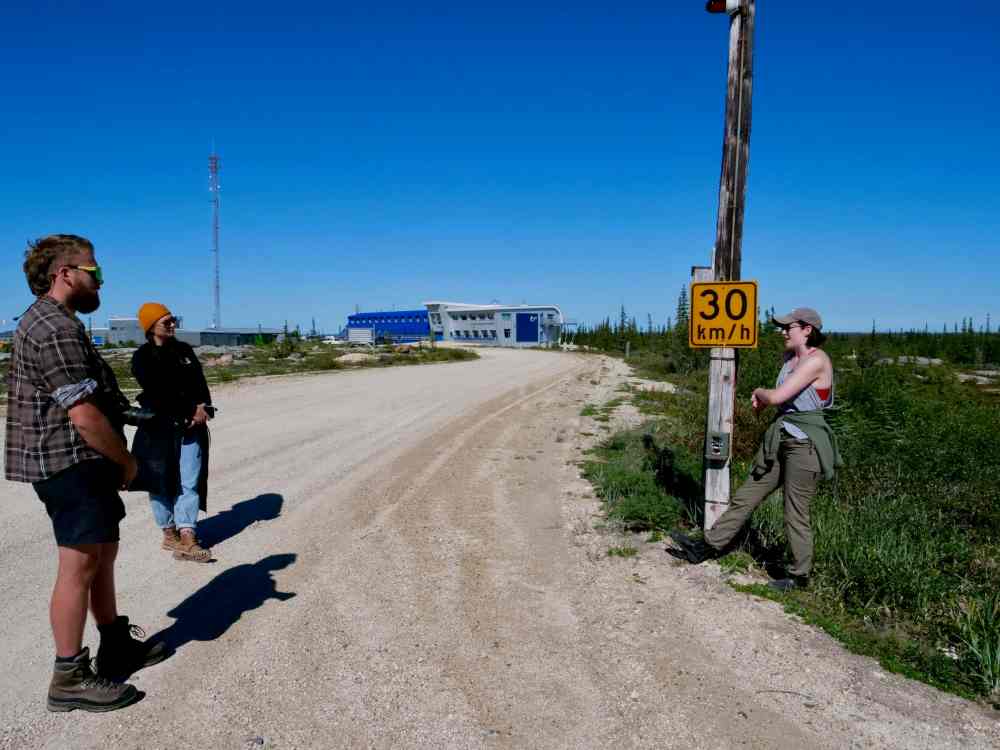
“It’s been tough with a smaller team to get some of the work done. But we all love our jobs so much that we’re so willing to go above and beyond to go collect this data, because we really know how important it is,” Gillis said. “For researchers who can’t come, it’s heartbreaking; this is what they look forward to every single year, coming to do their field work. And, master’s students and PhD students that can’t come collect their data, and now they’re a year behind; it’s really devastating for them.”
In phone calls with researchers all across North America, Gillis and her small but mighty team are heralded as the saviours of their research, collecting at least the bare minimum the scientists need to keep their projects viable. One of those singing Gillis’ praises is Jon Davenport, an assistant professor of biology at Appalachian State University.
Instead of crawling through the shrubbery of the tundra this summer near Churchill, Davenport finds himself on the other end of the phone line from a Free Press reporter from his home in North Carolina, blocked from any possibility of travelling north by the closure of the U.S.-Canada border. Davenport studies the impact of climate change on wood frogs in the Churchill region. He and his research team are affectionately known as “the froggers.”
“It’s been a big bummer. This would be my tenth year (going north) which is a big deal usually when you’re doing long-term animal research because you really want to get that eight to ten years of data to really start to get at how populations respond, especially when you’re talking about climates,” Davenport said.
Though Gillis stepped up to help Davenport collect some of the baseline data for his research in his absence, it won’t compare to the full array of monitoring statistics typically gathered.
“We’ve just said there is going to be an asterisk beside this year — no data really collected for our long-term data set this year,” Davenport said. “But everybody’s in the same boat as us. Of course we’re still trying to figure out how to infer how these populations are doing when you miss a year.”
The impact of COVID-19 on unrelated scientific research will be sizable and is being felt around the globe. Across disciplines the asterisk beside 2020 data will become ubiquitous and accepted as a year with many question marks beside it.
More immediately, at the CNSC, it has meant declines in revenues for the non-profit research hub of approximate 75 per cent, says the CNSC board of directors’ chair Jim Roth.
“We rely so much on visitors and we haven’t been able to have any visitors. So we (opened) up for researchers on a limited basis with some extra fees in August, but we can only have half capacity, our polar bear season (this fall) is going to be very reduced,” Roth said.
Roth managed to make his way north, and is one of the only researchers who was able to travel into Wapusk National Park to gather data this year, but he had to get creative to do it. The rules were such that travel groups could only consist of people in your own household. Luckily, his son is also a biologist.
Andrew Derocher is one of the country’s foremost polar bear experts, based at the University of Alberta, and he had his spring field research cancelled early on with a question mark thrown beside whether or not it would be feasible to deploy radio collars on adult female bears this fall. If it isn’t possible, it will be the first time radio collar data isn’t collected for this polar bear population since the early 1990s.
“It’s an interesting phenomenon, it’s almost like Murphy’s Law, interesting things happen when you’re not collecting data,” Derocher said. Before long-term data was being collected on the wester Hudson Bay polar bears, there were years in the 1980s where there were low cub birth rates. They know this because they can still see the impacts, but researchers will never know what led to that outcome, he says.
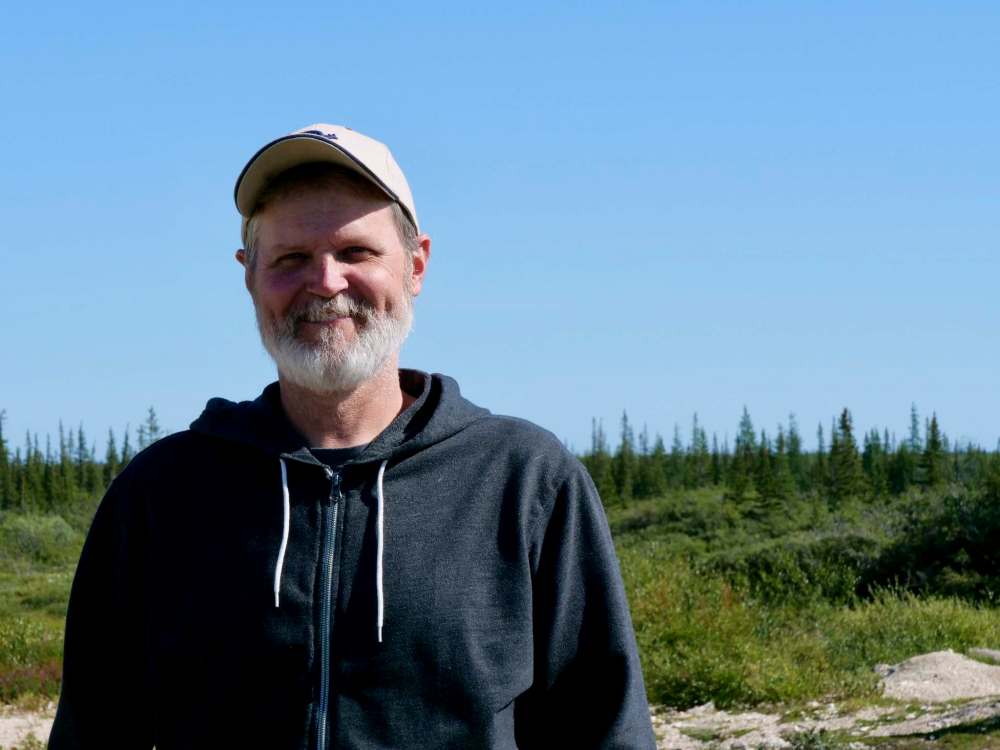
“Lost data, you can never really make it up, but with long-term monitoring data sets like we have, usually there’s an inertia in the data. More years is always better, but when you start to get a long-term data set where you’ve been monitoring a lot of individuals, if you took a year out, it won’t be devastating. But, of course if something interesting happens, you won’t get those insights,” Derocher said.
For Davenport and his frog research, it isn’t just the lost data, but each year he brings with him new students that gain field research skills that help them along in building their careers. That missed opportunity is a substantial blow for them, he says.
Katie Manning, a masters student at the University of Saskatchewan, is one of those young students having their research derailed by the pandemic. She was at first only meant to spend a few weeks in northern Manitoba. Once travel restrictions took hold, a new plan was drawn up for her to isolate and spend the whole summer in Churchill. “I packed up my whole life, and then 24 hours before I was supposed to catch the train, (my supervisor) called me and said, ‘It no longer makes sense. We’re not doing it,’” Manning said.

But Manning is one of the researchers who had her research rescued by Gillis and the team at CNSC. Manning is studying community attitudes towards bears with increasing frequency of human-bear interactions. Instead of conducting in-person interviews, she was able to conduct interviews over video chat, and Gillis helped to hand out and deploy wildlife cameras to the individuals involved in the research project.
“She’s been a huge asset and resource for me,” Manning says of Gillis.
Doug Clark, Manning’s supervisor and bear researcher in his own right, also had his field season in Churchill cancelled for the year, but he hopes that some positive things can come from the circumstances, at least for research like his.
“Tools like this, that are so easy to deploy, I think have great potential to give northerners more active roles in wildlife research, which is something that people across the north have been calling for, for a long time. And if our experience with the pandemic is anything to go by, there is no problem whatsoever with northerners deploying these cameras themselves,” Clark said. “It’s northerners finally being in the driver’s seat.”
sarah.lawrynuik@freepress.mb.ca
History
Updated on Monday, September 28, 2020 6:10 AM CDT: Corrects typo
Updated on Monday, September 28, 2020 12:26 PM CDT: Updates photo