

Courtrooms face row over rights
Former lawyers file human rights complaints challenging accessibility standards in Manitoba court buildings

Advertisement
Read this article for free:
or
Already have an account? Log in here »
To continue reading, please subscribe:
Monthly Digital Subscription
$1 per week for 24 weeks*
- Enjoy unlimited reading on winnipegfreepress.com
- Read the E-Edition, our digital replica newspaper
- Access News Break, our award-winning app
- Play interactive puzzles
*Billed as $4.00 plus GST every four weeks. After 24 weeks, price increases to the regular rate of $19.95 plus GST every four weeks. Offer available to new and qualified returning subscribers only. Cancel any time.
Monthly Digital Subscription
$4.99/week*
- Enjoy unlimited reading on winnipegfreepress.com
- Read the E-Edition, our digital replica newspaper
- Access News Break, our award-winning app
- Play interactive puzzles
*Billed as $19.95 plus GST every four weeks. Cancel any time.
To continue reading, please subscribe:
Add Free Press access to your Brandon Sun subscription for only an additional
$1 for the first 4 weeks*
*Your next subscription payment will increase by $1.00 and you will be charged $16.99 plus GST for four weeks. After four weeks, your payment will increase to $23.99 plus GST every four weeks.
Read unlimited articles for free today:
or
Already have an account? Log in here »
Hey there, time traveller!
This article was published 21/10/2020 (2011 days ago), so information in it may no longer be current.
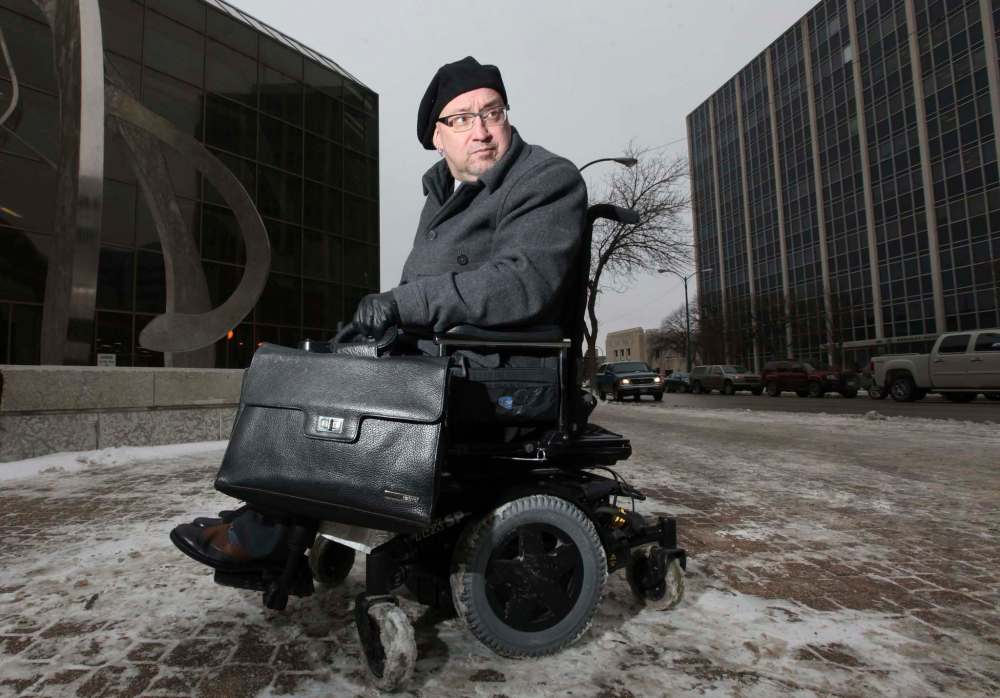
Two former criminal defence lawyers, who both stopped practising law in part because Manitoba’s courts were too difficult to navigate in their wheelchairs, have filed human rights complaints over inaccessible buildings, washrooms and walkways.
Mike Reimer and Peter Tonge filed separate complaints Tuesday, urging the Manitoba Human Rights Commission to declare that court buildings in the province violate the rights of people with disabilities. The men said they hope to trigger regulatory changes that would force the province to make the structures accessible for all.
Reimer was called to the bar in 2018. He left the profession at the end of last year, after repeatedly encountering barriers to working in the Winnipeg Law Courts building and at rural courthouses, he said.
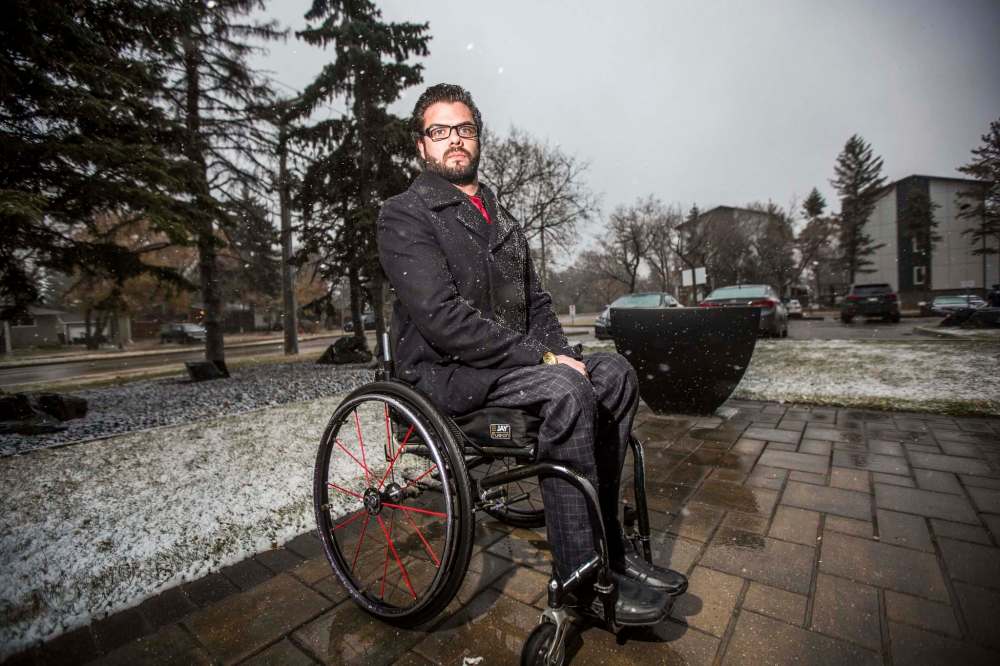
“Being a defence lawyer is stressful by itself, but when you add in all these other issues with accessibility and with inadequate snowplowing in the wintertime — there were days where they just didn’t plow around the courthouse, so that means you can’t get to court. That increases stress… it was something I ultimately concluded wasn’t sustainable, so I made the difficult decision to depart,” said Reimer, who added his concerns were largely ignored.
Reimer said he was hesitant to come forward with the human rights complaint when he was still working as a lawyer.
“Once I stopped practising, then I felt more comfortable going ahead with something like this, because when I was practising, there was always that underlying fear of, you know, I’m junior counsel, if I’m going to do this, I’d essentially be putting a target on my back because I’d be going after the system and some pretty powerful people within that system.”
Tonge, who worked as a lawyer in Winnipeg for more than a decade before he retired in 2018, said he also felt as though his pleas for accessibility were ignored. He was denied opportunities to work for Legal Aid Manitoba in circuit courts in other areas of the province because many of the court buildings in rural and northern Manitoba are not wheelchair-friendly and travel to some of the communities requires boarding small aircraft or boats.
“It’s a piece of your career growth that you’re missing, it’s connections with those communities that you’re not making,” Tonge said.
In Winnipeg, the largest courthouse in the province, some courtrooms lack automatic door-openers and are too small to comfortably navigate in a wheelchair. Recent renovations haven’t included upgrades to main-floor washrooms, Tonge said.
Both men recounted several occasions when they asked for their disabilities to be accommodated but were instead dismissed.
Reimer said a trial he was working on had to be moved to a different community because there was no wheelchair ramp and he was told sheriff’s officers couldn’t help carry him up the stairs.
While waiting for a verdict in a jury trial, Tonge was told all lawyers were expected to be ready to return to court within 20 minutes. He expressed the need for extra time, saying it takes 20 minutes just for him to put his Court of Queen’s Bench robes on. “The response from the bench was, ‘Then you should stay in your robes,’” Tonge said.
A spokesperson for the Manitoba Human Rights Commission didn’t respond to a Free Press inquiry Tuesday.
A statement from Manitoba Justice reads: “The Manitoba government is committed to ensuring justice stakeholders, members of the public and communities have safe and accessible spaces for court proceedings. Work is ongoing across the province to improve existing spaces and address any deficiencies if/when they arise. A number of projects are complete or currently underway to support accessibility in spaces for court proceedings.”
Tonge said Reimer was the only other lawyer who uses a wheelchair he’s encountered in Manitoba. He said that needs to change so younger lawyers who advocate for the rights of their clients can feel their own rights are being respected.

“I was always under the impression that the legal profession was happy to have us there and working as long as they didn’t have to change absolutely anything for us to do it,” Tonge said.
“If the courts aren’t even protecting the rights of the people that are ‘their own,’ it shows how important it is to work to protect the rights of others.”
katie.may@freepress.mb.ca
Twitter: @thatkatiemay
Katie May is a multimedia producer for the Free Press.
Our newsroom depends on a growing audience of readers to power our journalism. If you are not a paid reader, please consider becoming a subscriber.
Our newsroom depends on its audience of readers to power our journalism. Thank you for your support.
Katie May is a multimedia producer for the Free Press.
Our newsroom depends on a growing audience of readers to power our journalism. If you are not a paid reader, please consider becoming a subscriber.
Our newsroom depends on its audience of readers to power our journalism. Thank you for your support.
Advertisement Advertise With Us
Advertisement Advertise With Us