

Restored spirit tree has new home at museum

Advertisement
Read this article for free:
or
Already have an account? Log in here »
To continue reading, please subscribe:

Digital Subscription
One year of digital access for only $205*
- Enjoy unlimited reading on winnipegfreepress.com
- Read the E-Edition, our digital replica newspaper
- Access News Break, our award-winning app
- Play interactive puzzles
*First annual payment billed as $205.00 + GST for one year. This annual subscription will automatically renew at $233.00 + GST every 52 weeks (10% off the regular annual price of $259.35). Offer available to new and qualified returning subscribers only. Cancel any time.
To continue reading, please subscribe:
Add Free Press access to your Brandon Sun subscription for only an additional
$1 for the first 4 weeks*
- Enjoy unlimited reading on winnipegfreepress.com
- Read the E-Edition, our digital replica newspaper
- Access News Break, our award-winning app
- Play interactive puzzles
*Your next Brandon Sun subscription payment will increase by $1.00 and you will be charged $17.95 plus GST for four weeks. After four weeks, your payment will increase to $24.95 plus GST every four weeks.
Read unlimited articles for free today:
or
Already have an account? Log in here »
Hey there, time traveller!
This article was published 04/12/2021 (1777 days ago), so information in it may no longer be current.
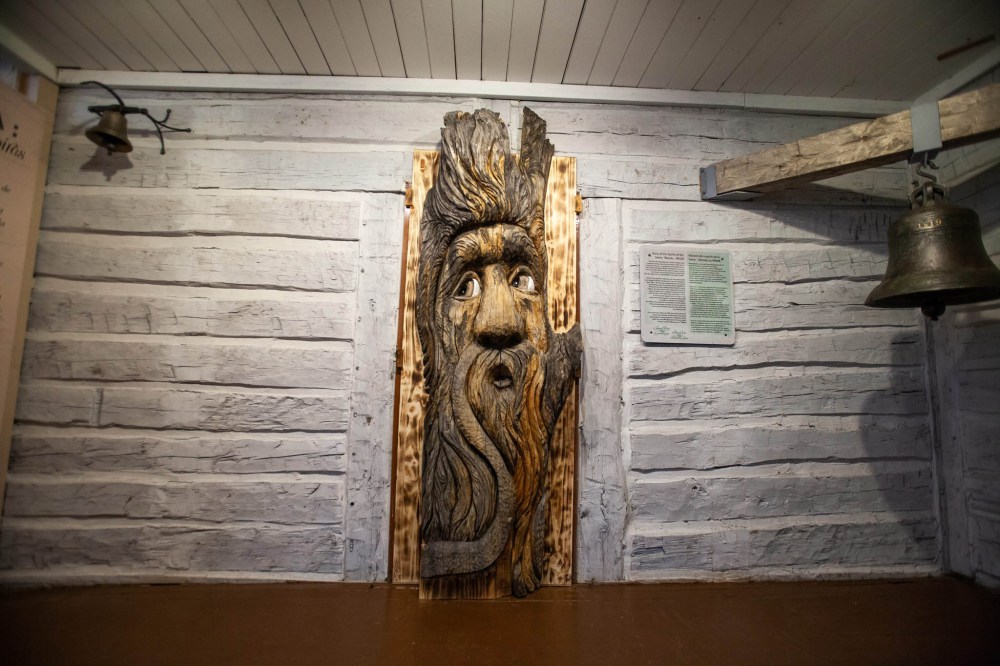
A beloved carved tree toppled earlier this year has found a new home in the St. Boniface Museum.
Woody-Mhitik, known as the spirit tree, had stood in the Bois-des-Ésprits forest attracting visitors for 15 years before succumbing to the elements in August of this year. It had been carved from a 150-year-old elm tree suffering from Dutch Elm disease and slated for removal by the city before its transformation.
It was then when former Save Our Seine volunteer Marcel Ritchot stepped in. He had grown up along the Red River and had been fond of Woody-Mhitik since its inception, sometimes approaching visitors to the tree and asking what the spirit tree meant to them. He retrieved the broken carving, which had fallen in two pieces, and began the “work of love” of restoring it.
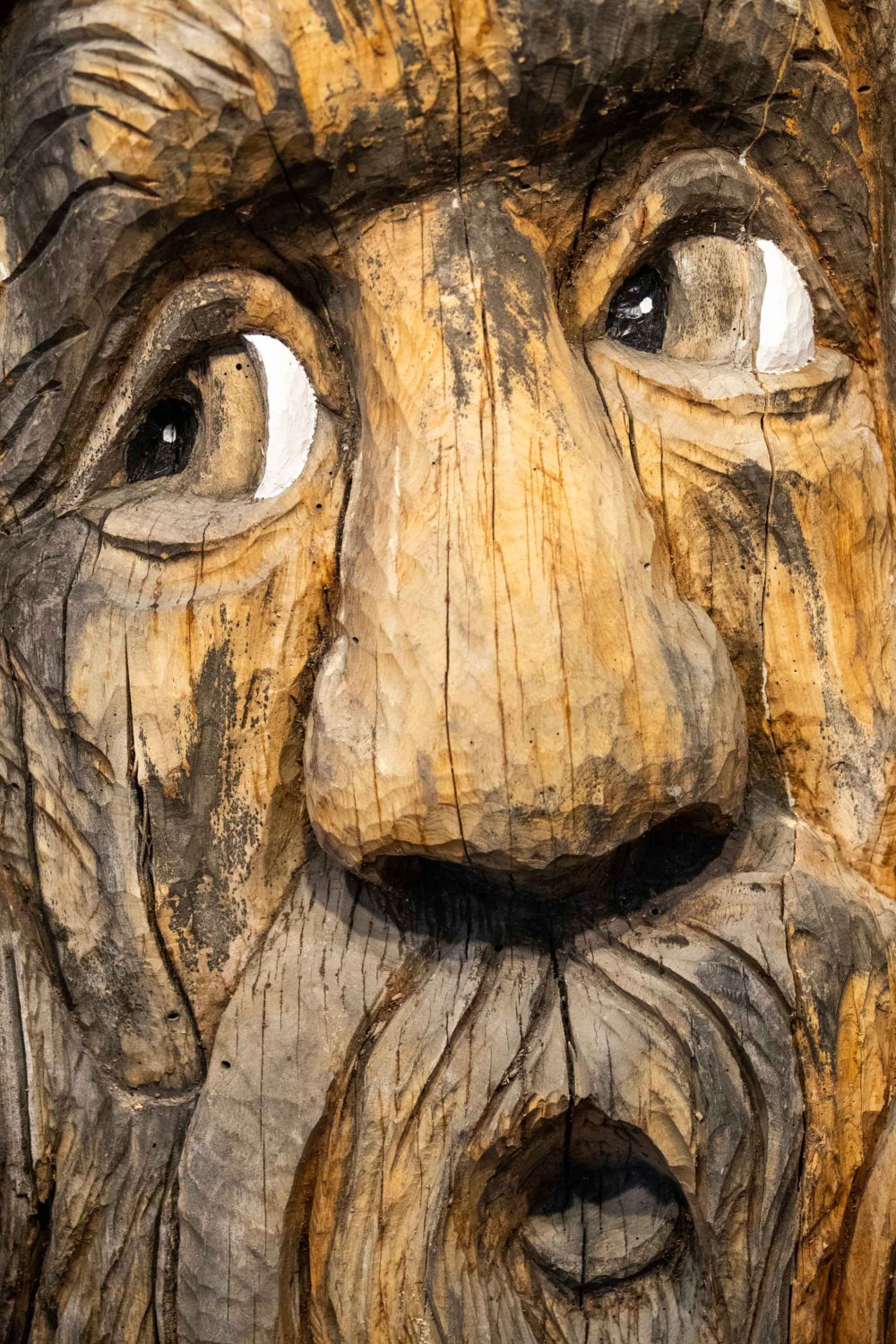
“The whole spirit of the whole thing was what was so appealing and drawing. So when he’d fallen of old age, I thought, he can’t just stop here,” he said. “It looked like it wasn’t much to go with, but I got all the pieces together and brought it to this point. It was very rewarding.”
Ritchot worked on the carving over seven weeks, building a backboard, support base and frame to create the eight-foot sculpture sitting near the St. Boniface Museum entrance today.
The revitalized Woody-Mhitik was unveiled to the public Saturday morning, with a plate explaining its history for visitors.
“Here it stands today for visitors to enjoy and appreciate – here stands the revived Woody-Mhitik, looking splendid,” non-profit organization Save Our Seine representative Denis DePape said.
Save Our Seine, which seeks to protect the Seine River and the area around it, originally partnered with two members of Les Gens de Bois Woodcarving Club to create Woody-Mhitik as part of a campaign to protect the Bois-des-Esprits in 2004.
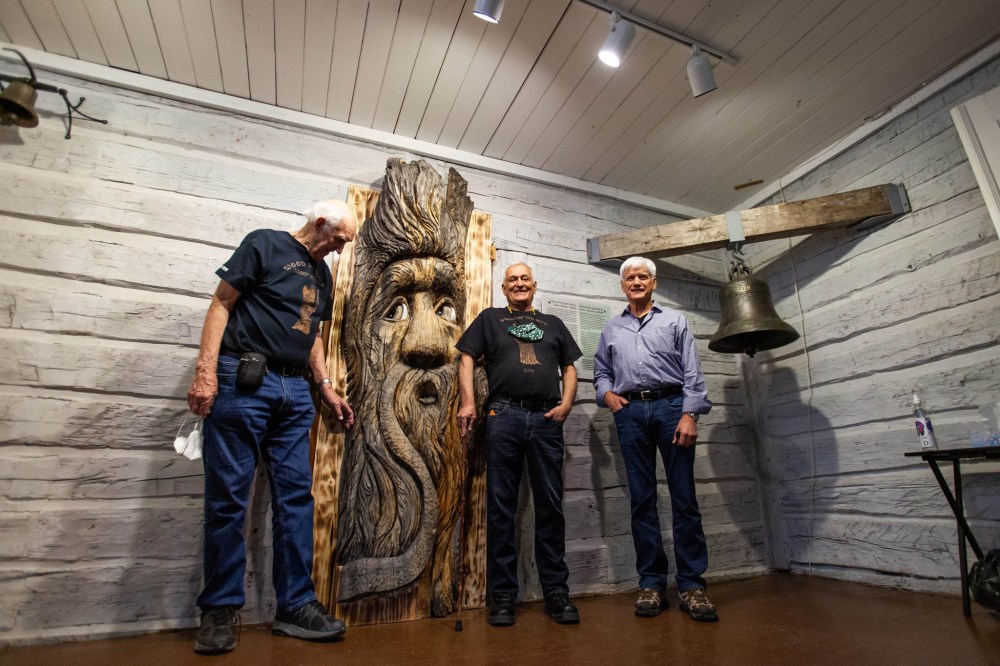

DePape commended Ritchot’s work in bringing the spirit of the spirit tree back to life.
“On behalf of Save Our Seine, we would like to extend our heartfelt appreciation to Marcel Ritchot and his helpers for reviving Woody-Mhitik, and to the St. Boniface Museum for providing a home for the revived Woody-Mhitik,” he said.
Ritchot said he hoped people visiting the museum would take time to take in the rich history of both Woody-Mhitik and the woods where it once stood.
“To me, what’s really important is the value of wooded parks and preserving these parks,” he said.
“And when people see this, I hope they’ll be intrigued enough to learn more about it and about how a forest is a living thing.”
Malak Abas is a city reporter at the Free Press. Born and raised in Winnipeg’s North End, she led the campus paper at the University of Manitoba before joining the Free Press in 2020. Read more about Malak.
Every piece of reporting Malak produces is reviewed by an editing team before it is posted online or published in print — part of the Free Press‘s tradition, since 1872, of producing reliable independent journalism. Read more about Free Press’s history and mandate, and learn how our newsroom operates.
Our newsroom depends on a growing audience of readers to power our journalism. If you are not a paid reader, please consider becoming a subscriber.
Our newsroom depends on its audience of readers to power our journalism. Thank you for your support.
Malak Abas is a city reporter at the Free Press. Born and raised in Winnipeg’s North End, she led the campus paper at the University of Manitoba before joining the Free Press in 2020. Read more about Malak.
Every piece of reporting Malak produces is reviewed by an editing team before it is posted online or published in print — part of the Free Press‘s tradition, since 1872, of producing reliable independent journalism. Read more about Free Press’s history and mandate, and learn how our newsroom operates.
Our newsroom depends on a growing audience of readers to power our journalism. If you are not a paid reader, please consider becoming a subscriber.
Our newsroom depends on its audience of readers to power our journalism. Thank you for your support.
Advertisement Advertise With Us
Advertisement Advertise With Us