

Exhibit of Olympic proportions
At the Manitoba Sports Hall of Fame, artifacts honour province’s top athletes

Advertisement
Read this article for free:
or
Already have an account? Log in here »
To continue reading, please subscribe:
Digital Subscription
One year of digital access for only $1.44 a week*
- Enjoy unlimited reading on winnipegfreepress.com
- Read the E-Edition, our digital replica newspaper
- Access News Break, our award-winning app
- Play interactive puzzles
*Billed as $5.77 plus GST every four weeks. After 52 weeks, price increases to the regular rate of $19.95 plus GST every four weeks. Offer available to new and qualified returning subscribers only. Cancel any time.
To continue reading, please subscribe:
Add Free Press access to your Brandon Sun subscription for only an additional
$1 for the first 4 weeks*
- Enjoy unlimited reading on winnipegfreepress.com
- Read the E-Edition, our digital replica newspaper
- Access News Break, our award-winning app
- Play interactive puzzles
*Your next Brandon Sun subscription payment will increase by $1.00 and you will be charged $17.95 plus GST for four weeks. After four weeks, your payment will increase to $24.95 plus GST every four weeks.
Read unlimited articles for free today:
or
Already have an account? Log in here »
Hey there, time traveller!
This article was published 30/01/2022 (1722 days ago), so information in it may no longer be current.
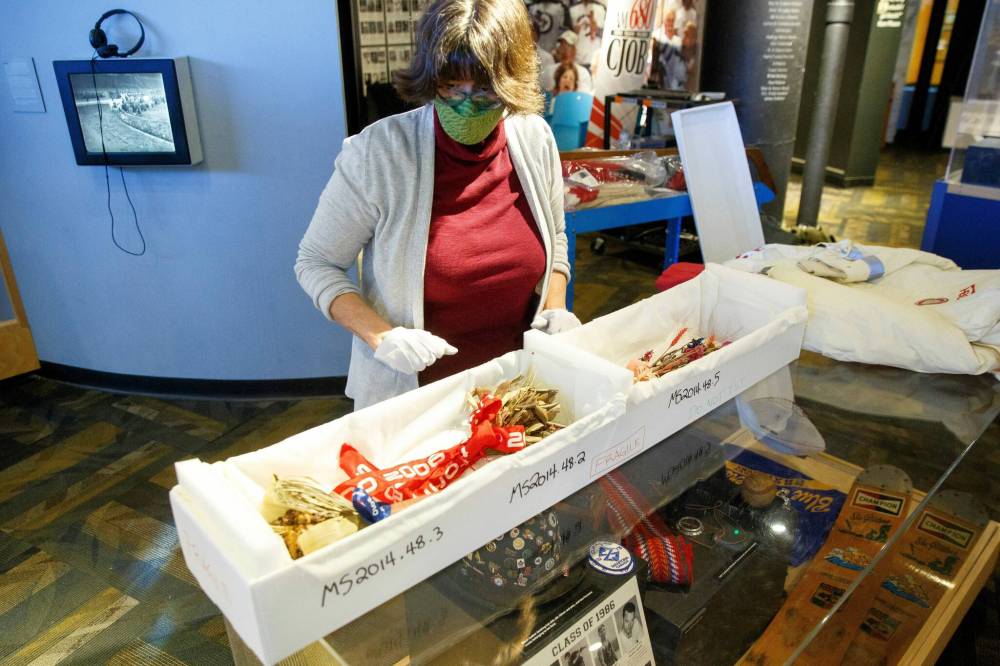
Their original colours faded to a dried brown, two bouquets of flowers still tied with Olympic ribbons tell a small part of the story of a multiple-medal-winning athlete and her proud mother.
Now nestled in a protective, archive-quality box, these flowers presented at the podium to speedskater Clara Hughes at the 2006 and 2010 Winter Olympics might be rarer than the medals themselves, says the curator of the Manitoba Sports Hall of Fame and Museum.
“It’s one of those ephemeral things,” Andrea Reichert says of the bouquets preserved by Hughes’ mother Maureen, and long displayed in the family home.
“These things aren’t meant to last.”
Donated to the museum when the Olympic speedskater was inducted into the Hall of Fame in 2012, these now-fragile floral arrangements are some of the hundreds of items connected to Manitoba athletes’ achievements in Winter Olympics.
With the 2022 Winter Games scheduled to open in Beijing on Friday, Feb. 4, Manitobans are catching the Olympic spirit again, eager to cheer on the 10 local athletes representing Canada in speedskating, curling, and hockey.
But the stands will be empty because of the ongoing global coronavirus pandemic and the families of athletes able to connect only virtually, with no one’s mom on hand to catch and stash the podium bouquet for posterity.
It will be tough on the athletes, says museum executive director Rick Brownlee, but still better than cancelling a one-in-four-year opportunity to compete.
“If you ask the athletes themselves, they’d rather have it this way than not at all,” says Brownlee.
“Would they like to have family and friends there? Absolutely!”
Most of the museum’s Olympic artifacts highlight Manitoban’s past achievements in the same sports our athletes will compete for medals in this Olympics — curling, hockey and speedskating.
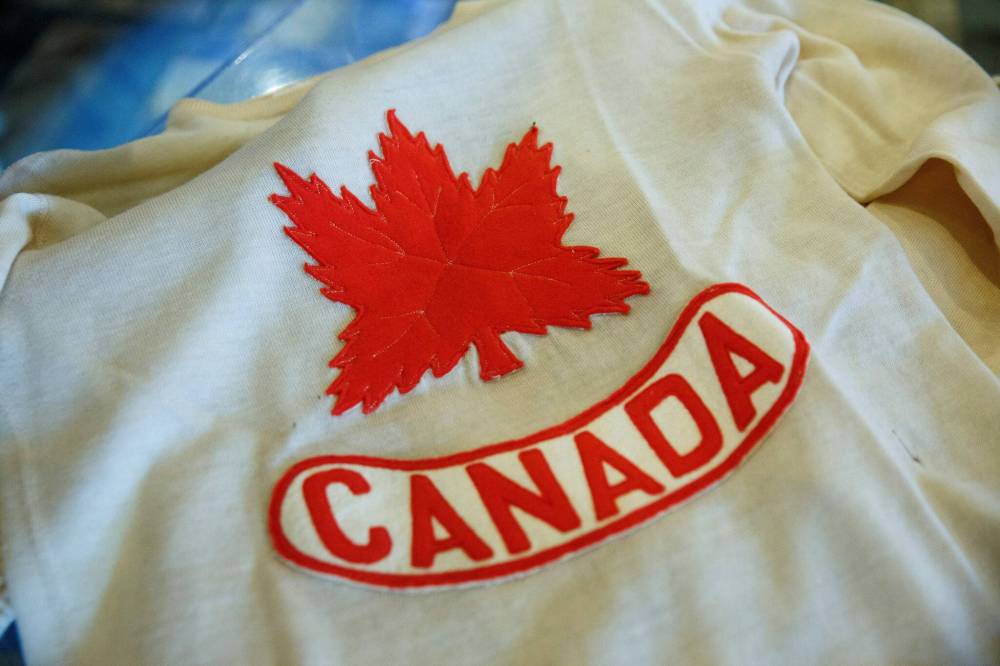
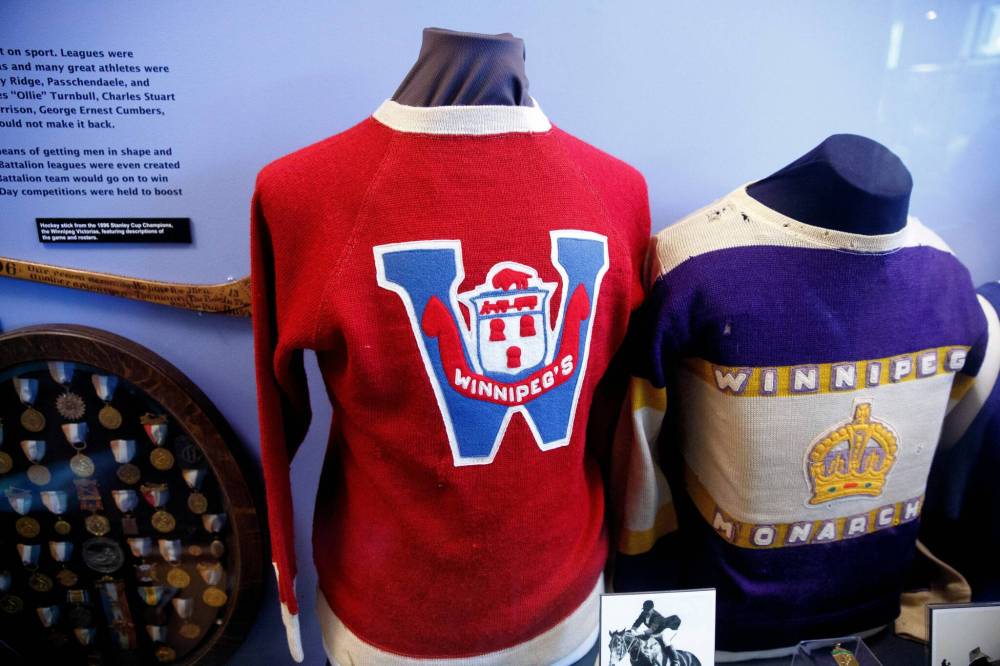
The museum owns a significant collection of items, some on permanent display, from the Winnipeg Hockey Team — Winnipegs for short — which won gold in the 1932 Lake Placid Olympics. The men’s senior amateur team was selected after winning the 1931 Allan Cup, and then travelled to New York state for the Olympic games, likely subsidizing the trip themselves, says Brownlee.
“For the 1932 games, whether you could afford to go played a big role,” he says of what factors were considered in choosing the Canadian Olympic team.
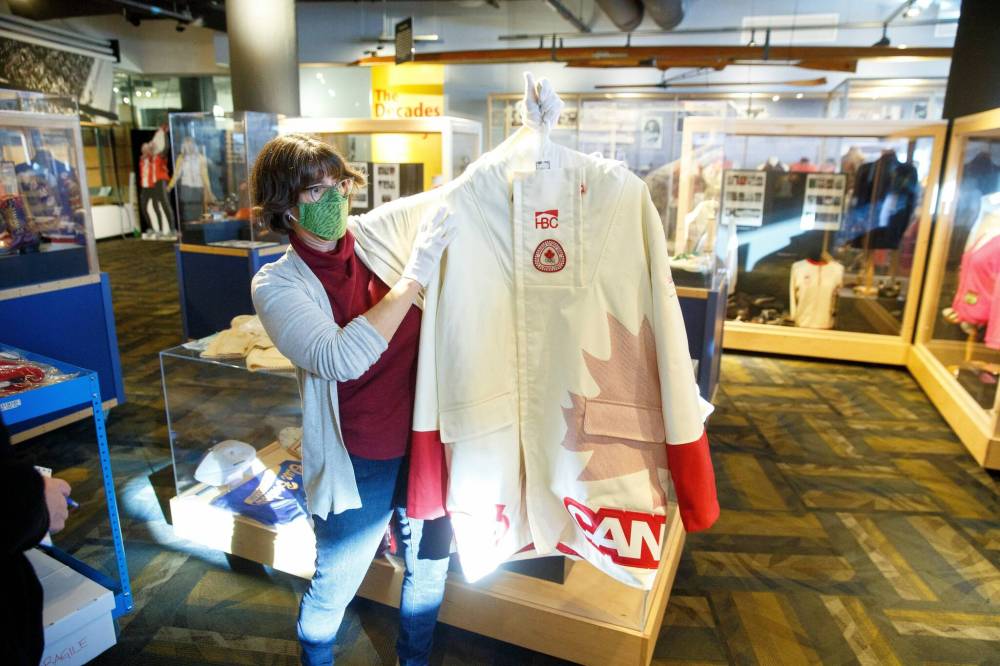
Not only was government support minimal, so was the equipment. The hockey players wore lightweight cream-coloured wool sweaters emblazoned with a red wool maple leaf, and their outerwear consisted of a matching shawl-collared, button down cardigan, similar to an old-style curling sweater.
The hockey equipment may have even been passed down from one team to the next, says Brownlee, with hand-darning stitches faintly visible in the left sleeve of the wool hockey sweater.
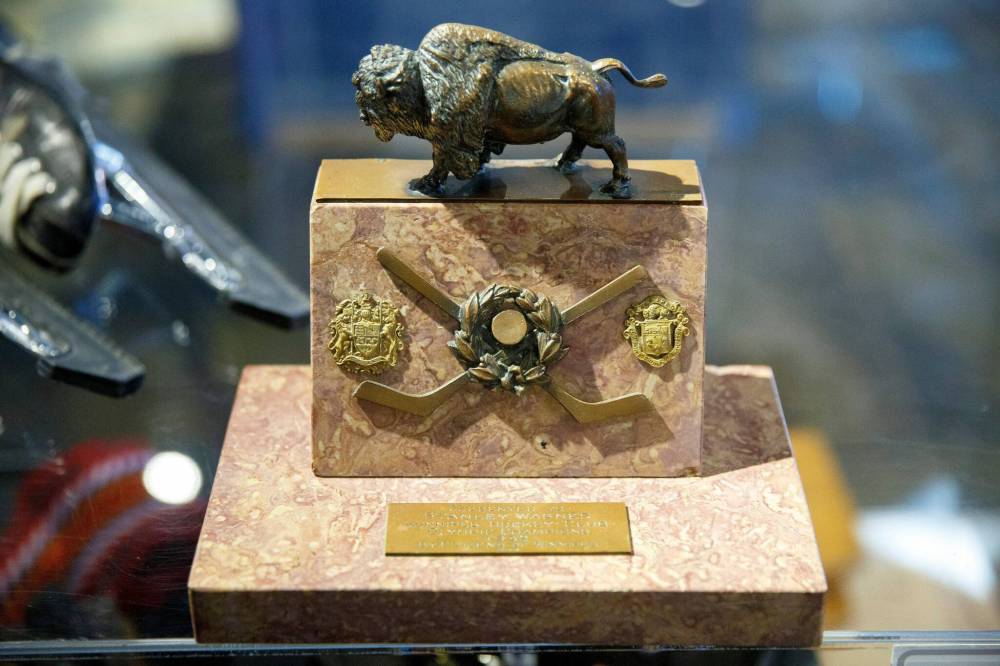
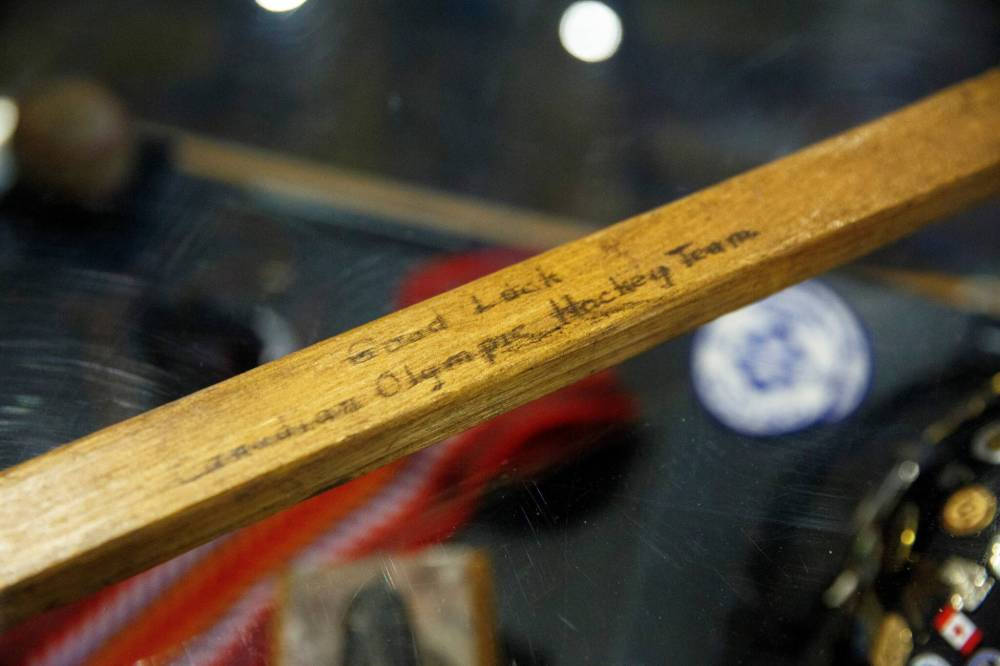
The museum also owns one of the gold medals issued to the team, along with participation medals, diplomas, team photos, signed sticks and the silver trophy presented to the players by the City of Winnipeg when the triumphant players returned home.
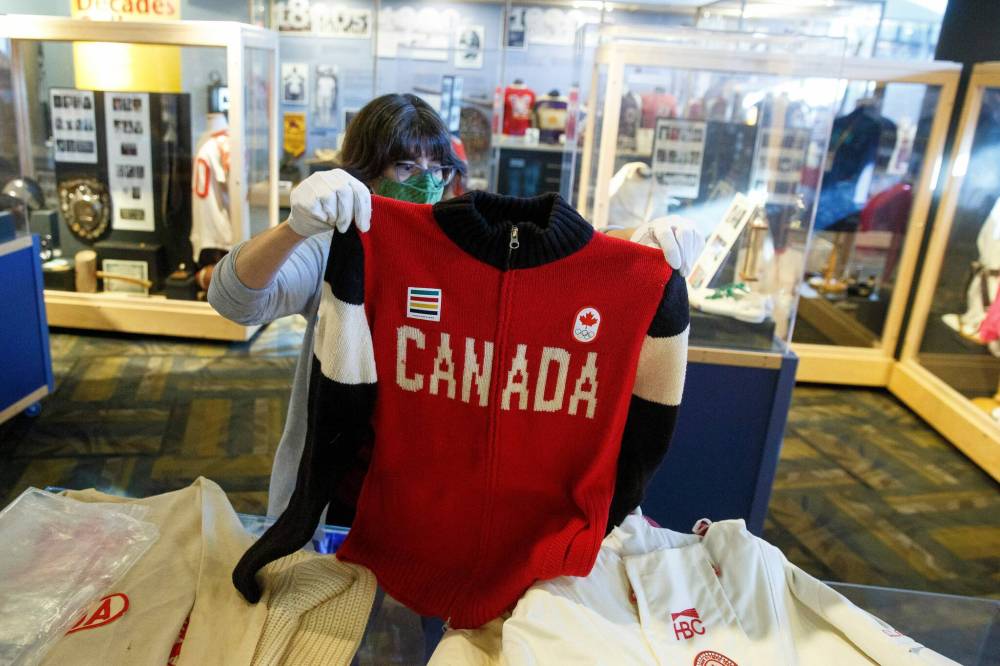
Those modest uniforms contrast to the large wardrobe issued to Olympians now, complete with hats, gloves, scarves and jackets bearing the Canadian Olympic team logos and those of sponsors.
Veteran curler Connie Laliberte donated some of her 2014 kit to the museum, much of it looking pristine, after serving as support staff at the Sochi Olympics.
“Some of the pieces we recently had donated still have their tags on them,” says Reichert of the many uniforms at the museum.
“They didn’t even wear them.”
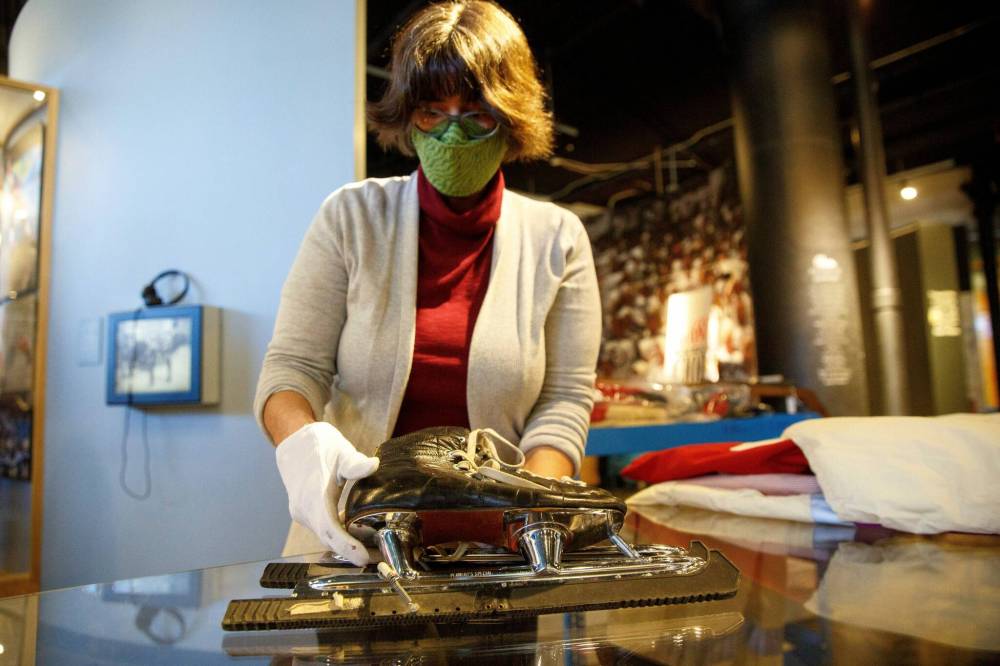
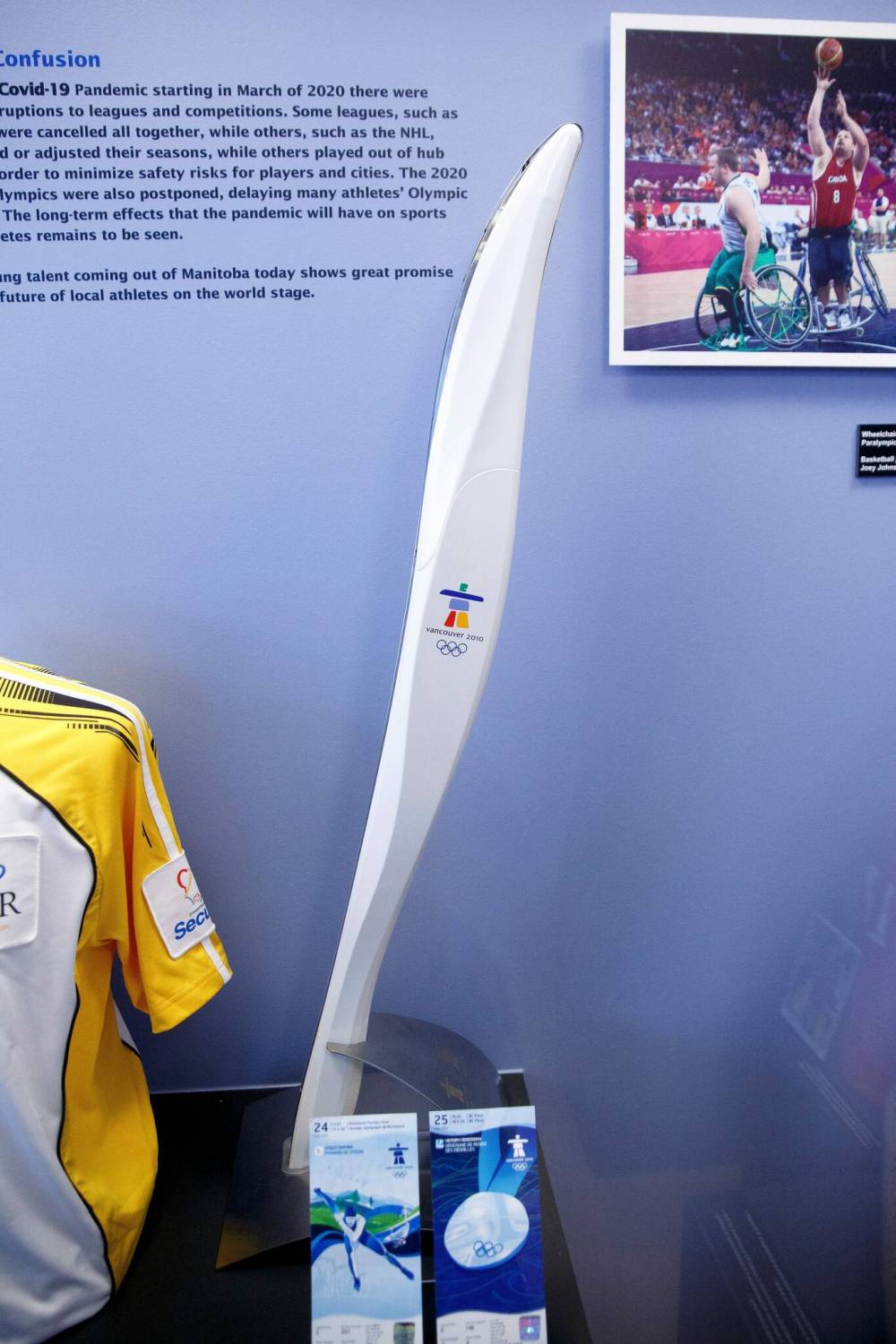
The uniforms in the museum’s collection also showcase changes in sport culture, as well as reflecting the fashion of the day. A long white stadium jacket trimmed in purple and silver reflective strips worn by bobsledder Greg Haydenluck at the Albertville Olympics practically screams 1992, while several speed skating suits demonstrate the evolution of the equipment. The one-piece unembellished navy nylon suit with shoulder and side zippers and cuffed sleeves worn by Donna McCannell Keating in the 1972 Sapporo Olympics looks plain beside Hughes’ 2010 red and black front zip Lycra skinsuit, laden with logos and featuring silver technical fabric on the thighs designed to reduce friction.
“The fabric is meant to accentuate the muscles and be aerodynamic,” says Reichert.
Those technical fabrics, along with the adoption of hinged skates, changed the sport significantly just before Hughes and fellow Winnipegger Cindy Klassen — until Tokyo, Canada’s most decorated Olympian — hit the international scene, says Brownlee.
“The two biggest influences in knocking down the speed was the evolution of the suit and the clap skate,” says Brownlee.
“The longer you keep the blade on the ice, the faster you go.”
Although Manitobans will cheer on their speedskaters, hockey players and curlers, whatever hardware they accumulate at the upcoming games will likely never be part of the Pacific Avenue museum.
Athletes tend to keep their medals to pass them down to their children, says Brownlee, and may loan them for short-term exhibits.
The gold medal won by backup goalie Stanley Wagner in 1932 is a rare exception. Featuring a wavy edge, the small disk was presented to medallists in a blue cardboard box and wasn’t designed to be worn around the neck. Along with the medal, many of Wagner’s other Olympic items are now in the museum’s collection, with the database mentioning how much the former Olympian treasured the items.
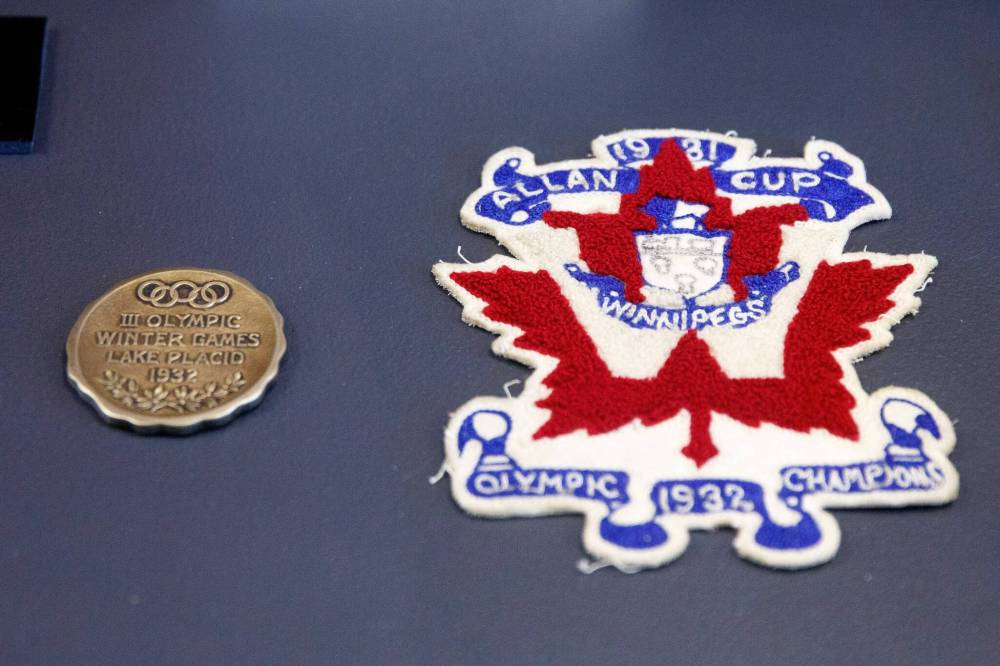
“Donor was very proud to his Olympic medal and carried with him when he went out to show to people,” the notes read.

Always keeping an eye out for the unusual and unexpected, Reichert says beyond uniforms and equipment, the museum also collects items like posters, programs, photos and collector pins.
A white silk armband, featuring the words VII Olympiade in gold hand-embroidery, would certainly be one of those unusual items. Presented to members of the Winnipeg Falcons, who won gold in men’s hockey at the 1920 games in Antwerp, Belgium, the pristine armband seems understated next to current Olympic gear, but also symbolizes a time when small tokens meant a great deal.
“These are things I like in the collection, things that are one-off, ephemeral,” Reichert says of the small handmade item that could have easily been lost or damaged in the century since it was awarded to a Winnipeg hockey player.
Whatever happens at these Olympics, the Manitoba Hall of Fame and Museum plans to continue highlighting the achievements of local athletes to encourage those who come next, and provoke memories for those who watched from afar, says Brownlee.
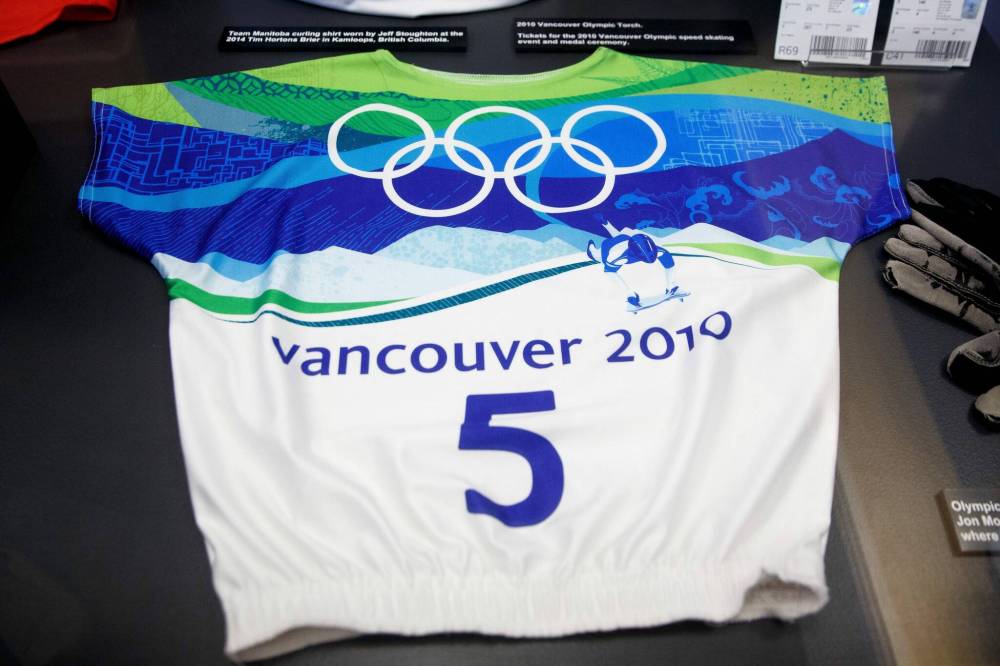
“It serves to provide inspiration to the next generation, to give a nostalgic touch to Manitobans who remember when it happened live, and instil a sense of pride for Manitoba when you look at what our athletes have done,” says Brownlee.
Brenda Suderman has been a columnist in the Saturday paper since 2000, first writing about family entertainment, and about faith and religion since 2006.
Our newsroom depends on a growing audience of readers to power our journalism. If you are not a paid reader, please consider becoming a subscriber.
Our newsroom depends on its audience of readers to power our journalism. Thank you for your support.
Brenda Suderman has been a columnist in the Saturday paper since 2000, first writing about family entertainment, and about faith and religion since 2006.
Our newsroom depends on a growing audience of readers to power our journalism. If you are not a paid reader, please consider becoming a subscriber.
Our newsroom depends on its audience of readers to power our journalism. Thank you for your support.
Advertisement Advertise With Us
Advertisement Advertise With Us