

Manitoba expands chronic wasting disease monitoring
Advertisement
Read this article for free:
or
Already have an account? Log in here »
To continue reading, please subscribe:

Digital Subscription
One year of digital access for only $205*
- Enjoy unlimited reading on winnipegfreepress.com
- Read the E-Edition, our digital replica newspaper
- Access News Break, our award-winning app
- Play interactive puzzles
*First annual payment billed as $205.00 + GST for one year. This annual subscription will automatically renew at $233.00 + GST every 52 weeks (10% off the regular annual price of $259.35). Offer available to new and qualified returning subscribers only. Cancel any time.
To continue reading, please subscribe:
Add Free Press access to your Brandon Sun subscription for only an additional
$1 for the first 4 weeks*
- Enjoy unlimited reading on winnipegfreepress.com
- Read the E-Edition, our digital replica newspaper
- Access News Break, our award-winning app
- Play interactive puzzles
*Your next Brandon Sun subscription payment will increase by $1.00 and you will be charged $17.95 plus GST for four weeks. After four weeks, your payment will increase to $24.95 plus GST every four weeks.
Read unlimited articles for free today:
or
Already have an account? Log in here »
Hey there, time traveller!
This article was published 28/06/2022 (1516 days ago), so information in it may no longer be current.
The Manitoba government is stepping up surveillance of chronic wasting disease to curb further spread of the contagion among deer, elk and moose.
The province announced Tuesday a new strictly regulated and managed mule deer hunting season in areas along the western and southern borders and increased the range of its mandatory sample submission area.
Hunters who harvest white-tailed deer, mule deer, elk and moose along the Saskatchewan border, south of Flin Flon, and along the Manitoba-U.S. border, including Brandon and areas south of Winnipeg, must provide samples for testing.
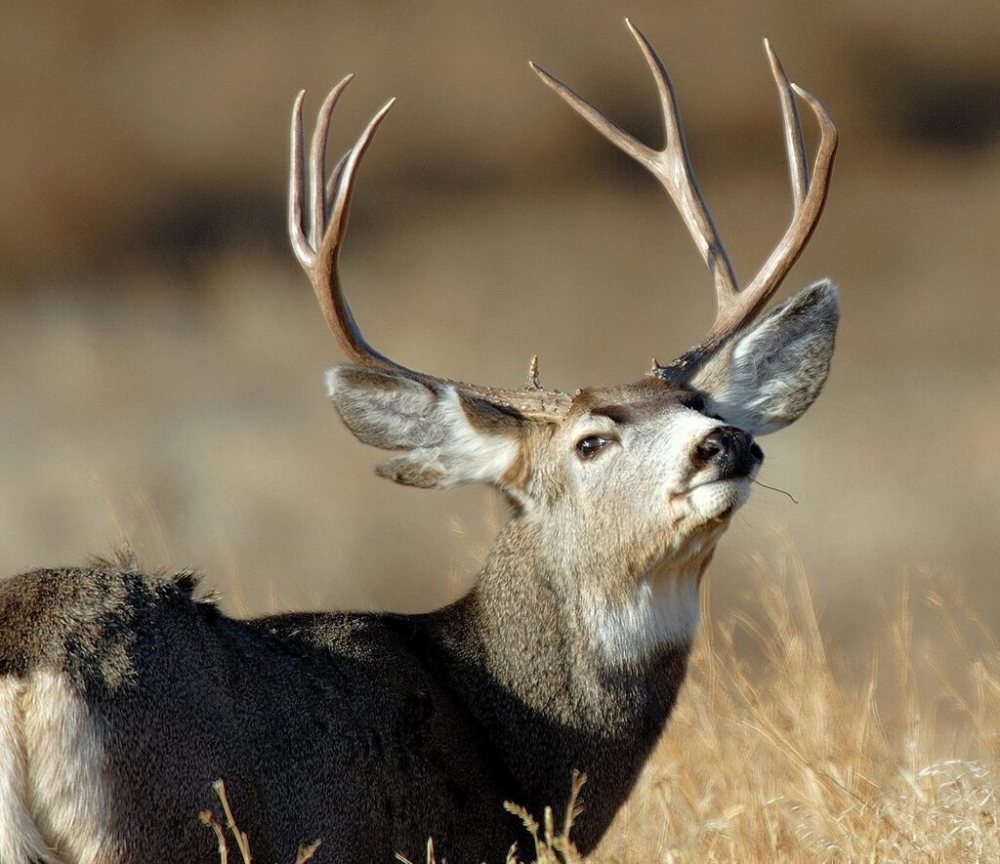
Samples will allow for the identification of infected animals to determine spread of the disease within the area, which is considered high risk, the government said. Additional details on new sample drop-off locations will be announced in mid-August. Hunters will be notified if samples test positive.
Five cases of chronic wasting disease have been confirmed in mule deer in Manitoba, said Maria Arlt, acting director of the province’s fish and wildlife branch. The first case was confirmed last year near the Saskatchewan border.
The highly contagious disease causes neurologic symptoms and is fatal and incurable. While the disease is not known as a human health risk, meat from a sick animal should not be eaten.
“Chronic wasting disease is one of the most significant challenges in North American wildlife management and it can have significant negative impacts on wildlife populations, particularly of the deer family, with impacts to hunting, outfitting, tourism and Indigenous food security,” Arlt said.
Prevalence of the disease in Saskatchewan has increased in both whitetail and mule deer, Arlt said. Animals have also tested positive in North Dakota near the Manitoba border and in Minnesota.
“Additional longer-term measures are needed to prevent any further spread. If (the disease) spreads, it can become one of the greatest threats to populations of deer, elk, moose and caribou in Manitoba,” Arlt said.

The province culled a number of deer in December in its effort to contain the disease. No positive cases were found among deer killed in the aerial operation, which involved marksmen in helicopters shooting deer in the region where the first case was discovered, Arlt said.
The province’s surveillance system has been in place since 1997, and extensive testing has occurred in the whitetail deer population. The expanded sample zone and regulated mule deer hunting season will increase surveillance in that population.
“We don’t believe that it’s spread beyond the five initial detections. We feel like those are preliminary detections, very early, very close to the border,” Arlt said. “So, we don’t believe it’s spread beyond that, but again we’re increasing our surveillance to ensure that that is the case.”
Hunters with concerns or questions about a harvested animal can contact the province by email (CWD@gov.mb.ca) or call toll-free 1-800-214-6497. Additional information about the province’s response to chronic wasting disease is available on its website.
danielle.dasilva@freepress.mb.ca
History
Updated on Wednesday, June 29, 2022 12:27 PM CDT: Corrects toll-free number.