

Mental illness caused fatal stabbing of cabbie: defence

Advertisement
Read this article for free:
or
Already have an account? Log in here »
To continue reading, please subscribe:

Digital Subscription
One year of digital access for only $205*
- Enjoy unlimited reading on winnipegfreepress.com
- Read the E-Edition, our digital replica newspaper
- Access News Break, our award-winning app
- Play interactive puzzles
*First annual payment billed as $205.00 + GST for one year. This annual subscription will automatically renew at $233.00 + GST every 52 weeks (10% off the regular annual price of $259.35). Offer available to new and qualified returning subscribers only. Cancel any time.
To continue reading, please subscribe:
Add Free Press access to your Brandon Sun subscription for only an additional
$1 for the first 4 weeks*
- Enjoy unlimited reading on winnipegfreepress.com
- Read the E-Edition, our digital replica newspaper
- Access News Break, our award-winning app
- Play interactive puzzles
*Your next Brandon Sun subscription payment will increase by $1.00 and you will be charged $17.95 plus GST for four weeks. After four weeks, your payment will increase to $24.95 plus GST every four weeks.
Read unlimited articles for free today:
or
Already have an account? Log in here »
Hey there, time traveller!
This article was published 09/12/2022 (1387 days ago), so information in it may no longer be current.
Prosecutors and defence lawyers agree Okoth Obeing was in the grip of bipolar disorder when he fatally stabbed a city cab driver 17 times.
But it will be up to a judge to decide if the killing of 44-year-old Balvir Toor was murder or the act of a man so mentally ill he can’t be held criminally responsible for his actions.
“Mr. Toor was an innocent man who lost his life and nothing can bring him back,” defence lawyer Alex Steigerwald told King’s Bench Justice Joan McKelvey in a closing argument Friday. “But it was not the same Okoth Obeing sitting before you today who killed Mr. Toor.”
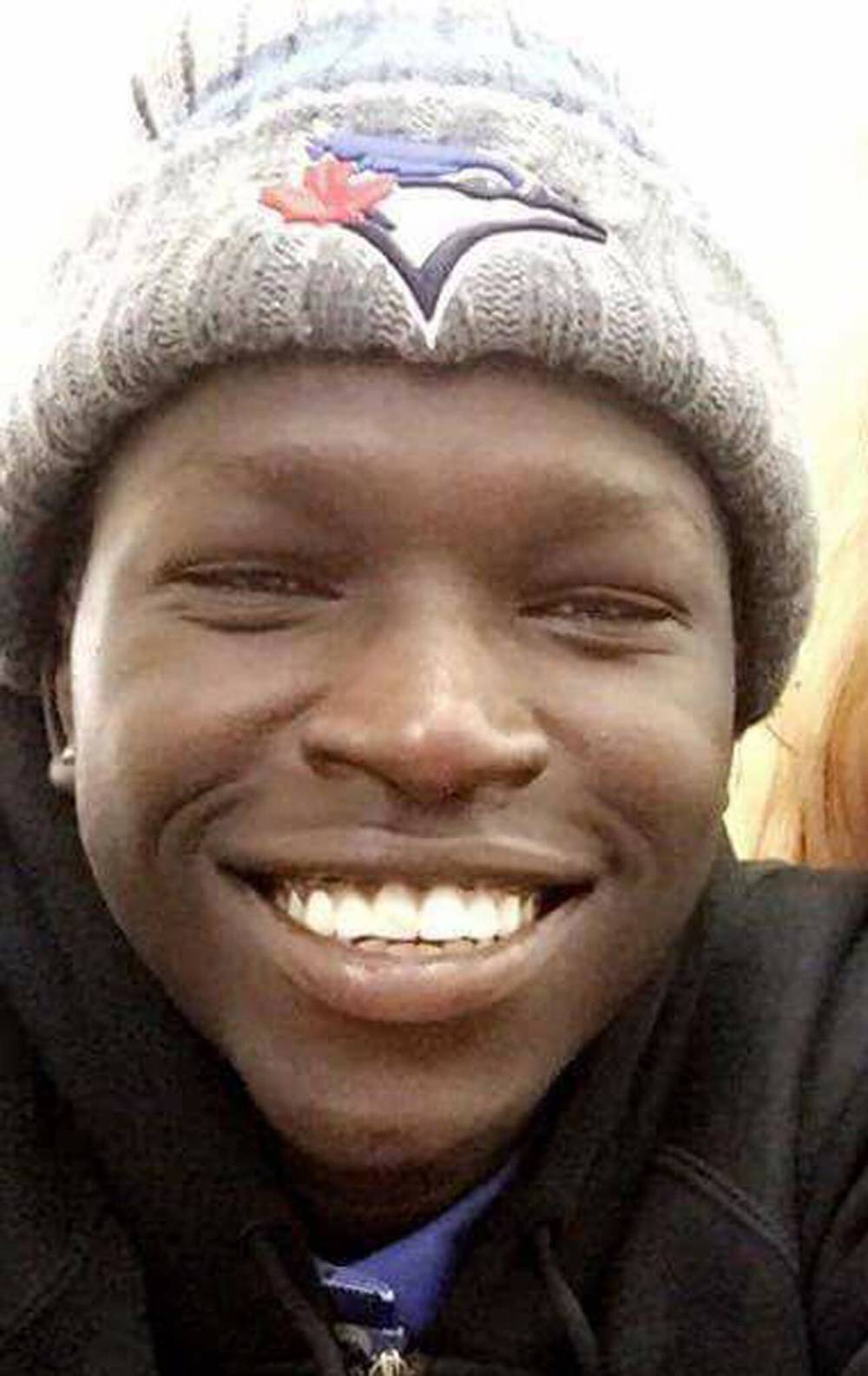
Okoth Obeing
Steigerwald and co-counsel Mitch Merriott are urging McKelvey to find Obeing not criminally responsible.
Such a finding requires that an accused, suffering from a mental disorder, did not know what they were doing was wrong or that they did not appreciate the nature and quality of their actions.
“It was because of mental illness that this tragedy occurred,” Steigerwald said.
Toor died on March 19, 2020, after he was stabbed to death in his cab as he pulled over on the 500 block of Burrows Avenue. Prosecutors argued at trial the killing was driven by Obeing’s racist attitude toward people of South Asian dissent and a “dislike of cab drivers” who “disrespected” him by asking for money up front.
Video of the attack, which was recorded by a cab security camera, showed Obeing in the rear driver-side seat engaged in an angry verbal exchange with Toor.
“Shut the f—k up before I kill you,” Obeing told Toor before seemingly calming down and telling him to “just drive, bro.”
Seconds later, Obeing slid over to the rear passenger-side seat, reached around the driver shield and stabbed Toor 17 times in the arm and upper body. Then, he ran from the vehicle.
In a subsequent police interview, Obeing claimed he gave Toor $60 up front for the fare and became angry when he wouldn’t give him back $10.
“I had enough,” he said. “That was my last $60. “It was money first, money first. I didn’t even f—-ing give him the address yet.”
Dr. Jeffrey Waldman, a forensic psychiatrist called by the defence, testified Obeing met the criteria for a not criminally responsible ruling, finding that due to his bipolar disorder Obeing “did not have conscious thought and control” of his actions at the time he stabbed Toor.
Court heard Obeing was experiencing manic episodes when he admitted himself to St. Boniface hospital on Feb. 25, 2020. When he was released on March 11, nine days before the killing, Obeing had not been properly medicated, Waldman testified.
Obeing has been diagnosed with an intellectual disability, which would have further compromised his ability to control his actions while suffering a manic episode, Waldman said.
“Mr. Obeing was getting sicker and sicker… and his medication was not sufficient to address it,” Steigerwald told court Friday. “This is an individual whose symptoms were so severe Dr. Waldman said he should never have been discharged from St. Boniface hospital.”
Prosecutors Chantal Boutin and Monique Cam urged McKelvey to give Waldman’s testimony little weight, saying his forensic assessment made conclusions not supported by the evidence of other trial witnesses and Obeing’s own comments before and after the killing.
Waldman, Boutin said, attributed Obeing’s actions to his mania, but did not question him about the killing or his state of mind at the time.
Waldman was not Obeing’s treating psychiatrist, but “an assessor, who should have taken an investigative approach… with a high-degree of suspicion,” Boutin said. Instead, Waldman “brushed things off as ‘his illness.’”

“Dr. Waldman saw the evidence only one way… and avoided all the evidence that would call that conclusion into question,” Boutin said, describing Waldman at one point as Obeing’s “third lawyer.”
Boutin said Obeing provided clear evidence he knew what he did was wrong when, after stabbing Toor to death, he ran away “with Olympic speed,” ditched the murder weapon in a garbage bin, and washed Toor’s blood from his hands.
“His own words and actions tell you he did (know his actions were wrong),” Boutin told McKelvey. “And that, m’lady is criminal responsibility.”
McKelvey will deliver her verdict on March 14.
dean.pritchard@freepress.mb.ca
Dean Pritchard is courts reporter for the Free Press. He has covered the justice system since 1999, working for the Brandon Sun and Winnipeg Sun before joining the Free Press in 2019. Read more about Dean.
Every piece of reporting Dean produces is reviewed by an editing team before it is posted online or published in print — part of the Free Press‘s tradition, since 1872, of producing reliable independent journalism. Read more about Free Press’s history and mandate, and learn how our newsroom operates.
Our newsroom depends on a growing audience of readers to power our journalism. If you are not a paid reader, please consider becoming a subscriber.
Our newsroom depends on its audience of readers to power our journalism. Thank you for your support.
Dean Pritchard is courts reporter for the Free Press. He has covered the justice system since 1999, working for the Brandon Sun and Winnipeg Sun before joining the Free Press in 2019. Read more about Dean.
Every piece of reporting Dean produces is reviewed by an editing team before it is posted online or published in print — part of the Free Press‘s tradition, since 1872, of producing reliable independent journalism. Read more about Free Press’s history and mandate, and learn how our newsroom operates.
Our newsroom depends on a growing audience of readers to power our journalism. If you are not a paid reader, please consider becoming a subscriber.
Our newsroom depends on its audience of readers to power our journalism. Thank you for your support.
Related Articles
Murder conviction in ‘rage-fuelled’ 2020 slaying of taxi driver


Advertisement Advertise With Us
Advertisement Advertise With Us