

Province releases reconciliation progress guide for educators
Advertisement
Read this article for free:
or
Already have an account? Log in here »
To continue reading, please subscribe:
Digital Subscription
One year of digital access for only $1.44 a week*
- Enjoy unlimited reading on winnipegfreepress.com
- Read the E-Edition, our digital replica newspaper
- Access News Break, our award-winning app
- Play interactive puzzles
*Billed as $5.77 plus GST every four weeks. After 52 weeks, price increases to the regular rate of $19.95 plus GST every four weeks. Offer available to new and qualified returning subscribers only. Cancel any time.
To continue reading, please subscribe:
Add Free Press access to your Brandon Sun subscription for only an additional
$1 for the first 4 weeks*
- Enjoy unlimited reading on winnipegfreepress.com
- Read the E-Edition, our digital replica newspaper
- Access News Break, our award-winning app
- Play interactive puzzles
*Your next Brandon Sun subscription payment will increase by $1.00 and you will be charged $17.95 plus GST for four weeks. After four weeks, your payment will increase to $24.95 plus GST every four weeks.
Read unlimited articles for free today:
or
Already have an account? Log in here »
Hey there, time traveller!
This article was published 20/04/2023 (1279 days ago), so information in it may no longer be current.
Manitoba Education has released a new guide on embedding truth and reconciliation in schools across the province that encourages teachers to track their progress in building “Indigenous-inclusive” communities.
On Thursday, the education department unveiled “Mamàhtawisiwin Tools for Reflection, Planning and Reporting” — a 24-page document that identifies priority areas for Indigenous education and professional learning for school employees.
Education Minister Wayne Ewasko said “it is more important than ever” to empower teachers with resources that reflect Indigenous languages, cultures and identities.
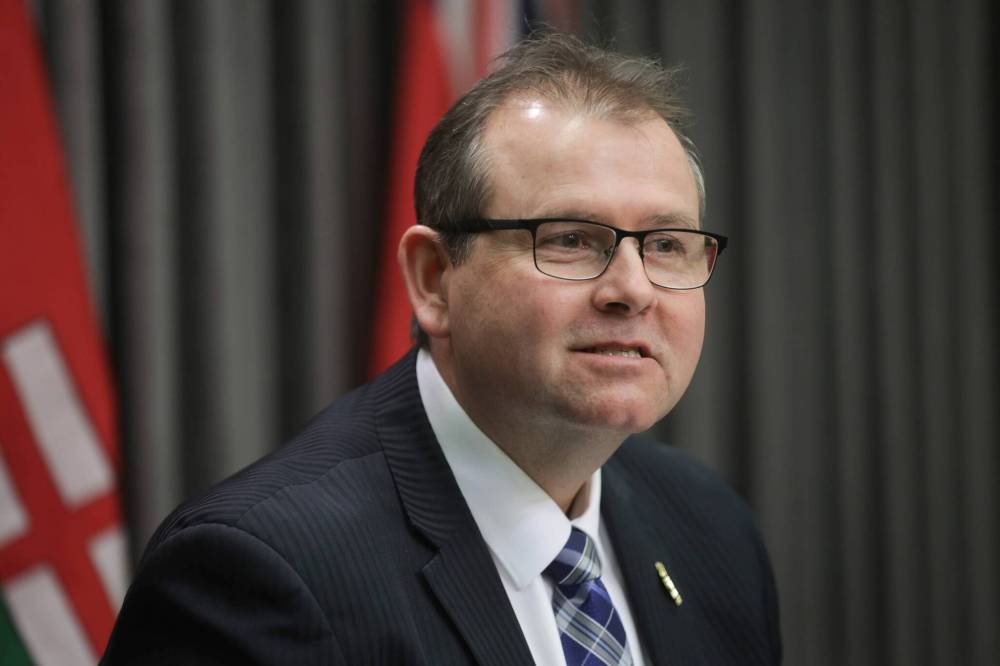
Manitoba Education and Early Childhood Learning Minister Wayne Ewasko (Ruth Bonneville / Winnipeg Free Press files)
“In doing so, we can help foster more inclusive learning environments that enhance the achievements and well-being of Indigenous students and improve the educational experience for all learners,” Ewasko said in a news release Thursday.
The department is partnering with the Manitoba Rural Learning Consortium to provide superintendents, teachers and other staff members with orientation sessions on the new tools.
This time last year, the province published an Indigenous education policy framework — “Mamàhtawisiwin: the Wonder We are Born With” — to renew its commitment to improving outcomes among First Nations, Métis and Inuit students.

Since then, the education department has updated its elders and knowledge keepers in schools guidelines to include the guiding concepts of the four Rs: relevance, relationship, respect and reciprocity.
The province is also planning to distribute nearly 3,000 bilingual English and Anishinaabemowin books to 37 school divisions and 71 First Nations schools this spring.
The reading materials, which were penned in partnership with leaders from Poplar River, Pauingassi, Little Grand Rapids and Bloodvein First Nations, as part of an initiative out of the Manitoba Museum, cover topics ranging from plant life to common Anishinaabeg teachings.
Ewasko indicated his office’s actions answer the Truth and Reconciliation Commission of Canada’s calls on governments to develop and implement resources on Indigenous peoples in Canadian history.
— Staff
MAMÀHTAWISIWIN Tools for Reflection, Planning, and Reporting