

‘Principle of restraint’ should also apply to empty political tactics

Advertisement
Read this article for free:
or
Already have an account? Log in here »
To continue reading, please subscribe:

Digital Subscription
One year of digital access for only $205*
- Enjoy unlimited reading on winnipegfreepress.com
- Read the E-Edition, our digital replica newspaper
- Access News Break, our award-winning app
- Play interactive puzzles
*First annual payment billed as $205.00 + GST for one year. This annual subscription will automatically renew at $233.00 + GST every 52 weeks (10% off the regular annual price of $259.35). Offer available to new and qualified returning subscribers only. Cancel any time.
To continue reading, please subscribe:
Add Free Press access to your Brandon Sun subscription for only an additional
$1 for the first 4 weeks*
- Enjoy unlimited reading on winnipegfreepress.com
- Read the E-Edition, our digital replica newspaper
- Access News Break, our award-winning app
- Play interactive puzzles
*Your next Brandon Sun subscription payment will increase by $1.00 and you will be charged $17.95 plus GST for four weeks. After four weeks, your payment will increase to $24.95 plus GST every four weeks.
Read unlimited articles for free today:
or
Already have an account? Log in here »
Hey there, time traveller!
This article was published 04/05/2023 (1237 days ago), so information in it may no longer be current.
When federal Justice Minister David Lametti announces changes to Canada’s bail laws later this year, it will likely have little, if any, impact on crime. Even if it did, there would be almost no way of proving it.
That’s always the challenge with criminal law. The federal government regularly amends the Criminal Code, but it’s virtually impossible to know with certainty how any change affects criminal behaviour. Crime is driven by a multitude of factors, including poverty, addictions, mental health, racism, and demographic shifts. Crime rates rise and fall over time, usually for no obvious or provable reasons.
Canada’s crime severity index fell almost every year from 1998 to 2014, followed by five consecutive years of increases, then two years of decline. No one really knows why. Criminologists have theories, but no hard evidence to explain the ebbs and flows.
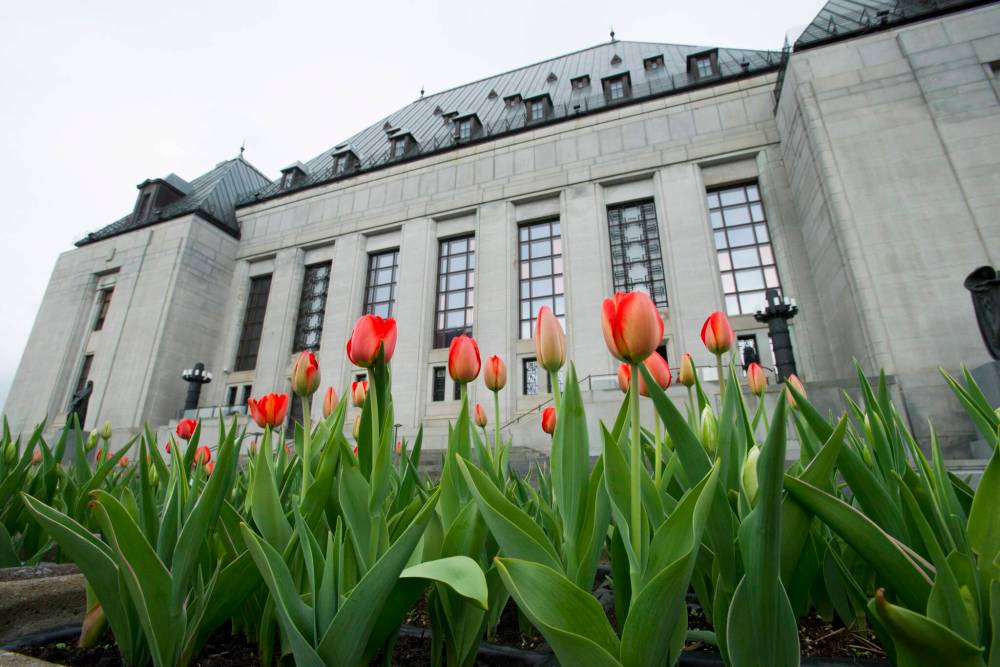
The Supreme Court of Canada, in interpreting the Charter of Rights and Freedoms, has reinforced in several rulings that, based on the presumption of innocence, bail must be the norm, not the exception. (Sean Kilpatrick / Canadian Press files)
Likewise, violent crime remained relatively stable in Canada between 1998 and 2007, then fell sharply from 2008 to 2014. It has increased almost every year since. The reasons are complex and the causes very difficult to untangle.
Politicians often try to score political points by claiming they know why crime is rising or falling. They ascribe it to things like a change in government (as if) or a specific amendment to the Criminal Code. They know correlation is not causation. But they make the claim anyway because they think it will help them win votes.
That’s what is happening with bail laws in Canada right now. Critics claim, without evidence, that the federal government’s amendments to the Criminal Code in 2019, which included some changes to bail laws, have caused violent crime to rise.
The amendment that has attracted the most attention is the codification of the “principle of restraint,” established by the Supreme Court of Canada. The top court, in interpreting the Charter of Rights and Freedoms, has reinforced in several rulings that, based on the presumption of innocence, bail must be the norm, not the exception.
The Criminal Code was updated in 2019 to reflect that and the longstanding constitutional principle that “release at the earliest opportunity is favoured over detention.” Under the Charter, reasonable bail cannot be denied without just cause. That’s not new. It was in place long before 2019.
Politicians, including Manitoba Justice Minister Kelvin Goertzen, know that. But they’re playing politics with it, claiming the 2019 changes contributed to an uptick in violent crime. Goertzen said this week the amendments had “unintended consequences.”
However, he can’t demonstrate with evidence what those alleged consequences are. When asked for evidence, his office pointed to various crime statistics, including a jump in violent incidents since 2017. But none of the data shows causation between the bail law amendments and crime rates. How could they if the principle of restraint was the norm long before 2019?
Interestingly, neither Goertzen nor any other provincial justice minister (all of whom have been calling for bail law changes) are proposing Ottawa reverse the 2019 amendments. If the argument is that those changes triggered a spike in crime, why aren’t the provinces calling for them to be rolled back?

Because they can’t be. The amendments codified Supreme Court rulings, which are binding on Parliament and on lower courts. The provinces know that and they’re intentionally misleading Canadians when they attempt to muddy the reasons behind the changes.
Instead of demanding a rollback of the 2019 changes, the provinces are calling for minor modifications to bail laws. They include expanding the list of charged offences for which an accused must convince the court why they should be released — the so-called reverse-onus clause. That already exists for a long list of offences, including murder and many crimes involving firearms.
Even if the provinces convince Ottawa to make those changes, it would likely have little impact on crime. If it does, it would be very difficult to prove. Reverse onus does not mean an accused is automatically refused bail. It simply means they must convince the court why they should be released. The court is still obligated to follow the principle of restraint and all other legal considerations.
For politicians such as Goertzen and his boss Premier Heather Stefanson, the political objective here is not to reduce crime. Their goal is to take partisan shots at the federal Liberals by claiming, wrongly, that Ottawa compromised public safety with the 2019 changes and that the provinces are the ones who will keep Canada’s streets safe. It’s pure political theatre.
tom.brodbeck@freepress.mb.ca
Tom Brodbeck is an award-winning author and columnist with over 30 years experience in print media. He joined the Free Press in 2019. Born and raised in Montreal, Tom graduated from the University of Manitoba in 1993 with a Bachelor of Arts degree in economics and commerce. Read more about Tom.
Tom provides commentary and analysis on political and related issues at the municipal, provincial and federal level. His columns are built on research and coverage of local events. The Free Press’s editing team reviews Tom’s columns before they are posted online or published in print – part of the Free Press’s tradition, since 1872, of producing reliable independent journalism. Read more about Free Press’s history and mandate, and learn how our newsroom operates.
Our newsroom depends on a growing audience of readers to power our journalism. If you are not a paid reader, please consider becoming a subscriber.
Our newsroom depends on its audience of readers to power our journalism. Thank you for your support.
Tom Brodbeck is an award-winning author and columnist with over 30 years experience in print media. He joined the Free Press in 2019. Born and raised in Montreal, Tom graduated from the University of Manitoba in 1993 with a Bachelor of Arts degree in economics and commerce. Read more about Tom.
Tom provides commentary and analysis on political and related issues at the municipal, provincial and federal level. His columns are built on research and coverage of local events. The Free Press’s editing team reviews Tom’s columns before they are posted online or published in print – part of the Free Press’s tradition, since 1872, of producing reliable independent journalism. Read more about Free Press’s history and mandate, and learn how our newsroom operates.
Our newsroom depends on a growing audience of readers to power our journalism. If you are not a paid reader, please consider becoming a subscriber.
Our newsroom depends on its audience of readers to power our journalism. Thank you for your support.
Advertisement Advertise With Us
Advertisement Advertise With Us
History
Updated on Thursday, May 4, 2023 5:30 PM CDT: Byline added.