

Westman officials weigh cost of safety officers
Advertisement
Read this article for free:
or
Already have an account? Log in here »
To continue reading, please subscribe:

Digital Subscription
One year of digital access for only $205*
- Enjoy unlimited reading on winnipegfreepress.com
- Read the E-Edition, our digital replica newspaper
- Access News Break, our award-winning app
- Play interactive puzzles
*First annual payment billed as $205.00 + GST for one year. This annual subscription will automatically renew at $233.00 + GST every 52 weeks (10% off the regular annual price of $259.35). Offer available to new and qualified returning subscribers only. Cancel any time.
To continue reading, please subscribe:
Add Free Press access to your Brandon Sun subscription for only an additional
$1 for the first 4 weeks*
- Enjoy unlimited reading on winnipegfreepress.com
- Read the E-Edition, our digital replica newspaper
- Access News Break, our award-winning app
- Play interactive puzzles
*Your next Brandon Sun subscription payment will increase by $1.00 and you will be charged $17.95 plus GST for four weeks. After four weeks, your payment will increase to $24.95 plus GST every four weeks.
Read unlimited articles for free today:
or
Already have an account? Log in here »
Hey there, time traveller!
This article was published 11/05/2023 (1244 days ago), so information in it may no longer be current.
BRANDON — Westman municipalities are on the fence about hiring community safety officers, following the Manitoba government’s move last week to address rural crime concerns.
One Brandon-based expert says their money could be better spent elsewhere.
On May 3, Justice Minister Kelvin Goertzen revealed plans for amendments to the Police Services Act, which would allow municipalities the authority to create community safety officer programs. According to Goertzen, these changes would help rural communities address safety issues while reducing the workload on local law enforcement.
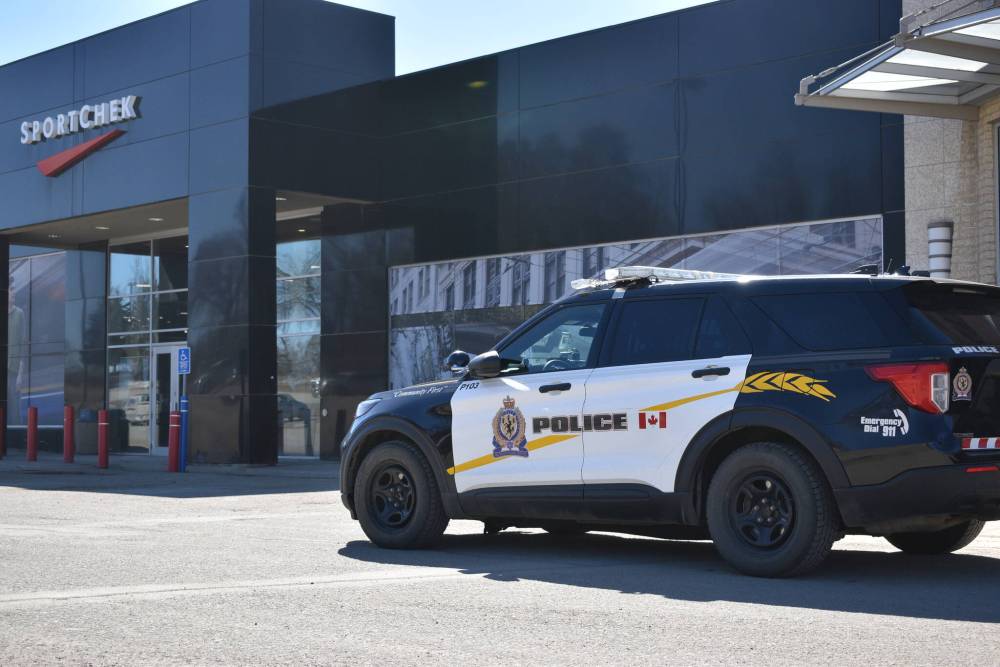
While many municipalities appear to support the idea, some say the costs of hiring safety officers is a barrier and they have so far been left with little direction on logistics. (The Brandon Sun files)
Kam Blight, president of the Association of Manitoba Municipalities, said at the announcement community safety officers are another “tool in the enforcement toolbox,” and giving them powers to enforce provincial statutes and bylaws would allow police to focus on more serious matters.
While many municipalities appear to support the idea, some say the costs of hiring them is a barrier and they have so far been left with little direction on logistics.
“I think it’s the right step,” Swan River Mayor Lance Jacobson said. “The only thing is, for most communities, it’s an additional cost on top of our public safety, RCMP costs and so forth.”
Like many communities, Swan River doesn’t have a local police force and instead pays the RCMP to do the job. Meantime, the cost of RCMP contracts has been a sticking point for the provincial government recently.
Ottawa has pushed the bill for retroactive pay for Mounties, stemming from the latest RCMP collective agreement, on to municipalities, who say they were not consulted on the matter.
Jacobson said Swan River is on the hook for hundreds of thousands of dollars in RCMP backpay, adding if the municipality didn’t have to pay those costs, the money could be spent on CSOs. However, council is still considering CSOs to complement RCMP, which would be cheaper than hiring additional Mounties, he said.
“(RCMP) officers are pulled out of the community constantly, we have a very large area,” Jacobson said. “If you had the option of having, say, three CSOs, then potentially that could fill the gap where the RCMP can’t be.”
The municipality will have to wait and see what the final legislation looks like to determine whether CSOs would benefit the community, he added.
Virden deputy mayor Marc Savy, a former police officer, also cited RCMP contract costs as a consideration for local council when discussing the possibility of hiring CSOs.
Virden is responsible for $107,000 in retroactive pay, as well as covering the cost of body cameras for RCMP officers, at $3,000 per Mountie, he said.
“We do agree that these amendments will offer some municipalities with other options to enhance the safety of our community,” Savy said. “However, a large part of our budget is public safety, contracting the RCMP to provide the policing services in our community.”
While Savy said council is looking at the CSO option, he emphasized there needs to be more clarity from the province as to how CSO programs are funded, how officers are trained, and who would be qualified in the municipality to oversee the officers.
“We don’t feel that it’s our responsibility to administer the program in our community,” Savy said. “What does our (chief administrative officer) know about law enforcement training and all of that?”
RCMP media relations Sgt. Paul Manaigre said more information about the province’s announcement is needed before the RCMP could comment on amendments to the Police Service Act.
According to Manitoba RCMP statistics for the west region released Tuesday, overall crimes against people (which include assaults, robberies and sexual offences) have dropped two percentage points since last year. Property crimes increased by 10 percentage points from last year.
Meantime, a Brandon University sociology professor said municipalities could instead spend potential CSO money on community resources, such as youth programs or a rehabilitation centre, to address the root causes of crime.

“These things that help people, give them skill sets to take into the world that are not criminal, will lead to prevention and reduction of crime,” said Chris Schneider, who writes extensively about policing.
He noted the RCMP has an online service through which people can report less-critical crime, ranging from a hit-and-runs to lost property. Schneider said the fact there is current infrastructure in place for handling less-serious crime incidents, calls into question why CSOs would be needed to handle these incidents as well.
With a provincial election later this year, the Tory government is using the issue of public safety and crime to spur fear among voters, he surmised.
“That fear is, I think, driving the government to respond in a way that is trying to respond to the fear,” Schneider said. “But they’re doing it in a way that is very vague, that will appease the political base, but not necessarily lead to prevention of crime or reduction of crime.”
— Brandon Sun