

Conservationists seek endangered butterfly comeback on tallgrass prairie
Advertisement
Read this article for free:
or
Already have an account? Log in here »
To continue reading, please subscribe:
Digital Subscription
One year of digital access for only $1.44 a week*
- Enjoy unlimited reading on winnipegfreepress.com
- Read the E-Edition, our digital replica newspaper
- Access News Break, our award-winning app
- Play interactive puzzles
*Billed as $5.77 plus GST every four weeks. After 52 weeks, price increases to the regular rate of $19.95 plus GST every four weeks. Offer available to new and qualified returning subscribers only. Cancel any time.
To continue reading, please subscribe:
Add Free Press access to your Brandon Sun subscription for only an additional
$1 for the first 4 weeks*
- Enjoy unlimited reading on winnipegfreepress.com
- Read the E-Edition, our digital replica newspaper
- Access News Break, our award-winning app
- Play interactive puzzles
*Your next Brandon Sun subscription payment will increase by $1.00 and you will be charged $17.95 plus GST for four weeks. After four weeks, your payment will increase to $24.95 plus GST every four weeks.
Read unlimited articles for free today:
or
Already have an account? Log in here »
Hey there, time traveller!
This article was published 14/07/2023 (1192 days ago), so information in it may no longer be current.
The Poweshiek skipperling has a special connection to the tallgrass prairie. It’s the only ecosystem in the world the loonie-sized butterfly can call home.
As grasslands — one of the most endangered terrestrial systems on the planet — deplete, the Poweshiek skipperling population is disappearing at a rapid pace.
To prevent further endangerment, the Assiniboine Park Conservancy and Nature Conservancy Canada have partnered to help expand the Grassland Butterfly Conservation Program to a new site in the Manitoba Tall Grass Prairie Preserve.
SUPPLIED
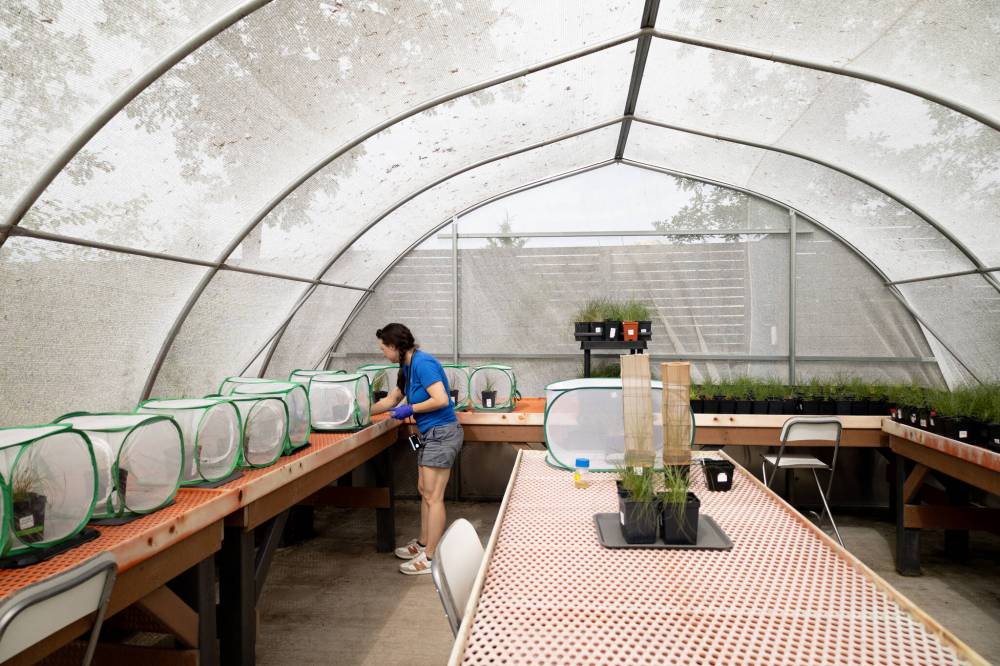
Laura Burns, a research and conservation specialist with Assiniboine Park Zoo in the Hoop house where they are breeding Poweshiek skipperling.
On Friday, the conservancy announced it had released 58 endangered Poweshiek skipperling onto a new site, some 50 kilometres south of Steinbach. It also released 19 endangered Dakota skippers, a related species, into an area in the Interlake region.
“This is the first time ever that we’ve released them into a new site,” said Laura Burns, a conservation program manager at the Assiniboine Park Conservancy. “The last time they were detected in that spot where we released them this year was almost 10 years ago.”
For six years, the conservancy has bred and reared Poweshiek skipperling to release into the wild. The petite orange-and-brown butterfly is classified as endangered under the Manitoba Endangered Species Act.
During the project’s planning stages 2015-17, the conservation team set an egg survival rate of three per cent — a jump from the Poweshiek skipperling’s usual one per cent survival rate in the wild.
That goal was met tenfold; the survival rate jumped to 30 per cent.
The Poweshiek skipperling is found in only two locations in the world: the Manitoba preserve and a site near Flint, Mich.
The Grassland Butterfly Conservation Program connects organizations in the U.S. and Canada.
SUPPLIED
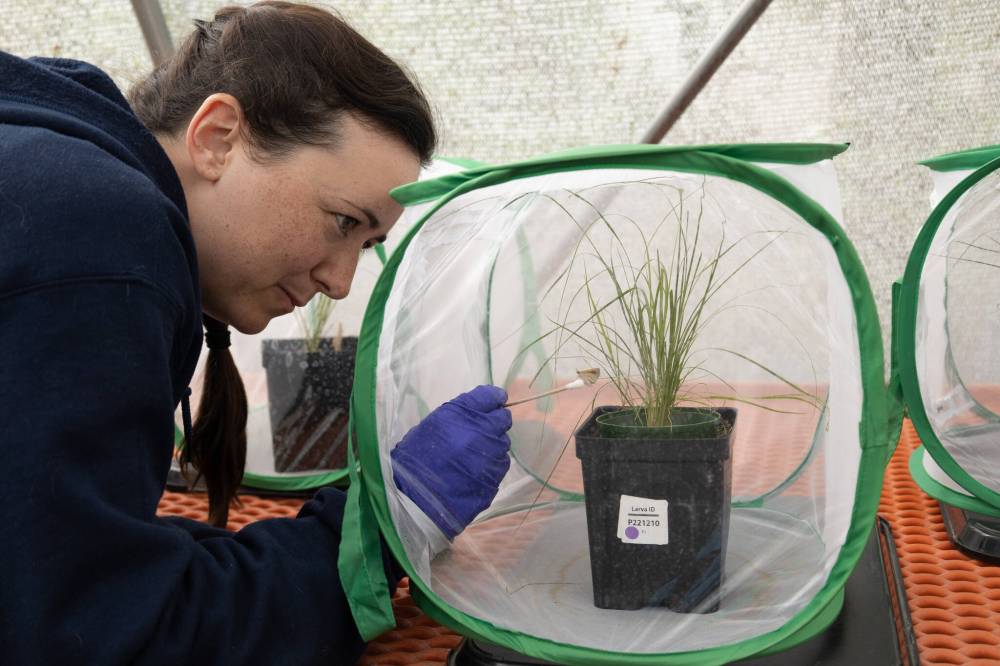
‘This is the first time ever that we’ve released them into a new site,’ said Burns.
Melissa Grantham, a conservation biologist with the Nature Conservancy of Canada, said communicating beyond borders is essential to success.
“There are so many folks across the range that are working on so many different things,” Grantham said. “It’s so important for us to be sharing and relying on each other for expertise.”
While numerous factors, including habitat loss, pesticides and extreme weather events are believed to be contributing to the decline of the Poweshiek skipperling and Dakota skipper, Grantham said it’s difficult to pin down a precise cause.
For one, they haven’t been monitoring the species for very long. With tiny, hard-to-find larvae, studying the species has also proved difficult. Some contributing factors, such as extreme weather and climate change, are also deeply interlinked, she said.

“They have an endangered status, so we don’t want to implement any sort of experimental studies or anything that might have a negative impact on them,” Grantham said. “We’re very, very cautious about that, which makes answering certain types of questions kind of hard.”
With a total of 77 grassland butterflies released into the wild through this year’s efforts, conservationists are cautiously optimistic.
SUPPLIED
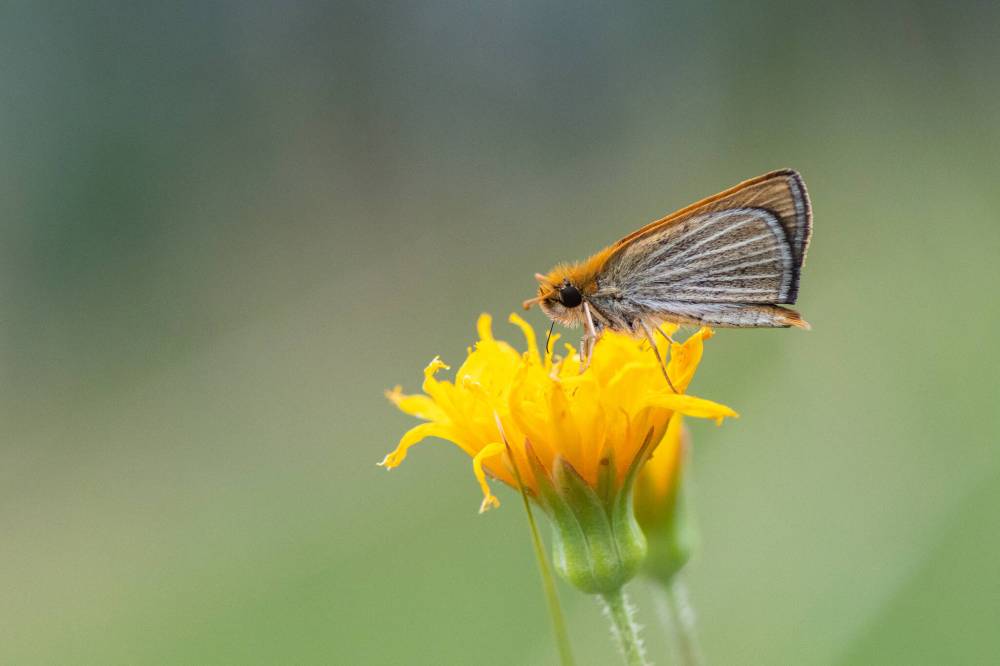
An adult male Poweshiek skipperling perches on a wildflower moments after its release.
“When you have these tiny pockets left of a species of that risk, any weird event like a wildfire or a really bad storm or a strange weather year could knock the whole population out at once,” Burns said. “By increasing the number of spots where you can find them, we are greatly decreasing the risk of extinction.”
After a nine-year absence in that part of the Manitoba Tall Grass Prairie Preserve, the Poweshiek skipperling have returned home.
cierra.bettens@freepress.mb.ca